Exploring How Computational Design Can Transform Bamboo Architecture in Indonesia
As I prepare to embark on doctoral research in computational design and sustainable architecture, I find myself constantly returning to a material that has defined my Indonesian homeland for centuries: bamboo. Walk through any village in Sumatra, Java, or Bali, and you’ll see it everywhere – used for homes, bridges, furniture, and art. Indonesia is home to 176 documented bamboo species, with 105 being endemic, making us a global biodiversity hotspot for this remarkable material [1]. Yet despite this abundance and our deep cultural connection, I believe we’ve been asking the wrong question about bamboo in architecture.
For years, the conversation has centered on a simple narrative: “Is bamboo sustainable?” The answer, definitively, is yes. A single hectare of bamboo sequesters approximately 17 tonnes of carbon annually – significantly more than most tree species [2]. Its rapid renewability, with harvesting cycles of just 3-5 years compared to decades for timber, positions it as one of the most regenerative building materials available [3]. These facts are powerful and important.
But here’s the critical insight I want to explore in this post: sustainability without performance is a missed opportunity. The simple act of substituting bamboo for traditional materials without fundamentally changing our design process is, in many ways, like driving a Ferrari in first gear. We’re not utilizing its full potential.
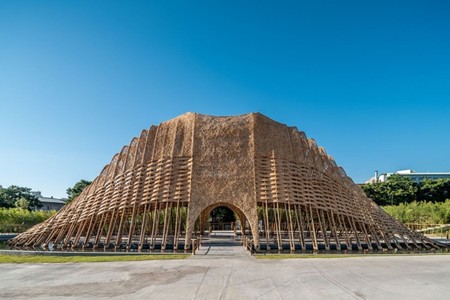
The architectural potential of bamboo is immense, but realizing it requires moving beyond traditional design methods.
As a lecturer teaching architecture students at Universitas Medan Area, I see this challenge firsthand. My students are eager to use bamboo – it aligns with their values, it’s locally abundant, it’s culturally meaningful. But when they sit down to design a structure, they often fall back on conventional design methods: static calculations, safety factors borrowed from timber design, and joinery details that don’t account for bamboo’s unique properties. The result? Over-designed, materially inefficient structures that don’t realize bamboo’s true promise.
This is where computational optimization enters the picture, and why I believe it’s essential for the future of Indonesian architecture.
In this post, I’m not declaring universal truths – I’m exploring why I believe computational design is crucial for unlocking bamboo’s performance potential. These are questions I’m actively investigating as I prepare for PhD study, and I’d love your perspective.
The Anisotropic Challenge: Why Bamboo is Not Wood
One of the first things I realized in my research is that a fundamental mistake undermines much bamboo design: treating bamboo as a simple wooden pole. This assumption is dangerous because it’s partially true, which makes it deceptively misleading.
Bamboo is a functionally graded, anisotropic composite material – meaning its mechanical properties vary directionally and change systematically from the inner to outer culm wall [4]. To understand what this means in practice:
Along the fibers (longitudinal direction): Bamboo’s tensile strength rivals mild steel—up to 140-160 MPa for species like Dendrocalamus asper (betung) and Gigantochloa apus (ampel), the two most common species in Indonesia [5].
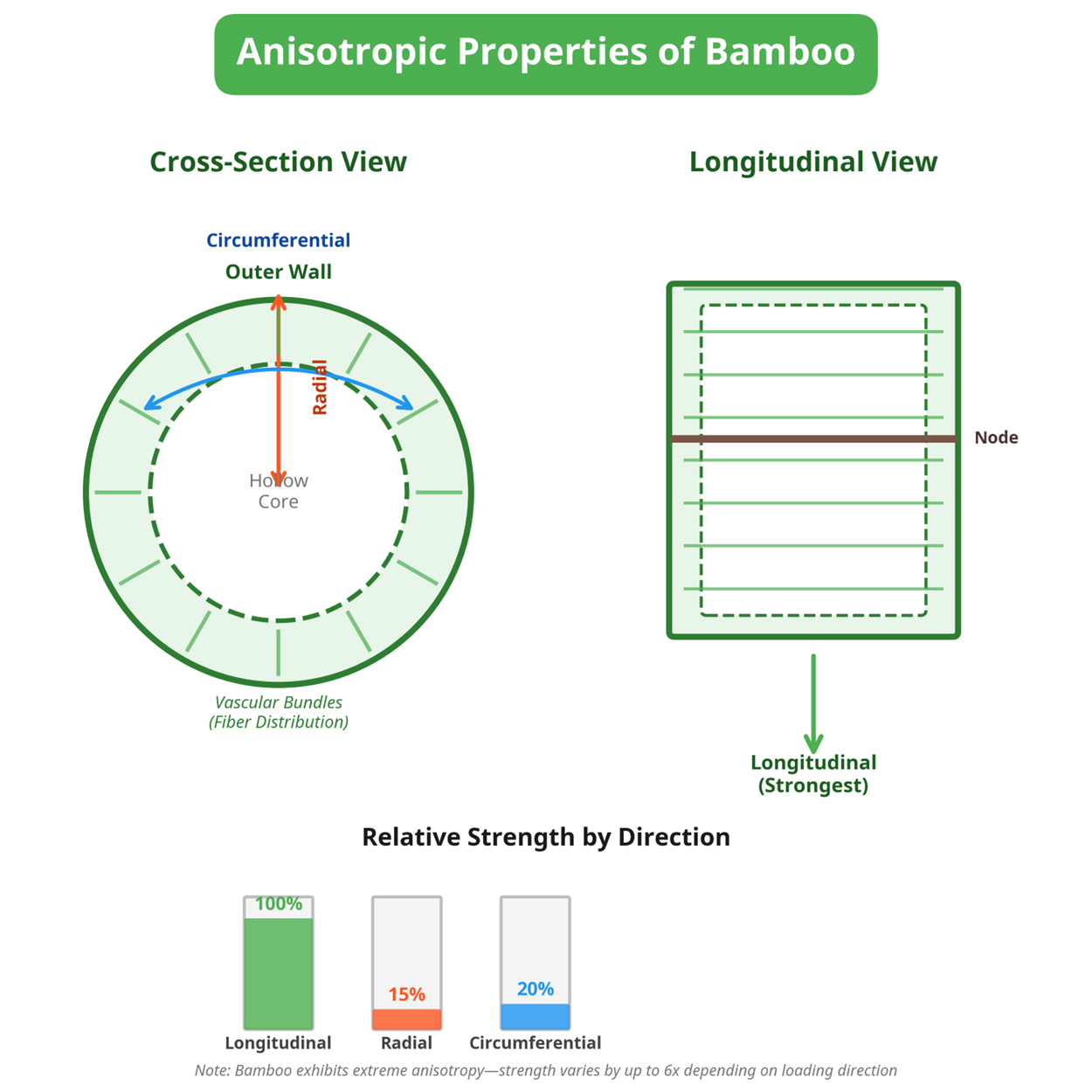
Perpendicular to fibers (radial/circumferential directions): Strength drops dramatically – up to 6 times weaker in some directions [4].
This difference in strength stems from bamboo’s elegant biomechanical structure: cellulose fibers are primarily oriented along the culm’s length, embedded in a lignin matrix. Additionally, the density and diameter of vascular bundles vary from the inner to outer wall, creating a natural gradient that’s been optimized by millions of years of evolution to resist wind and bending loads [6].
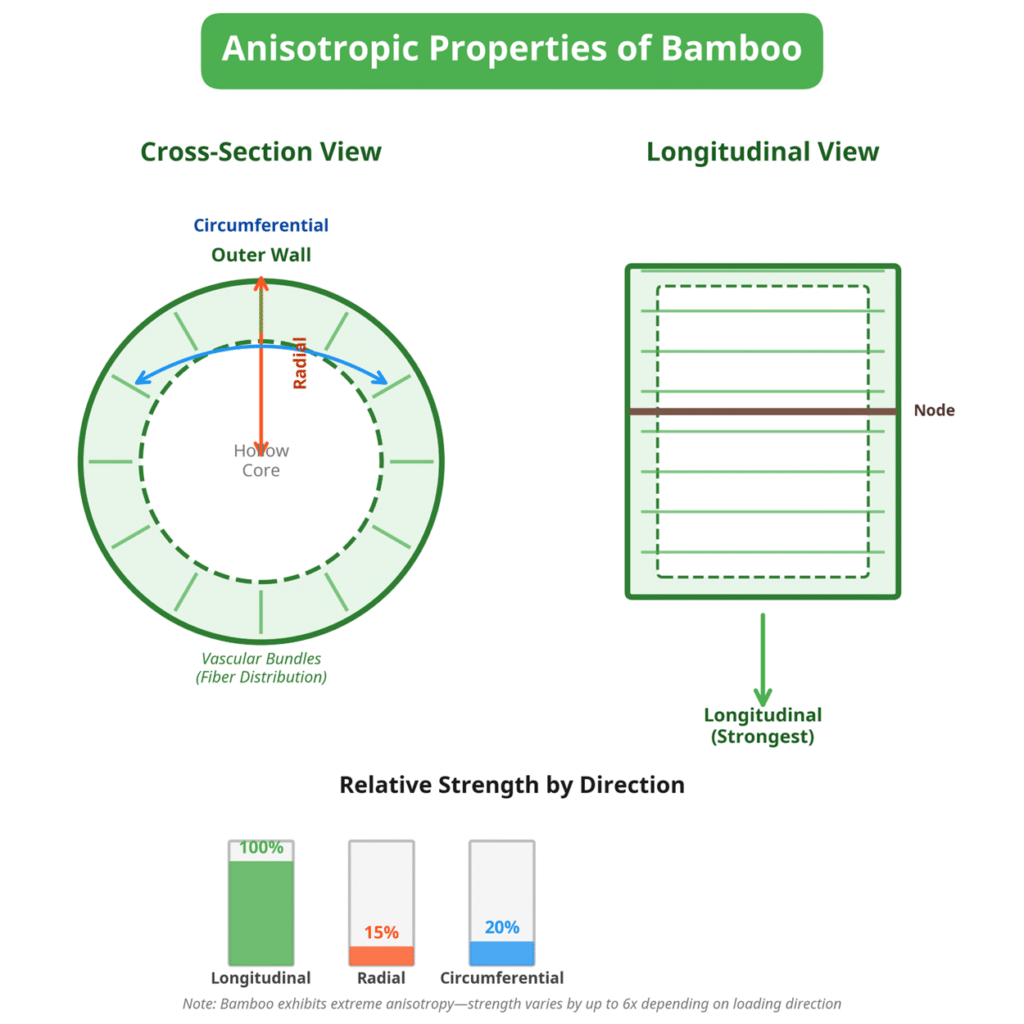
The anisotropic nature of bamboo, showing its primary strength along the longitudinal axis versus its weaker properties in the radial and circumferential directions. Strength can vary by up to 6x depending on loading direction.
Why conventional design fails:
Traditional architectural and engineering design methods rely on isotropic assumptions – the assumption that a material has uniform properties in all directions. This works reasonably well for steel or concrete, where isotropy is engineered into the manufacturing process. But for bamboo, this assumption is fundamentally violated.
This leads to two critical problems in practice:
- Material Inefficiency: Engineers, uncertain about bamboo’s directional weaknesses, often over-design structures with excessive safety factors [7]. I’ve seen bamboo frames using far more culms and material than structurally necessary. This negates some of bamboo’s sustainability advantage—if you use 50% more material than needed, your carbon payback period extends dramatically [7].
- Unpredictable Failure: An incomplete understanding of directional weaknesses can lead to catastrophic, unexpected failures. The most common failure mode I’ve observed in bamboo structures is longitudinal splitting—the culm fractures along its length. This typically occurs when loading direction isn’t optimized for fiber orientation or when designers use joinery details designed for isotropic materials [7].
How computational design changes this:
Finite element modeling allows architects to build detailed computational models that explicitly define bamboo’s anisotropic properties. Rather than applying uniform assumptions, the model understands that stress flows differently through the material depending on direction.
Engineers can then simulate:
- How stress distributes through actual bamboo geometry with real anisotropic properties
- Where maximum stresses occur and in which directions
- Which culm orientations best resist applied loads
- Optimal joint designs for actual bamboo behavior (not theoretical isotropy)
The result: structures that use bamboo efficiently, in its strongest orientations, with material placed exactly where it’s needed. This is performance-driven design, not assumption-driven design.
Indonesian context matters: In my teaching, I’m increasingly using parametric models showing students how Dendrocalamus asper (popular in North Sumatra) behaves differently than Gigantochloa apus (common in Bali) due to their different fiber orientation patterns and wall thickness gradients [5]. This localized knowledge becomes powerful when encoded computationally.
The Moisture Problem: Designing for a Living, Breathing Material
Beyond structural anisotropy lies another profound challenge: bamboo is hygroscopic – it constantly absorbs and releases moisture in response to atmospheric humidity. In Indonesia’s tropical climate, this isn’t a minor detail. It’s perhaps the critical factor determining long-term structural performance [8].
Here’s what happens: As moisture content increases, bamboo’s mechanical properties systematically degrade.
Studies show that [8] [9]:
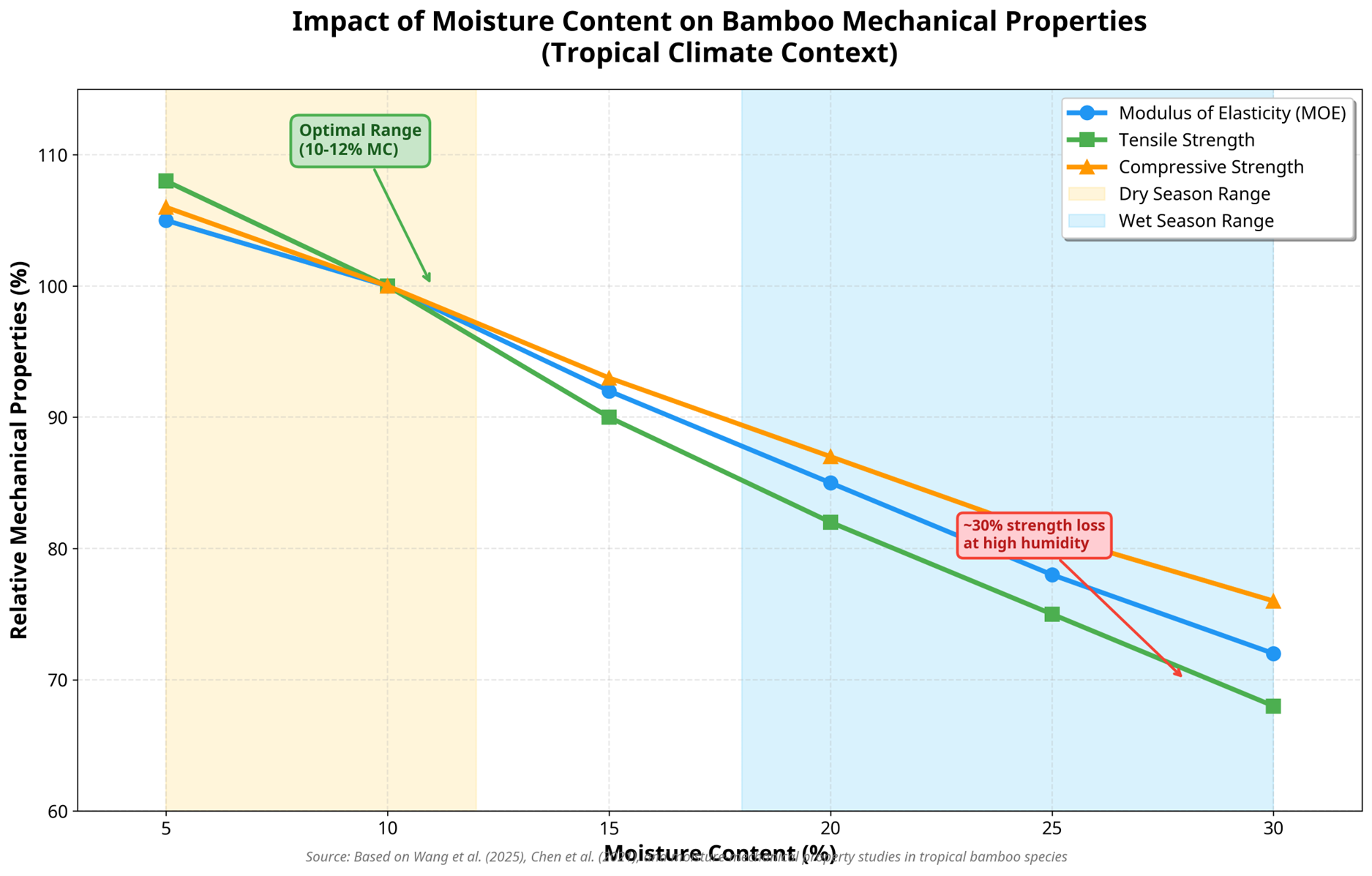
- Tensile strength decreases by up to 40-50% as moisture content increases from dry to saturated condition [9]
- Elastic modulus (stiffness) decreases significantly, meaning the material becomes more flexible [8]
- Dimensional stability changes: The material swells and shrinks, with different swelling rates in different directions [8]
In tropical Indonesia, seasonal moisture variations are extreme. During the rainy season (November-March), relative humidity can reach 95% or higher, causing bamboo moisture content to rise dramatically. During the dry season (June-September), humidity drops to 60-70%, and bamboo moisture content decreases. This cycle repeats year after year.
The practical problem:
Imagine a bamboo joint designed in controlled conditions—perhaps a laboratory in Stuttgart or Singapore where humidity is relatively stable. The joint is tight, load-bearing connections are perfect. Now place that same joint in a rural Sumatran village experiencing tropical humidity cycles:
- Wet season: Bamboo swells; the joint tightens or becomes overstressed
- Dry season: Bamboo shrinks; the joint loosens, potentially compromising structural integrity
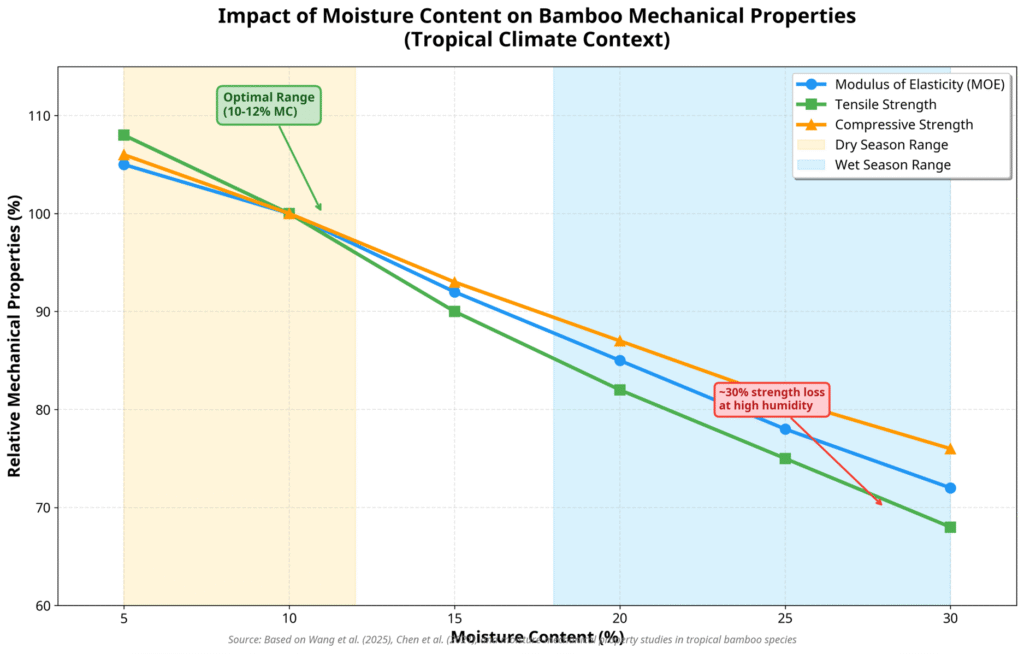
The inverse relationship between moisture content in bamboo and its key mechanical properties. In tropical climates, seasonal humidity variations can cause up to 30% strength loss.
A joint tight during dry season becomes loose in wet season. A connection designed for static conditions becomes dynamic and unpredictable. This is why traditional Indonesian bamboo buildings employ specific joinery techniques that accommodate movement—our ancestors understood this intimately, even if they described it differently [10].
How conventional design fails:
Static design methods assume material properties remain constant throughout the building’s lifetime. Bamboo design guidelines often cite material properties at “standard” moisture content (around 12%), but never address the reality that Indonesian buildings experience moisture contents ranging from 8% to 20% or higher depending on season and location.
How computational optimization changes this:
Environmental-responsive parametric design incorporates real climate data directly into structural models [11]. Rather than assuming static moisture content, the design process:
- Integrates historical climate data from the specific building location
- Models moisture content cycles throughout the year based on humidity patterns
- Simulates structural behavior across the full range of moisture conditions
- Designs joints and connections that remain structurally sound whether bamboo is at its driest or wettest seasonal state
- Predicts movement and designs the structure to accommodate it
This level of analysis is impossible through manual calculations – the variables are too many, the relationships too complex. But computational models can simulate years of seasonal cycling in minutes, predicting how a structure will perform over decades [11].
Indonesian example I’m exploring: For buildings in Medan where I teach, tropical climate data shows humidity averages 75-80% year-round with minimal seasonal variation compared to other regions. This means different optimal designs than, say, a building in Bali where seasonality is more pronounced. Computational design makes this regional differentiation explicit and testable.
Encoding traditional wisdom: Interestingly, traditional Indonesian bamboo joinery often uses sliding connections or slightly loose joints that can accommodate movement. This isn’t haphazard – it’s sophisticated engineering [10]. Computational design can formalize this traditional knowledge, testing whether specific joint geometries actually optimally accommodate seasonal moisture cycling, and potentially improving on them.
From Variability to Opportunity: Embracing Natural Irregularity
Here’s where my research takes an exciting turn. In industrial construction, standardization is sacred. Materials are mass-produced to uniform specifications. A steel I-beam ordered in Jakarta is identical to one in Bandung. This standardization enables reproducibility and simplifies design calculations.
Bamboo, as a natural material, fundamentally resists this logic. Each culm is unique:
- Diameter variations (within a single species, culms can vary from 4cm to 12cm)
- Wall thickness variations (outer and inner wall diameter ratios vary)
- Internode spacing variations (distance between nodes isn’t uniform)
- Fiber orientation variations (subtle differences in how fibers are arranged)
For decades—honestly, for centuries until very recently—this variability was seen as a defect. Something to overcome through processing. Indonesian and other tropical builders dealt with this variability through:
- Careful selection: Master craftspeople would age bamboo, split it lengthwise to examine fiber direction, and manually select pieces for specific structural roles
- Lamination: Processing bamboo into laminated lumber to create artificial uniformity
- Over-design: Using thicker sections and more material to account for uncertain properties
These approaches work, but they’re labour-intensive, require deep expertise, and often negate bamboo’s material and economic efficiency.
The computational perspective flips this entirely:
What if variability isn’t a problem to overcome, but data to harness?
3D scanning and digital inventorying technologies can capture the precise geometric and material properties of every single culm available for a project. Feed this data into an optimization algorithm, and you get something remarkable: a system that functions like a master craftsperson with perfect information—selecting the ideal bamboo piece for each specific structural role [12].
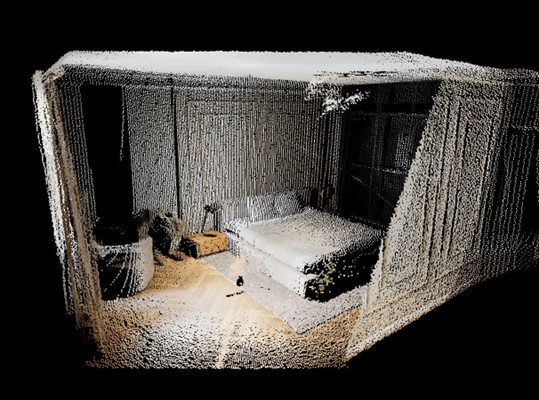
3D scanning technologies can capture the unique geometric properties of each bamboo culm, turning natural variability into precise data for computational design.
Here’s how it works in practice:
- Scanning & Data Capture: Each bamboo culm is 3D-scanned to capture outer diameter, wall thickness variations, internal node geometry, and fiber orientation [12]
- Material Testing: A sample of culms are tested to establish property relationships (e.g., how wall thickness correlates to strength for this species)
- Algorithmic Selection: An optimization algorithm uses this data to assign each culm to specific positions in the structure where its unique properties are best utilized
- Structural Performance: The strongest, stiffest culms go where maximum load is concentrated; more flexible culms work in regions of lower stress; slender culms are used decoratively where they’re not load-critical
- Economic Benefit: The structure uses less material overall while maintaining or exceeding performance requirements
This process is called topology optimization or material-aware design, and it’s moving from theoretical research into semi-automated fabrication reality. Research at ETH Zurich’s Digital Building Technologies lab and ITKE at University of Stuttgart has demonstrated this working at architectural scales [14, 15].
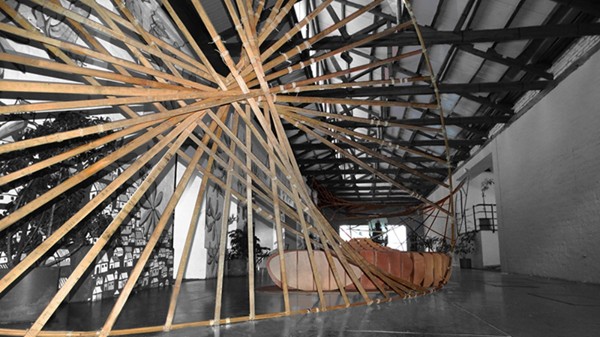
ITKE’s computational bamboo research demonstrates how algorithmic design can work with natural material variability to create structurally optimized forms.
What excites me most: This approach celebrates bamboo’s natural diversity rather than fighting it. It’s the opposite of industrial homogenization. Each bamboo structure becomes uniquely optimized to its specific available materials, its specific climate, its specific structural requirements. And paradoxically, this variation-embracing approach leads to better performance and lower environmental impact than trying to force all bamboo into standardized categories.
Indonesian opportunity: With 176 bamboo species [1], many with subtle property variations, Indonesia has an extraordinary opportunity to lead in material-aware computational design. Rather than standardizing all bamboo, we could develop species-specific design protocols that account for the unique properties of Dendrocalamus asper vs. Gigantochloa apus vs. endemic species found only in specific regions.
Multi-Objective Optimization: Beyond Structure into Culture
Here’s where I believe computational design becomes genuinely powerful for Indonesian architecture: optimizing for multiple competing objectives simultaneously.
A successful building is never just about structural performance. It must simultaneously achieve:
- Structural safety (won’t collapse)
- Economic viability (cost-effective)
- Environmental responsibility (low carbon, sustainable materials)
- Constructability (can actually be built with available skill and equipment)
- Cultural authenticity (resonates with place and people)
- Aesthetic integrity (visually appropriate and beautiful)
In Indonesia particularly, the last criterion – cultural resonance – is irreplaceable. A structurally perfect design that’s culturally alien is ultimately a failure. It won’t be maintained, won’t be valued, won’t inspire future practitioners.
Traditional design methods can technically “optimize” for one criterion (usually lowest cost or maximum span). But the moment you introduce multiple competing objectives, manual design becomes unwieldy. How do you simultaneously minimize cost, maximize cultural appropriateness, and optimize structural efficiency? How do you make informed trade-offs?
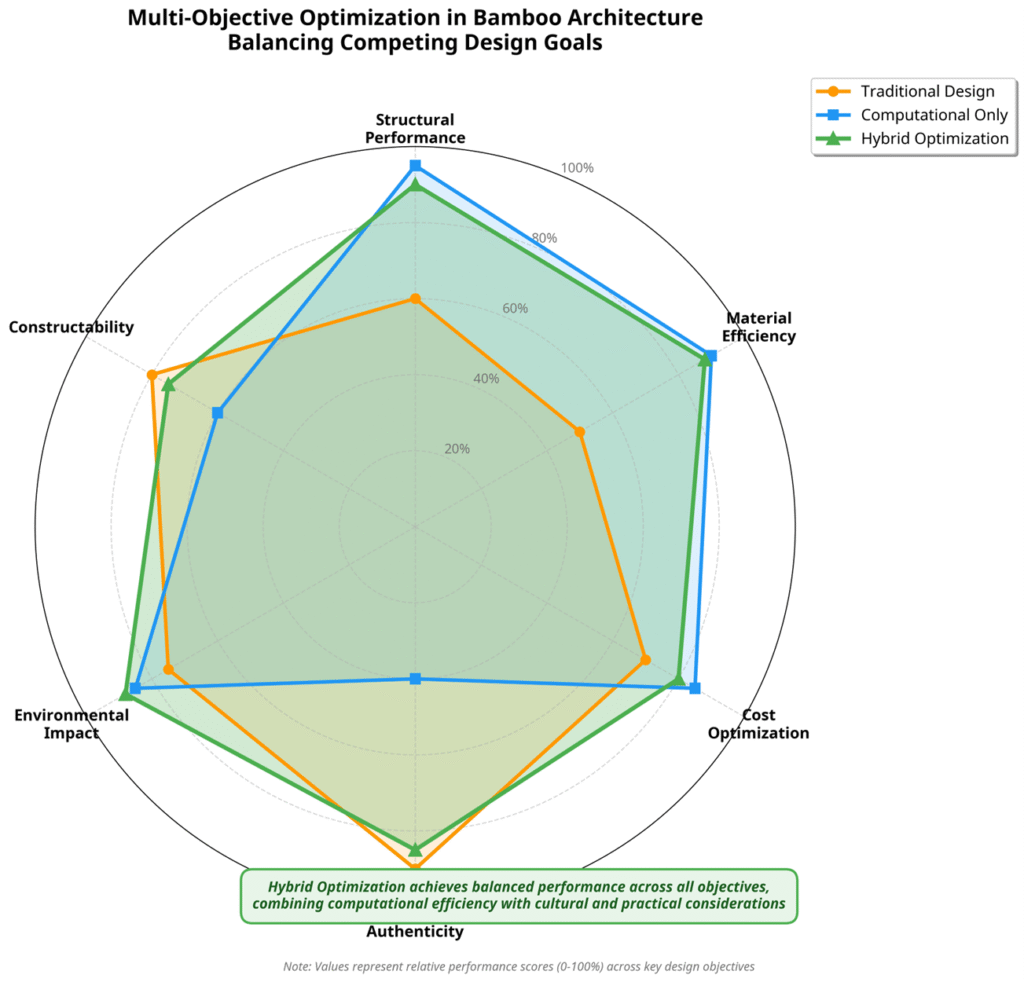
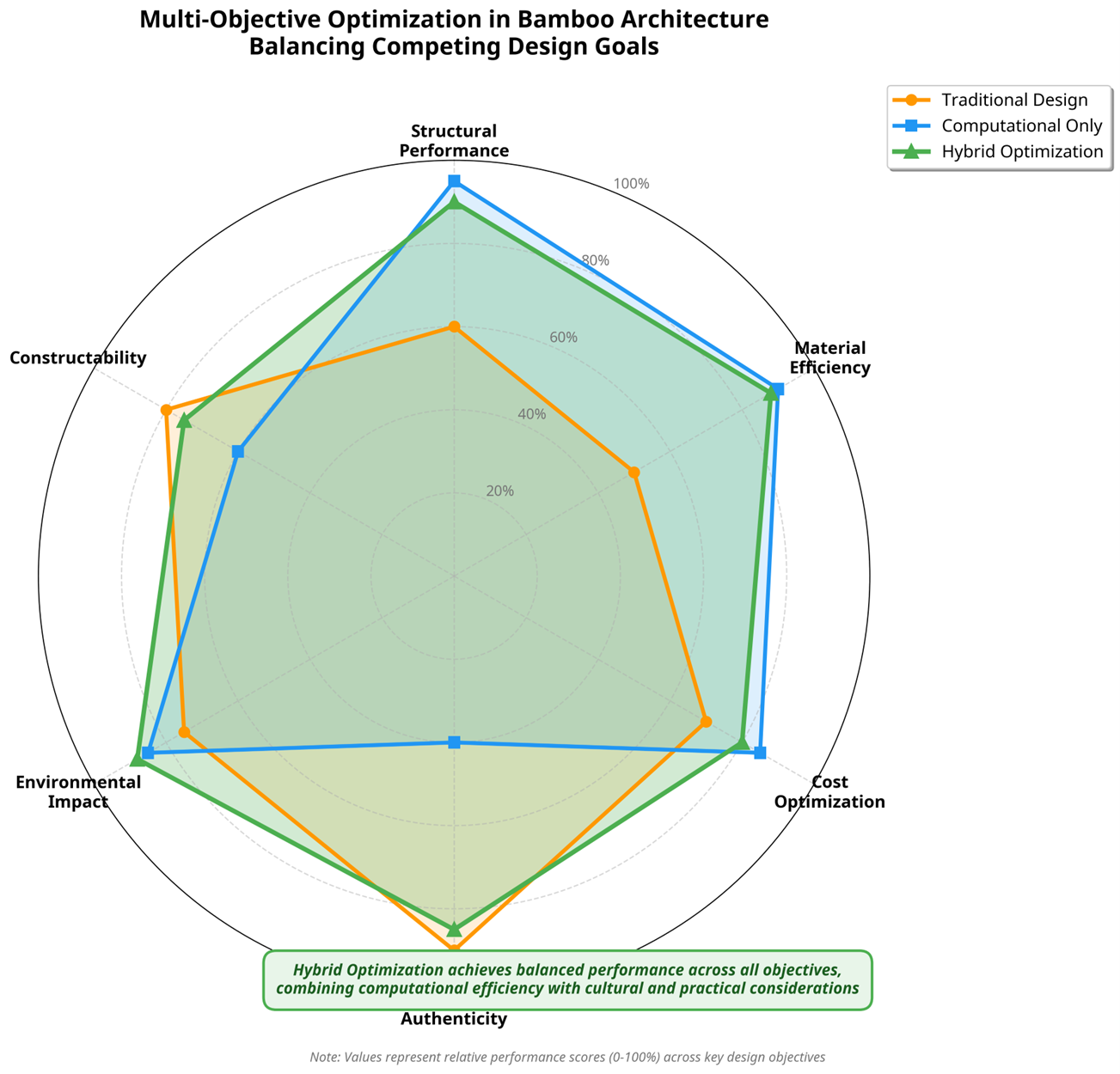
Multi-objective optimization balances competing goals such as structural performance, cost, sustainability, and cultural aesthetics. Hybrid computational approaches achieve the best overall balance.
Multi-objective optimization algorithms solve this elegantly:
These algorithms allow designers to define:
- Quantifiable performance objectives (minimize material use, minimize cost, minimize carbon, maximize structural efficiency)
- Design constraints (must accommodate traditional joinery, must use available bamboo species, must fit within site constraints)
- Relative importance weights (cost is important, but cultural appropriateness is more important)
The algorithm then generates a Pareto front—a set of optimal solutions representing the best possible trade-offs between competing objectives. Rather than a single “best” solution, the designer gets multiple solutions, each optimal for slightly different priority weightings.
In practice, for an Indonesian bamboo school project, this might mean:
The algorithm explores designs that:
- Minimize material use (environmental objective) [11]
- Use only local Indonesian bamboo species (cultural/economic objective)
- Employ traditional joinery techniques from Bali/Java/Sumatra (cultural objective) [10]
- Meet modern building code requirements (safety objective)
- Fit within a specific budget (economic objective)
- Can be fabricated by local craftspeople without importing specialized equipment (social/economic objective)
Rather than compromising across all these goals mediocrely, the algorithm finds designs that excel at different trade-off combinations. The architect then selects which combination best serves the specific project context.
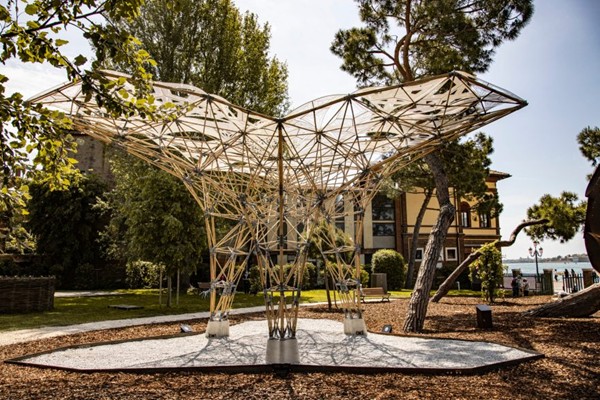
ETH Zurich’s Digital Bamboo project showcases integrated computational workflows that combine structural optimization with fabrication constraints.
Why this matters for Indonesia:
This approach allows computational design to be culturally intelligent. It’s not imposing a globally-standard design methodology; it’s enabling architects to encode Indonesian design values – cultural continuity, local material sourcing, traditional craft techniques – directly into the optimization framework. The result is high-performance architecture that’s computationally rigorous AND culturally rooted.
I see this as essential for sustainable practice in Indonesia. We don’t want our buildings to look like they could have been designed anywhere—we want computational efficiency in service of deepening our architectural identity, not erasing it.
Moving Forward: Computational Design as Indonesia’s Opportunity
As I prepare to pursue doctoral research in this intersection of computational optimization and bamboo architecture, I’m increasingly convinced this isn’t a luxury – it’s a necessity for Indonesia.
Consider our situation: We have the most biodiverse bamboo resource globally – 176 species [1], enormous cultivation potential, centuries of craft knowledge [10]. We have urgent needs: housing shortages, infrastructure gaps, climate commitments. We have emerging capability: young architects and researchers trained in computational design, growing access to digital fabrication tools, universities engaged in this research space.
What we’re building is the computational capacity to leverage all of this simultaneously – our material abundance, our cultural knowledge, our urgent development needs, our technical capability.
But I’ll be honest: the challenges are real. The barriers include:
- Limited computational design expertise in most Indonesian architecture schools
- Need for comprehensive material property databases specific to Indonesian bamboo species [5]
- Integration challenges between traditional craft knowledge and digital workflows
- Affordable access to design software and computational resources
- Convincing construction industry to adopt new methods
And yet, the potential payoff is immense:
- Indonesian intellectual leadership: Positioning Indonesia as a global research center in sustainable computational architecture, not just a bamboo supplier
- Scalable housing solutions: Moving from one-off artisanal bamboo buildings to productized, computationally-optimized bamboo housing that meets massive development needs
- Cultural continuity through innovation: Preserving and evolving traditional knowledge rather than watching it disappear as younger generations move toward reinforced concrete
- Climate contribution: Actually achieving the carbon benefits of bamboo [2] through efficient design, not just using it as a “green” substitute
This is the work I’m committing the next several years to. I’ll be documenting this journey on this blog – sharing insights, dead-ends, breakthroughs, and questions as I navigate PhD applications and eventually doctoral research. I’m not claiming certainty or declaring universal principles. I’m exploring. I’m curious. I’m working through these questions systematically.
If you’re an Indonesian architect, student, researcher, or practitioner interested in this space, I’d genuinely love to hear from you. What are your observations about bamboo design in practice? What barriers do you see? What excites you about computational approaches? Let’s work through this together – this is too important and too complex for any individual to solve alone.
References
[1] Ekawati, L. Karlinasari, R. Soekmadi, and I. Nurrochmat, “The status of bamboo research and development for sustainable use in Indonesia: A systematic literature review,” IOP Conference Series: Earth and Environmental Science, vol. 1109, no. 1, p. 012100, 2022.
[2] “Bamboo plants can act as efficient carbon sinks,” Nature India, Mar. 30, 2021. [Online]. Available: https://www.nature.com/articles/nindia.2021.46
[3] O. S. B. V., “Top 5 Bamboo material environmental benefits,” MOSO Bamboo Blog. [Online]. Available: https://blog.moso-bamboo.com/top-5-bamboo-material-environmental-benefits
[4] Akinbade, L. Horne, J. Nash, J. Heeley, and T. Morsink, “Modelling full-culm bamboo as a naturally varying functionally graded material,” Construction and Building Materials, vol. 310, p. 125211, 2021.
[5] Hartono et al., “Physical, chemical, and mechanical properties of six bamboo from Sumatera Island Indonesia and its potential applications for composite materials,” Polymers, vol. 14, no. 22, p. 4868, Nov. 2022.
[6] Sun et al., “Bionic design and multi-objective optimization for variable wall thickness tube inspired bamboo structures,” Thin-Walled Structures, vol. 113, pp. 114-123, 2017.
[7] Triwiyono et al., “Optimizing Bamboo as an Alternative Building Material to Respond Global Architectural Challenges,” IOP Conference Series: Earth and Environmental Science, vol. 1157, no. 1, p. 012011, 2023.
[8] Chen et al., “Water vapor sorption behavior of bamboo pertaining to its structure,” Scientific Reports, vol. 11, no. 1, p. 12543, 2021.
[9] Wang et al., “Correlations between moisture expansion and flexural properties of bamboo strips under different loading rates,” Holzforschung, vol. 78, no. 8, pp. 715-724, 2024.
[10] Huda et al., “Bamboo architecture as a learning project for community development of rural area in Indonesia,” IOP Conference Series: Earth and Environmental Science, vol. 490, no. 1, p. 012004, 2020.
[11] Tedjosaputro et al., “Multi-objective optimisation of bamboo tensegrity structure for immediate relief shelters,” City, Territory and Architecture, vol. 12, no. 1, p. 14, 2025.
[12] Saghafi Moghaddam et al., “Bamboo spatial structure, developing an integrated computational workflow and a tailored semi-automated fabrication apparatus,” International Journal of Architectural Computing, vol. 22, no. 4, pp. 567-585, 2024.
[13] Columbia GSAPP, “Structural Optimization of Composite Bamboo Beams,” May 28, 2024. [Online]. Available: https://www.arch.columbia.edu/student-work/12707-structural-optimization-of-composite-bamboo-beams
[14] Digital Building Technologies, ETH Zurich, “Digital Bamboo,” Oct. 8, 2020. [Online]. Available: https://dbt.arch.ethz.ch/project/digital-bamboo/
[15] ITKE, University of Stuttgart, “Computational Bamboo,” 2017. [Online]. Available: https://www.itke.uni-stuttgart.de/