Beyond Blueprints: How Computational Design is Reshaping Architecture

Imagine a building that designs itself, optimizing for sunlight, structural integrity, and even the unique properties of its materials, all before a single brick is laid. Sounds like science fiction? Not anymore. Welcome to the world of computational design in architecture, where algorithms and advanced software are transforming how we conceive, create, and construct our built environment. This isn’t just about drawing on a computer; it’s about empowering architects with a new language to solve complex problems, push creative boundaries, and build a more sustainable future. If you’ve ever wondered how buildings can be smarter, more efficient, and truly responsive to their surroundings, then you’re about to discover the digital revolution that’s making it all possible.

The Digital Architect’s Toolkit: What is Computational Design?

At its core, computational design (CD) in architecture is the application of computer algorithms and computational techniques to generate, analyze, and optimize architectural designs [1]. It moves beyond traditional CAD (Computer-Aided Design) by allowing designers to define rules and parameters, rather than just drawing lines. Think of it as teaching a computer to think like an architect, but with the ability to process vast amounts of data and explore countless design variations at lightning speed. This approach enables architects to tackle challenges that would be impossible or incredibly time-consuming with conventional methods.

Beyond the Drawing Board: Why Computational Design Matters
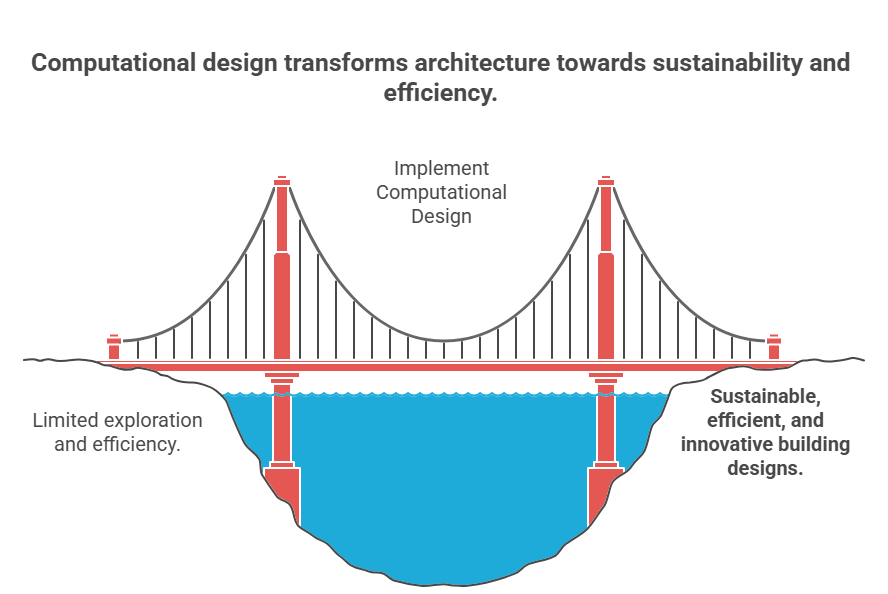
Computational design isn’t just a fancy new tool; it’s a paradigm shift that offers significant advantages for architects and the built environment. It empowers designers to explore and create in ways previously unimaginable. Instead of manually drawing every iteration, architects can now define a set of rules and allow the computer to generate thousands of design options, pushing the boundaries of complex geometries and innovative forms that might have been impossible to conceive through traditional methods [2]. This newfound freedom allows designers to focus on higher-level conceptual thinking, truly expanding the realm of architectural possibility.

One of the most powerful aspects of computational design is its ability to integrate performance analysis directly into the design process. Architects can simulate how a building will perform in terms of energy efficiency, daylighting, structural integrity, and even acoustics, all before construction even begins. This capability facilitates data-driven decisions that lead to more sustainable and efficient buildings [3]. For instance, a design can be meticulously optimized to maximize natural ventilation in a tropical climate, significantly reducing the need for artificial cooling and its associated energy consumption.

Furthermore, computational design brings unparalleled efficiency and automation to the architectural workflow. Repetitive and often tedious tasks, such as generating detailed drawings or calculating complex structural elements, can now be automated. This not only dramatically speeds up the design process but also minimizes human error, allowing architects to dedicate more of their valuable time to creative problem-solving and meaningful engagement with clients [4]. In an increasingly complex world, modern buildings often feature intricate geometries and demanding performance requirements. Computational design provides the essential tools to manage this inherent complexity, ensuring precise control and coordination of vast amounts of information, from the initial conceptual sketch to the detailed instructions for fabrication.

Finally, CD is opening exciting new doors for material innovation. It allows architects to gain a deeper understanding of how various materials behave, even those with inherent variability. By simulating material performance under different conditions, designers can push the boundaries of material use, leading to more efficient and innovative structures. This is particularly crucial for natural, sustainable materials, which often possess less predictable characteristics than their manufactured counterparts, enabling their integration into cutting-edge designs.

Computational Design in Action: Real-World Applications

Computational design is not merely theoretical; it is actively transforming various aspects of architectural practice today. One of its most common applications is Parametric Design, where design elements are defined by parameters and their intricate relationships. This means that changing one parameter automatically updates all related elements, allowing for rapid iteration and adaptation. It’s like having a dynamic model that intelligently responds to every design adjustment, offering unparalleled flexibility.

Taking this concept a significant step further, Generative Design employs algorithms to automatically generate a multitude of design alternatives based on a predefined set of goals and constraints. The architect sets the rules, and the computer then explores a vast solution space, presenting optimal or near-optimal designs [5]. This powerful capability is where the subtle threads of my own research begin to weave into the broader narrative, as generative design becomes a core component in exploring novel structural forms and innovative material applications, particularly for challenging yet sustainable resources.

Beyond generating forms, CD tools are invaluable for Performance Simulation and Optimization. This includes a range of critical analyses, such as energy analysis to predict heating, cooling, and lighting loads; daylight analysis to optimize natural light penetration and reduce glare; structural analysis to ensure the stability and efficiency of structural systems; and environmental impact assessment to evaluate the embodied energy and carbon footprint of materials and designs.

Finally, the seamless integration of computational design extends to Digital Fabrication. Computational models can be directly translated into precise instructions for digital fabrication machines, such as 3D printers and CNC routers. This direct link streamlines the construction process, significantly reduces material waste, and enables the creation of highly complex and customized building components with unprecedented accuracy.

References

[1] Novatr. (2022, December 29). Understanding Computational Design (The Ultimate Guide). Retrieved from https://www.novatr.com/blog/computational-design-guide

[2] Futurly. (2023, August 14). The Role of Computational Design in Architecture: 6 Ways it Will Change the Way You Work. Retrieved from https://www.futurly.com/blog/the-role-of-computational-design-in-architecture

[3] ArchSmarter. (2024, January 26). 5 Ways Computational Design Will Change the Way You Work. Retrieved from https://www.archsmarter.com/blog/computational-design

[4] Technostruct. (2024, March 12). The Role of Computational Design in Architecture. Retrieved from https://www.technostruct.com/blog/2024/03/12/the-role-of-computational-design-in-architecture/

[5] Novatr. (2024, August 14). Generative Design in Architecture: Everything You Need to Know. Retrieved from https://www.novatr.com/blog/generative-design-architecture

The Future is Now: Designing with Intelligence and Sustainability

Computational design is not just a trend; it’s the inevitable evolution of architectural practice. It empowers architects to move beyond traditional limitations, creating buildings that are not only visually stunning but also highly efficient, responsive, and sustainable. By embracing algorithms and data, we can unlock unprecedented possibilities in design, from optimizing complex geometries to understanding and leveraging the unique properties of natural materials.
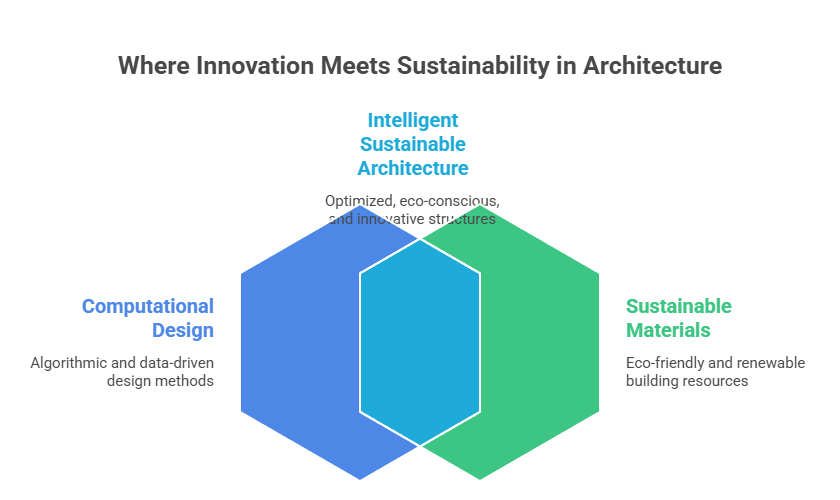
This journey into computational design is particularly exciting when considering its potential for sustainable materials. Imagine a future where we can precisely model and optimize structures made from rapidly renewable resources, like bamboo, accounting for their natural variations to create resilient and beautiful buildings. This approach promises to revolutionize how we build, fostering a deeper connection between technology, nature, and human well-being. As we continue to explore these frontiers, computational design will undoubtedly play a pivotal role in shaping a more intelligent and sustainable built environment for generations to come.

From Passive to Proactive: How Technology is Helping Buildings Give Back to Nature

In architecture, we often talk about making buildings more sustainable. You might have heard terms like ‘passive design’ and ‘regenerative design.’ My last blog post discussed these ideas. Passive design aims to reduce energy and resource use, like a building holding its breath. Regenerative design, however, is about buildings actively giving back to nature, like breathing out clean air and water. How can a building do this? Technology holds the key.

The Limits of Passive Design

Passive design is a very important first step in sustainable architecture. It focuses on using natural elements to make buildings comfortable and efficient. Think about big windows that let in sunlight for warmth in winter, or clever designs that allow cool breezes to flow through a building in summer. These ideas help reduce the need for air conditioning and heating, saving energy and money. For example, the Bullitt Center in Seattle, often called the ‘greenest commercial building in the world,’ uses features like automated windows for natural ventilation and a smart building shell to be energy net-positive [1].

While passive design reduces a building’s negative impact, it doesn’t actively improve the environment. It minimizes harm, but doesn’t create positive change. It’s a crucial foundation, but we need buildings that don’t just take less, but actually give more.

The Rise of Proactive Buildings

This is where proactive, or regenerative, buildings come in. Imagine a building not just as a shelter, but as a living part of its environment. These buildings are designed to act like natural ecosystems. They aim to improve the environment around them, not just reduce their own impact. This means they can generate more energy than they use, clean the air, manage rainwater, and even help local wildlife thrive. It’s about creating a positive impact, making the world a better place just by existing.

One great example is the Omega Center for Sustainable Living in New York. It has a special wastewater treatment system that works like natural wetlands. It cleans water and creates a beautiful space for learning [2]. Another is the Khoo Teck Puat Hospital in Singapore. It has lots of greenery that cools the building and provides a healing space for patients, while also helping local nature [3]. These buildings show how architecture can actively contribute to the health of both people and the planet.

Technology as the Game-Changer

So, how do we make buildings proactive? The answer lies in smart technology. These tools help architects and designers create buildings that work with nature, not against it.

Generative Design and Artificial Intelligence (AI)

Think of generative design as a super-smart assistant for architects. Instead of drawing every line themselves, designers give the computer a set of rules and goals. For example, they might tell it: “Design a building that uses the least amount of material, gets lots of natural light, and stays cool in a tropical climate.” The computer then uses AI to explore thousands, even millions, of design options that a human could never think of. It learns what works best and suggests the most efficient and sustainable designs [4].

This is especially exciting for materials like bamboo. Bamboo is amazing – it grows fast, is strong, and can store carbon. But each bamboo stalk is unique, and its properties can change with moisture and temperature. This allows us to design buildings that truly use bamboo to its full potential, adapting to its natural variations and the tropical climate. AI helps us unlock bamboo’s ‘secret language’ to build stronger, more sustainable structures.

Smart Materials

Imagine a building that can heal itself, change its color to reflect sunlight, or even clean the air around it. This isn’t science fiction; it’s the world of smart materials. These materials can react to their environment and change their properties. For example, some windows can automatically tint themselves to block harsh sunlight, reducing the need for air conditioning. There are even materials that can absorb pollutants from the air or self-repair small cracks, making buildings last longer and require less maintenance [5]. These innovations help buildings become more adaptive and efficient, actively contributing to a healthier environment.

IoT and Sensors

Just like our bodies have senses, smart buildings have sensors. These tiny devices, connected through the Internet of Things (IoT), collect real-time information about everything from temperature and humidity to air quality and how many people are in a room. This data is like a building’s nervous system. It allows the building to understand its own performance and make adjustments automatically. For instance, if a room is empty, the lights can dim, and the air conditioning can reduce its output, saving energy. This constant monitoring and adjustment help buildings operate at peak efficiency, minimizing waste and maximizing comfort [6].

Examples of Proactive Buildings in Action

These technologies are not just ideas; they are being used in real buildings around the world, making a tangible difference:

  1. The California Academy of Sciences (San Francisco, USA): This building combines passive and proactive design. Its living roof provides insulation (passive) while supporting native plants and managing stormwater (proactive). It also generates its own renewable energy and educates on environmental stewardship [7].
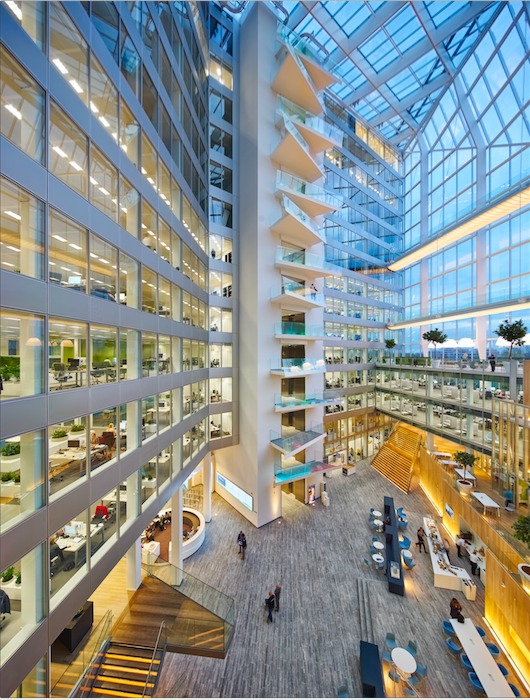
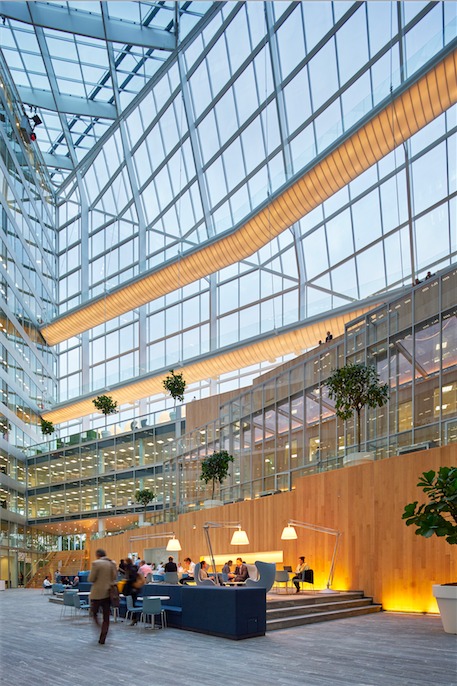
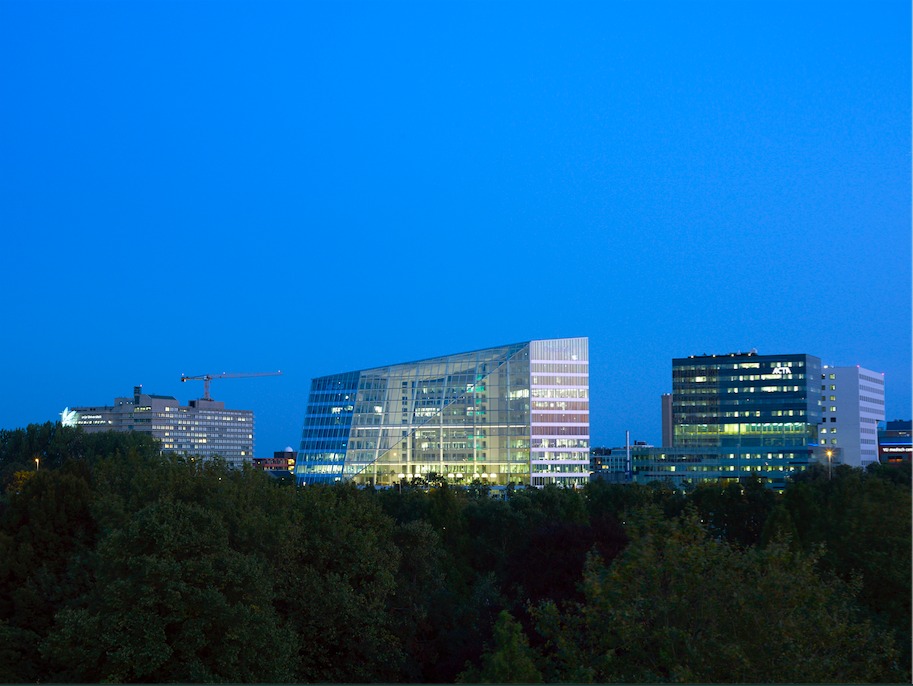
  2. The Edge (Amsterdam, Netherlands): Often called the world’s most sustainable office building, The Edge uses a vast network of IoT sensors to monitor everything from temperature and light to CO2 levels and occupancy. This data allows the building to adjust its systems in real-time, optimizing energy use and creating a highly efficient and comfortable environment. It even has a smartphone app that learns user preferences, further personalizing and optimizing the workspace [8]. This is a prime example of how IoT makes a building truly proactive in its energy management.
  3. One Central Park (Sydney, Australia): This residential tower is famous for its vertical gardens, which are not just for show. These gardens act as a living skin, providing natural shading, improving air quality, and reducing the urban heat island effect. The building also incorporates a tri-generation plant for energy and a wastewater treatment system, demonstrating a holistic, proactive approach to urban sustainability [9]. While not explicitly stated as using generative design, the complexity and optimization of such a system often benefit from advanced computational tools.

These examples show that buildings can be more than just shelters; they can be active participants in creating a healthier planet. They demonstrate how technology, from AI-powered design to smart materials and interconnected sensors, is enabling a new era of architecture that goes beyond simply reducing harm to actively giving back to nature.

The Future is a Partnership with Nature, Powered by Technology

The journey from passive to proactive buildings is an exciting one. It represents a fundamental shift in how we think about our built environment. No longer are buildings just static structures; they are becoming dynamic, intelligent entities that can adapt, learn, and contribute positively to the world around them.

This shift is driven by the incredible advancements in technology. Generative design, AI, smart materials, and IoT sensors are not just tools; they are enablers that allow us to design and construct buildings that are deeply integrated with natural systems. They help us understand complex environmental data, optimize material use, and create structures that are resilient and responsive to changing conditions.

Ultimately, the goal is to create a future where every building is a partner with nature. A future where our cities are not just concrete jungles, but thriving ecosystems where human life and natural life coexist and flourish. This vision is becoming a reality, one smart, proactive building at a time. It’s a hopeful vision for architecture, where innovation and sustainability go hand in hand to build a better world for everyone.

References

[1] Aulia Muflih Nasution. (2025, June 26). Passive vs Regenerative Design in Architecture: Practical Insights for Sustainable Building. Retrieved from https://auliamuflih.blog.uma.ac.id/2025/06/26/passive-vs-regenerative-design-in-architecture-practical-insights-for-sustainable-building/

[2] Omega Institute. (n.d.). Omega Center for Sustainable Living. Retrieved from https://www.eomega.org/omega-center-for-sustainable-living

[3] Khoo Teck Puat Hospital. (n.d.). Our Green Hospital. Retrieved from https://www.ktph.com.sg/about-us/our-green-hospital/

[4] Maket.ai. (n.d.). The Role of AI in Sustainable Architecture: How Generative Design is Helping to Reduce Carbon Footprints. Retrieved from https://www.maket.ai/post/the-role-of-ai-in-sustainable-architecture-how-generative-design-is-helping-to-reduce-carbon-footprints

[5] ArchDaily. (2022, May 31). What Are the Smart Materials in Architecture?. Retrieved from https://www.archdaily.com/982583/what-are-the-smart-materials-in-architecture

[6] Neuroject. (2024, September 5). IoT Sensors in Smart Buildings: Enhancing Efficiency. Retrieved from https://neuroject.com/iot-sensors-in-smart-buildings/

[7] California Academy of Sciences. (n.d.). Architecture. Retrieved from https://www.calacademy.org/academy/architecture

[8] PLP Architecture. (n.d.). The Edge. Retrieved from https://plparchitecture.com/work/the-edge/

[9] One Central Park. (n.d.). About. Retrieved from https://www.onecentralpark.com.au/about/

Bamboo Parametric Curve Structure

I got this parametric script from Architutors, one of the YouTube accounts that shares parametric modeling. This is the link to the original parametric modeling: https://www.youtube.com/watch?v=HkE99xfG8CQ.

This is the original parametric script that I tried to build using the script I got from the YouTube link.

This is the result of the parametric script.

On the original script the curve cannot be change using parameter, so i put some changed in the script by using 3 point circle.

Furthermore, i put some change in the circle, so we still can change the parameter the diameter and the height using offset curve and move command.

In essence, this is the total of the parametric script that i have been changed and the result of the parametric modeling.

However, i believe that there is still some changed can be make to the basic curve, from the circle to the polyline arc using PolyArc command for the parameter.

The basic curve changed to be flexible curve that can be changed through the parameter. The result from the script is:

The final parametric script consist of all changed that I have been made is: