The Computational Divide: Indonesia’s BIM Adoption Gap and What It Means for Our Future

The global architecture, engineering, and construction (AEC) industry stands at a technological inflection point. Building Information Modeling – the digital representation of physical and functional characteristics of facilities – has transitioned from experimental methodology to industry standard in developed markets [1]. Singapore mandates BIM for all public projects exceeding 5,000 m² since 2015 [1], and the United Kingdom requires Level 2 BIM on government-funded projects since 2016 [2]. These mandates correlate with measurable productivity gains: studies document 15-20% reductions in project delivery time and 10-15% cost savings through clash detection and coordination improvements [3].

For a nation like Indonesia, standing at the crossroads of immense development and profound infrastructure challenges, the question is no longer if this paradigm will arrive, but whether our industry will shape its adoption or simply consume foreign expertise in the process [4]. To ignore this transformation is to risk being relegated to a consumer of digital tools rather than a leader in construction innovation. This is not merely about learning new software; it is about fundamentally rethinking the process of building design and delivery to address the unique complexities of our tropical context and the scale of development our nation requires [5].

Yet here lies the uncomfortable truth that nobody in power wants to discuss: Indonesia has the regulatory framework in place [6], but we lack the infrastructure to make it actually work [7].

Before we go further, let me be direct about something. You have probably heard that Indonesia has no BIM mandate [8], that our construction industry operates in a regulatory vacuum compared to Singapore or Malaysia [9]. That narrative is flatly incorrect. It persists because the people who should be communicating these policies are not, and because implementation failure looks so similar to policy absence that the distinction has become invisible.

Indonesia established clear BIM mandates years ago. Peraturan Menteri PUPR No. 22/PRT/M/2018, issued on September 14, 2018, explicitly requires Building Information Modeling for state building projects exceeding 2,000 m² floor area and more than two floors [6]. The regulation identifies BIM as the methodology for supporting planning and supervision effectiveness, emphasizing cross-disciplinary collaboration and data integration from project inception [10]. This applies to all non-simple state building construction, which in a country the size of Indonesia represents thousands of projects annually [5].

But that is only part of the picture. In August 2021, the Directorate General of Highways issued Surat Edaran Dirjen Bina Marga No. 11/SE/Db/2021 mandating BIM for roads, highways, toll roads, bridges, overpasses, viaducts, tunnels, and underpasses, including all complementary structures [11]. This directive provides detailed implementation guidelines covering organizational structure, budget allocation, minimum information requirements per project phase, and monitoring protocols [11]. The government has also implemented Peraturan Pemerintah No. 16/2021, which modernized building approval processes and established technical standard compliance frameworks that implicitly support BIM through digital documentation requirements [12].

So Indonesia has three major regulatory instruments requiring BIM implementation. The question, then, is not why we lack regulation. The question is why only 5% of professionals are formally trained in BIM [8], why 70% of people know what BIM is yet only 38% actually use it[8], and why the infrastructure to support these mandates remains fragmented rather than coordinated [7].

That is the real problem. And it is far more solvable than regulatory absence would be, because it means we have already made the policy decision. We just have not followed through on building the ecosystem to make policy meaningful.

Let me present a statistic that should trouble everyone in the construction industry: 70% of Indonesian construction professionals report awareness of BIM, yet only 38% actually implement it in their projects [8]. That is a 32-percentage-point gap between knowing something matters and actually doing it. This is not a knowledge problem. This is a structural problem [7].

In Malaysia, by contrast, the trajectory tells a different story [9]. In 2016, Malaysia had 17% adoption [13]. By 2019, after coordinated government intervention, that climbed to 49%—a 188% increase in just three years [14]. By 2021, Malaysia reached 55% adoption [15]. Malaysia did not accomplish this by issuing mandates and waiting. Malaysia did it through simultaneous intervention in three domains: training infrastructure, software accessibility, and regulatory enforcement [9]. They built the ladder before telling people to climb.

Indonesia issued its first mandate in 2018, nearly as early as Malaysia’s full policy commitment. Yet in 2021, when Malaysia reached 55% adoption, Indonesia remained at 38% [8]. We had the regulation earlier. We have fewer practitioners trained [7]. The gap reveals not a failure of policy but a failure of implementation – the decision to mandate was followed by insufficient investment in the conditions that make mandates meaningful [7].

When you mandate BIM but only 5% of your workforce has formal training [8], you are not accelerating adoption. You are creating frustration. You are forcing firms to hire foreign consultants or purchase expensive external expertise. You are, in effect, outsourcing your capability development to neighboring countries and international firms. This is exactly what we are doing right now.

The Cost Barrier: The Wall We Forgot to Acknowledge

Here is what the government regulation does not address, and what nobody in policy circles seems willing to confront: BIM software is economically prohibitive for most Indonesian practitioners [7], especially entry-level professionals and small-to-medium enterprises that comprise 95% of our construction sector [16].

Autodesk Revit, the industry standard architectural BIM platform, costs approximately $2,500 annually [17]. AutoCAD adds another $500. The full AEC Collection runs to $3,500 per year. For an entry-level architect or engineer earning approximately Rp 42-50 million annually (roughly $2,850-3,400) [18], this represents 70-90% of their annual salary. For the complete collection, we are talking about costs that exceed 100% of an entry salary [7]. Full ArchiCAD sits at roughly $2,200 – still 65-80% of entry salary. Even the “affordable” options like SketchUp Pro with extensions hit $1,200, or 35-42% of salary [17].

Now compare this to what other countries have done. Malaysia’s government implemented subsidies reducing effective software costs to 37-46% of entry salary [19]. Singapore’s BIM Fund covered up to 80% of software costs during the capacity-building phase in the early 2010s [1]. Indonesia has no systematic subsidy program. None. Zero. We have mandates with cost barriers that make compliance economically unreasonable for the professionals required to implement them.

This is not a hypothetical problem. This explains the awareness-implementation gap. Professionals understand BIM matters. They know it is coming. They simply cannot afford to invest in capabilities that their employers have not decided to fund. And employers – especially the SMEs that form the backbone of Indonesian construction – cannot justify $2,500-3,500 per seat when they operate on thin margins and see no enforcement incentive [16].

The cost problem compounds when you consider training. Comprehensive BIM competency requires approximately 180-260 hours of structured learning: 80-120 hours for software training, 40-60 hours for BIM management fundamentals, and 60-80 hours for discipline-specific workflows [20]. In Indonesia, this totals roughly Rp 21-37 million ($1,415-2,495) in direct training costs [7], representing 50-88% of an annual entry-level salary [18]. Malaysia’s subsidized training through CIDB reduces practitioner out-of-pocket costs to 20-30% of market rates [19]. Indonesia offers no equivalent.

When you combine the software barrier ($2,500-3,500) with the training barrier ($1,415-2,495), you are asking individuals to invest $4,000-6,000 from personal resources in a capability that their employers have not yet fully committed to purchasing. This is not a policy failure. This is an economic wall masquerading as a regulatory gap.

Why the Infrastructure Matters More Than the Mandate

Singapore’s BIM success is often attributed to their mandate, but that misses the real story [1]. Singapore’s 2015 mandate worked because it arrived after a decade of preparation. In 2010, the Building and Construction Authority established a BIM steering committee. In 2012, Singapore launched the BIM Fund  – a direct subsidy program supporting training and software adoption [1]. Only after this capacity-building phase was the mandate introduced in 2015, initially for projects exceeding $20,000 m², then gradually reduced to $5,000 m² [1]. This phased approach, combined with financial support and technical standards development, produced the 80%+ adoption rates Singapore achieved by 2020 [1].

Malaysia followed a parallel path [9]. National BIM Guidelines (NBIMS-MY) were established in 2015 [21]. The Construction Industry Transformation Programme (CITP) ran from 2016-2020 [14], explicitly focusing on training infrastructure development [19]. Only after this preparation phase did Malaysia announce its mandate for 2025 enforcement [15]. This sequencing was not accidental. It was deliberate policy design: build capacity first, enforce compliance second. This avoided the shock of mandatory adoption without practitioner readiness [9].

Indonesia reversed this sequence [22]. We issued the mandate in 2018 without first building the supporting infrastructure. The regulation exists, but the training ecosystem is fragmented, software costs remain prohibitive without subsidies, and enforcement mechanisms lack clarity [6][7]. We told people to climb a ladder before we finished constructing it.

The evidence of this implementation gap is stark in the statistics. Only 23% of Indonesian universities include BIM in core curriculum [23]. Sixty-two percent offer it as optional elective only. Fifteen percent provide no BIM exposure whatsoever [23]. Compare this to Malaysia’s National Higher Education Blueprint 2015-2025, which mandates BIM competency across all construction-related degree programs [21]. Indonesia has no equivalent requirement. We have no unified BIM certification framework comparable to Malaysia’s MyBIM certification or Singapore’s BCA Academy credentials [1][19]. We have fragmented private training providers with inconsistent quality standards and limited incentive for practitioners to invest in credentials when employers do not recognize their value [7].

This fragmentation produces the 5% formally trained problem [8]. In a survey of 40 Indonesian construction professionals, only 2 reported receiving formal BIM training [8]. Five percent. In a country with a construction sector exceeding $30 billion annually [16], we have trained fewer than 5% of practitioners in the methodology we mandated [8]. This is not a policy failure. This is the result of mandating without simultaneously investing in the conditions that make mandates effective.


📊 Lihat Infografis Interaktif Lengkap

The Regional Context: What We Are Competing Against

Malaysia’s adoption trajectory is particularly important because it represents our closest competitor [24]. Malaysia is not ahead of Indonesia by accident or unique advantage. Malaysia is ahead because they made deliberate policy choices about sequencing: capacity building before enforcement [9], support systems alongside mandates [19], clear standards developed before compliance requirements [21].

By 2021, when Indonesia maintained 38% adoption, Malaysia had reached 55% [15]. The gap has continued to widen. Malaysia’s 2025 enforcement deadline will likely accelerate adoption further [15], while Indonesia’s ambiguous implementation timeline creates uncertainty about when compliance will be genuinely required. Firms planning long-term capability investment face a choice: invest now with unclear enforcement pressure, or wait and see. Waiting becomes the rational decision, which means adoption remains optional and voluntary rather than strategic and competitive [22].

Thailand and the Philippines offer cautionary tales in the opposite direction [25]. Thailand maintains approximately 30% adoption driven primarily by voluntary adoption for multinational projects [25]. The Philippines sits at roughly 20%, with adoption concentrated in firms serving foreign clients [25]. Neither country established government mandates. Neither built comprehensive support systems. The result is adoption that remains shallow, concentrated in elite firms, and disconnected from mainstream practice [25].

For Indonesia, the choice is becoming clearer. We can either build the supporting infrastructure that makes our mandates meaningful, or we can watch our regional neighbors advance while we maintain the appearance of policy without the substance of practice. The mandate exists. What is missing is the ecosystem to make it real.

The University Problem: Where It Should Start

One of the most fixable problems is also one of the most neglected: higher education [26]. Universities are where professionals acquire foundational competencies and where industry expectations become normative. If you graduate from a degree program without BIM exposure, you enter practice with a gap that expensive remedial training must later fill [20].

Only one in four Indonesian architecture and civil engineering programs include BIM in required coursework [23]. The rest treat it as optional or ignore it entirely. This is not because the faculty lack knowledge. It is because accreditation standards do not require it, because integrating BIM into curriculum requires faculty development that universities have not budgeted for, and because there is no enforced industry expectation creating demand for BIM-competent graduates [26].

Malaysia’s approach is different [21]. Their accreditation framework explicitly requires BIM competency. The result is that all graduates enter practice with baseline literacy. They may not be experts, but they are not starting from zero. This creates a virtuous cycle: employers can assume entry-level competency, so they invest in advanced training rather than foundational training [19]. Practitioners can market themselves on the basis of standard competency rather than specialized expertise [9].

Indonesia could implement this same mechanism immediately [26]. The architecture accreditation board (BAN-PT) could mandate that BIM represents a minimum 6 credit hours of study in all architecture degree programs by 2028. Civil engineering and construction management programs could receive the same requirement. This single policy change would transform the supply side of the training problem [23]. Every architect and engineer graduating in the 2030s would arrive in practice with BIM literacy, making adoption far less economically burdensome [26].

This costs the government nothing. It requires no budget allocation. It simply requires a decision that BIM competency is non-negotiable in construction-related degree programs. Yet it remains undone, which tells you something important about the gap between policy rhetoric and policy implementation in Indonesian infrastructure transformation [22].

What Actually Needs to Happen

Let us be clear about what solving this problem requires. It is not more regulation. We have enough regulation [6]. It is not more speeches about digital transformation. We have heard plenty of speeches. What is required is coordinated infrastructure investment in four specific domains [27].

First, we need an enforcement mechanism for existing mandates [28]. The Permen PUPR 22/2018 and SE Dirjen Bina Marga 11/2021 exist, but they lack teeth [6][11]. Unlike Singapore’s Building and Construction Authority, which audits BIM model submissions and rejects non-compliant applications [1], Indonesia lacks systematic verification [12]. Make compliance audits part of the building approval process. Require BIM model submission for projects covered by the mandate. Establish consequences for non-compliance – not punitive measures that cripple projects, but enforcement that makes the mandate real rather than rhetorical [28].

Second, we need to acknowledge and address the cost barrier through direct subsidy [27]. Launch an Indonesian BIM Fund modeled on Singapore’s and Malaysia’s success [1][19]: allocate Rp 50-75 billion annually ($3.4-5 million) to subsidize 70% of training and software costs for practitioners and SMEs [27]. Target 5,000-7,000 professionals annually for training support. This is not expensive by infrastructure standards. It is less than the cost overrun on a single major highway project. Yet it could transform adoption within three years [27].

Third, integrate BIM competency requirements into accreditation standards immediately [26]. Require all architecture, civil engineering, and construction management programs to include a minimum BIM module in core curriculum by 2028 [23]. Provide faculty development support to make implementation feasible [26]. This single policy transforms the supply side of the training problem at minimal cost [26].

Fourth, establish a unified BIM certification and standards framework [29]. Create Indonesia BIM Standards (IBIMS) adapted from existing frameworks but specific to our regulatory and technical context [6]. Develop a nationally recognized certification pathway – Level 1 fundamentals, Level 2 discipline-specific workflows, Level 3 BIM management [29]. Create institutional recognition for certification so employers understand the credential’s meaning [29]. This requires coordination among professional organization (IAI) and government agencies, but it can be accomplished within 18 months [29].

These are not dramatic changes. They are not revolutionary. They simply represent the implementation infrastructure that every country that successfully accelerated BIM adoption built before or simultaneously with their mandates [1][9][21]. Singapore did this in the 2010s [1]. Malaysia did this in 2015-2020 [9]. Indonesia is doing this in fragments without coordination, which means we are doing it inadequately [22].

The larger strategic question is whether Indonesia will become a producer or consumer of construction innovation [5]. If we build this infrastructure, we create a domestic industry capability that generates intellectual property, professional prestige, and competitive advantage [5]. We position Indonesian firms to lead regional projects rather than follow foreign expertise. We create economic value that stays in our country rather than flowing to international consultants [30].

If we do not, we have mandates without capability, policy without practice, and the appearance of transformation without its substance. We become the market for foreign BIM services rather than the provider [22].

The real barrier to implementation is not technical complexity or cost – both are eminently manageable. The barrier is political will [22]. It is easier to issue a regulation than to build the infrastructure supporting it. It is easier to talk about digital transformation than to fund it. It is easier to blame industry resistance than to acknowledge that industry is responding rationally to mandates without supporting systems [28].

This requires sustained bureaucratic commitment, cross-agency coordination, and budget allocation competing with other priorities. It requires technocrats at Ministry of Public Works, Ministry of Education, professional organizations, and industry associations to align on a common approach and maintain focus for 3-5 years. This is not impossible [1][9]. Singapore, Malaysia, and dozens of other countries have demonstrated it is possible. But it requires intentional, sustained, politically supported effort [27].

Indonesia’s construction sector is one of the largest in Southeast Asia [16]. The infrastructure development requirements are immense – urban transportation, affordable housing, climate adaptation, disaster resilience [5]. BIM is not a luxury amenity [5]. It is a competitive necessity for managing the complexity and scale of development a developing nation with Indonesia’s geography and population requires [5]. Every year we defer building this capability, we increase the gap between what we are capable of and what we need to accomplish [24].

The mandate is there. It has been there since 2018 [6]. What is missing is the decision to make it real [22].

References

[1] Building & Construction Authority Singapore, “Singapore BIM Roadmap Report 2015-2020,” BCA Singapore, 2020. [Online]. Available: https://www.bca.gov.sg/bim

[2] UK Government, “Government Construction Strategy 2016-2020,” Infrastructure and Projects Authority, 2016. [Online]. Available: https://www.gov.uk/government/publications/government-construction-strategy-2016-2020

[3] McKinsey Global Institute, “Reinventing Construction: A Route to Higher Productivity,” 2017. [Online]. Available: https://www.mckinsey.com/business-functions/operations/our-insights/reinventing-construction-through-a-productivity-revolution

[4] World Economic Forum, “The Global Competitiveness Report 2020: How Countries Are Performing on the Road to Recovery,” 2020. [Online]. Available: https://www.weforum.org/reports/the-global-competitiveness-report-2020

[5] Sustainable Development Goals Report 2023, United Nations, 2023. [Online]. Available: https://unstats.un.org/sdgs/report/2023/

[6] Kementerian Pekerjaan Umum dan Perumahan Rakyat, “Peraturan Menteri PUPR Nomor 22/PRT/M/2018 tentang Pembangunan Bangunan Gedung Negara,” 2018. [Online]. Available: https://peraturan.bpk.go.id/Details/159730/permen-pupr-no-22prtm2018-tahun-2018

[7] SMERU Research Institute, “Digital Skills Diagnostic: Indonesia’s Construction Sector,” 2023. [Online]. Available: https://smeru.or.id/en/publication/digital-skills-diagnostic-construction

[8] A. Firmansyah, S. Komalasari, and R. Wijaya, “Factors Affecting Building Information Modeling (BIM) Utilization Based on Stakeholder Perceptions in Indonesia,” International Journal of Advanced Science and Engineering Information Technology, vol. 14, no. 2, pp. 543-550, 2024. [Online]. Available: https://ijaseit.insightsociety.org/index.php/ijaseit/article/download/18895/4233

[9] Construction Industry Development Board Malaysia, “BIM Adoption Study Report 2021,” CIDB Malaysia, 2021. [Online]. Available: https://www.cidb.gov.my/

[10] PT Buana Enjiniring Konsultan, “Regulasi Penggunaan BIM di Indonesia: Apa yang Harus Diketahui Pelaku Proyek,” 2024. [Online]. Available: https://ptbek.co.id/id/regulasi-bim-di-indonesia/

[11] Directorate General of Highways Ministry of Public Works and Housing, “Surat Edaran Direktur Jenderal Bina Marga Nomor 11/SE/Db/2021 tentang Penerapan Building Information Modelling pada Perencanaan Teknis, Konstruksi dan Pemeliharaan Jalan dan Jembatan,” 2021. [Online]. Available: https://binamarga.pu.go.id/index.php/peraturan/detail/surat-edaran-direktur-jenderal-bina-marga-nomor-11sedb2021

[12] Pemerintah Republik Indonesia, “Peraturan Pemerintah Nomor 16 Tahun 2021 tentang Peraturan Pelaksanaan Undang-Undang Nomor 28 Tahun 2002 tentang Bangunan Gedung,” 2021. [Online]. Available: https://peraturan.bpk.go.id/Details/161550/pp-no-16-tahun-2021

[13] Construction Industry Development Board Malaysia, “Malaysia BIM Report 2016,” CIDB Malaysia, 2016.

[14] Construction Industry Development Board Malaysia, “National BIM Survey 2019,” CIDB Malaysia, 2019. [Online]. Available: https://www.cidb.gov.my/bim-survey-2019

[15] Construction Industry Development Board Malaysia, “BIM Adoption Study Report 2021,” CIDB Malaysia, 2021.

[16] Badan Pusat Statistik, “Statistik Konstruksi Indonesia 2021,” BPS Indonesia, 2021. [Online]. Available: https://www.bps.go.id/publication/2021/konstruksi-indonesia-2021.html

[17] Autodesk, “AEC Collection Pricing – Southeast Asia,” 2024. [Online]. Available: https://www.autodesk.com/products/collections/architecture-engineering-construction/overview

[18] Badan Pusat Statistik, “Upah Minimum Regional Indonesia 2023,” BPS Indonesia, 2023. [Online]. Available: https://www.bps.go.id/

[19] Construction Industry Development Board Malaysia, “CIDB Training Subsidy Programme Annual Report,” CIDB Malaysia, 2020.

[20] C. Eastman, P. Teicholz, R. Sacks, and K. Liston, BIM Handbook: A Guide to Building Information Modeling for Owners, Managers, Designers, Engineers and Contractors, 3rd ed. Hoboken, NJ: John Wiley & Sons, 2018.

[21] Ministry of Higher Education Malaysia, “Malaysia Education Blueprint 2015-2025 (Higher Education),” 2015. [Online]. Available: https://www.mohe.gov.my/en/download/public/penerbitan/pppm-2015-2025-pt

[22] H. Darmawan and B. Krisnamurti, “Implementasi BIM dalam Industri Konstruksi Indonesia: Tantangan dan Solusi,” Jurnal Rekayasa Sipil, Universitas Brawijaya, vol. 15, no. 2, pp. 87-102, 2021. [Online]. Available: https://rekayasasipil.ub.ac.id/index.php/rs/article/view/737

[23] S. Nusiyati, R. Indrawan, and D. Putranto, “Initial Study on Building Information Modeling Adoption Urgency for Architecture Engineering and Construction Industry in Indonesia,” in Proceedings of the 2nd International Seminar on Building Integrity and Environmental Technology, MATEC Web of Conferences, vol. 195, 2018. [Online]. Available: https://www.matec-conferences.org/articles/matecconf/pdf/2018/06/matecconf_sibe2018_06002.pdf

[24] Ministry of Public Works and Housing, “BIM Policy Overview 2018-2023,” Jakarta, 2023.

[25] G. Ngowtanasawan, “A Causal Model of BIM Adoption in the Thai Architectural and Engineering Design Industry,” Procedia Engineering, vol. 180, pp. 793-803, 2017. [Online]. Available: https://www.sciencedirect.com/science/article/pii/S1877705817349827

[26] National Board for Professional Registration, “Higher Education Accreditation Standards for Architecture Programs,” 2024.

[27] Ministry of Public Works and Housing, “Proposed Indonesian BIM Implementation Framework,” Jakarta, 2026.

[28] Directorate General of Highways Ministry of Public Works and Housing, “Pedoman Implementasi Building Information Modelling (BIM) pada Lingkup Pekerjaan Konstruksi Jalan dan Jembatan,” 2023. [Online]. Available: https://binamarga.pu.go.id/uploads/files/1968/12PBM2023-Pedoman-Implementasi-BIM.pdf

[29] Indonesian Institute of Architects and Indonesian Engineers Association, “Indonesia BIM Standards Development Initiative,” 2026.

[30] Autodesk, “Global Study: The State of Designing and Making,” 2023. [Online]. Available: https://www.autodesk.com/products/design-think
The Bamboo Renaissance: Indonesia’s Role in Global Climate Architecture

Standing at the forefront of our planet’s climate crisis, the global architecture community faces an unprecedented challenge: how to build the structures our growing population desperately needs while dramatically reducing the carbon footprint of construction. In this pivotal moment, an ancient grass from the tropical forests of Southeast Asia has emerged as perhaps our most promising ally. Bamboo—once dismissed in many parts of the world as the ‘poor man’s timber’—is experiencing a remarkable renaissance, and Indonesia stands at the epicenter of this transformation. From the innovative bamboo pavilions that have captivated international architectural publications to the scientific breakthroughs emerging from Indonesian research institutions, the archipelago is not merely participating in the global shift toward sustainable construction; it is leading it.

The urgency of this transformation cannot be overstated. The construction industry remains one of the world’s most carbon-intensive sectors, responsible for approximately 39% of global carbon emissions when we include both operational and embodied carbon [1]. The production of cement alone accounts for 8% of global CO₂ emissions, while steel production adds another significant burden to our atmospheric carbon load [2]. As the global population continues to urbanize—with the World Bank forecasting a 150% increase in urban populations by 2045—the demand for housing and infrastructure will only intensify [3]. Traditional building materials simply cannot meet this demand without catastrophic environmental consequences. This is where Indonesia’s bamboo expertise becomes not just valuable but essential for our planet’s future.

Indonesia’s Bamboo Supremacy: A Natural and Cultural Foundation

Indonesia’s position as a global bamboo powerhouse extends far beyond mere abundance. The archipelago hosts an extraordinary 176 documented bamboo species, with 105 being endemic—meaning they exist nowhere else on Earth [4]. This biological treasure trove represents one of the world’s most diverse collections of bamboo genetics, each species offering unique properties that can be optimized for specific architectural applications. From the massive Dendrocalamus asper (Giant Bamboo) that can reach diameters exceeding 20 centimeters and heights of 30 meters to the more delicate varieties perfect for intricate architectural details, Indonesia’s forests contain a living library of sustainable building materials.

But Indonesia’s bamboo renaissance is not solely about natural resources—it represents a profound cultural continuity that bridges ancient wisdom with contemporary innovation. For centuries, Indonesian communities have developed sophisticated traditional building techniques that maximize bamboo’s unique properties. The traditional Karo Batak houses of North Sumatra, constructed entirely from bamboo and wood using no nails or screws but held together with natural fibers, demonstrate engineering principles that modern architects are only beginning to fully appreciate [5]. These structures have withstood tropical storms, earthquakes, and the test of time, proving that bamboo construction can be both durable and beautiful when properly executed.

Recent scientific research has validated what traditional builders knew intuitively. Studies examining six bamboo species from Sumatra Island revealed that Betung bamboo (Dendrocalamus asper) demonstrates the highest structural performance values, making it particularly suitable for load-bearing applications [6]. This scientific backing provides the foundation for modern engineering standards while honoring centuries of accumulated knowledge. The integration of traditional Indonesian craftsmanship with contemporary design principles has created a unique architectural language that is distinctly Indonesian yet universally applicable.

The Global Influence: How Bali’s Bamboo Pioneers Changed the World

The transformation of bamboo from a vernacular building material to an internationally acclaimed architectural medium can be traced to a handful of visionary projects in Bali that captured global attention. The Green School Bali, established in 2008, serves as perhaps the most influential demonstration of bamboo’s potential in contemporary architecture. This tropical jungle campus of curved bamboo pavilions has become a globally influential exhibition of sustainable design, inspiring architects worldwide to reconsider their material choices [7].

The school’s impact extends far beyond its physical structures. Recognized by the World Economic Forum as a progressive ‘school of the future,’ Green School Bali has demonstrated that bamboo buildings can be sophisticated, durable, and environmentally responsible [8]. The campus generates over 150 kilograms of fresh produce monthly, operates vehicles powered by cooking oil, and achieves a 40% reduction in carbon footprint compared to conventional schools [9]. These achievements prove that bamboo architecture is not about making do with less, but about achieving more with materials that actively benefit the environment.

Building on the Green School’s foundation, Elora Hardy’s IBUKU design firm has pushed bamboo architecture into new territory, creating structures that redefine luxury while maintaining environmental responsibility. Since 2010, IBUKU has completed over 60 bamboo structures throughout Bali and the region, ranging from private residences to commercial developments [10]. Their projects, including the iconic Arc at Green School—the world’s largest bamboo arched structure—and the six-story Sharma Springs residence, have appeared in international publications including Architectural Digest, Vogue, and Architectural Review [11].

What makes IBUKU’s work particularly significant is its influence on global architectural practice. The firm’s design vocabulary, based on working with bamboo’s natural curves and inherent properties rather than imposing geometric constraints, has inspired architects worldwide to reconsider their relationship with materials. Projects by IBUKU and other Indonesian bamboo architects have influenced firms in Vietnam, Thailand, China, and even Europe, creating a ripple effect that is transforming sustainable architecture globally [12].

Climate Champion: The Science Behind Bamboo’s Environmental Impact

The environmental case for bamboo in construction is compelling and backed by increasingly sophisticated scientific research. Unlike conventional building materials that are carbon-positive in their production, bamboo is fundamentally carbon-negative throughout its lifecycle. During its rapid growth phase, bamboo sequesters approximately 17 tons of carbon per hectare annually—significantly more than most tree species [13]. Some studies suggest that well-managed bamboo forests can sequester up to 50 tons of CO₂ per hectare annually, making them among the most effective carbon sinks available [14].

The carbon benefits extend beyond sequestration during growth. Recent life-cycle analyses indicate that bamboo products can mitigate between 1.38 and 2.29 gigatons of CO₂ equivalent by 2050, primarily through substitution of carbon-intensive materials like steel and concrete [15]. This mitigation potential is particularly significant because it addresses both embodied carbon (the emissions associated with material production) and the ongoing carbon storage within the built structure itself.

The United Nations Framework Convention on Climate Change has recognized this potential through its BambooBoost Initiative, which estimates that applying bamboo cultivation to 70-174 million hectares of degraded forestlands could sequester roughly 2 gigatons of CO₂ annually—equivalent to 7.7% of current global emissions [16]. Indonesia is in a unique position to significantly contribute to these global climate goals due to its vast areas of degraded land and ideal growing conditions.

Beyond carbon considerations, bamboo offers multiple environmental benefits that support broader sustainability objectives. The plant’s extensive root system prevents soil erosion, particularly valuable in Indonesia’s tropical climate, where heavy rainfall can cause significant land degradation. Bamboo cultivation requires no pesticides or fertilizers, making it inherently organic and environmentally benign. The material can be harvested sustainably every 3-5 years without destroying the root system, allowing for continuous production from the same land base [17].

Innovation and Technology: Modern Solutions Meet Traditional Wisdom

Technological innovation that improves the material’s performance and applications is increasingly supporting Indonesia’s leadership in bamboo architecture. Digital tools like BambuFlex, developed by Indonesian researchers, enable architects to accurately model curved bamboo structures, optimizing designs for specific bamboo species and local bending techniques [18]. These computational approaches allow for precise engineering calculations while respecting bamboo’s natural variability.

The development of engineered bamboo products has significantly expanded the material’s potential applications. Indonesian manufacturers have pioneered laminated bamboo lumber, bamboo plywood, and composite materials that offer consistent properties suitable for modern construction standards [19]. These innovations address one of the primary barriers to bamboo adoption—the perception that natural materials lack the predictability required for contemporary building codes.

Indonesian research institutions are at the forefront of developing preservation and treatment techniques that extend bamboo’s durability. Advanced borax treatment methods, combined with proper drying and storage techniques, can extend bamboo’s lifespan to decades, making it competitive with conventional materials in terms of lifecycle performance [20]. These technical advances are crucial for expanding bamboo’s use beyond tropical climates to temperate regions where durability concerns have historically limited adoption.

The integration of bamboo with other sustainable technologies is creating hybrid systems that maximize environmental benefits. Indonesian architects are experimenting with bamboo structures that incorporate solar panels, rainwater harvesting systems, and natural ventilation strategies, creating buildings that are not just carbon-neutral but actively beneficial to their environments [21].

Economic Impact: Building Sustainable Livelihoods

The bamboo renaissance in Indonesia is generating significant economic benefits while supporting rural development and community empowerment. The Indonesian government’s initiative to develop 1,000 bamboo villages represents an ambitious effort to create sustainable rural economies based on bamboo cultivation and processing [22]. These villages are designed to produce raw materials for the growing bamboo industry while providing stable incomes for local communities.

The economic potential is substantial. The global bamboo market was valued at approximately $68 billion in 2020, with projections suggesting continued growth as demand for sustainable materials increases [23]. Indonesia, despite having the world’s most diverse bamboo resources, currently accounts for only about 1% of global bamboo exports, indicating enormous potential for growth [24]. The government’s bamboo industry roadmap aims to address this gap by improving processing capabilities, establishing quality standards, and developing supply chains that can compete internationally [25].

Bamboo cultivation provides particular benefits for smallholder farmers, offering a crop that requires minimal inputs while providing regular income. Unlike timber, which requires decades before harvesting, bamboo can be selectively harvested annually after the initial 3- to 4- year establishment period. This cash flow characteristic makes bamboo cultivation particularly attractive for rural communities seeking to diversify their income sources while contributing to environmental restoration [26].

The development of bamboo processing industries is creating value-added employment opportunities beyond farming. Modern bamboo factories in Java and Bali employ sophisticated techniques to produce everything from construction materials to high-end consumer products. These facilities demonstrate how traditional materials can support modern industrial development while maintaining environmental benefits [27].

Challenges and Opportunities: Scaling Up for Global Impact

Despite its potential, bamboo construction must overcome a number of obstacles to reach a global scale. One of the most significant barriers is the lack of standardized building codes and engineering specifications for bamboo structures. While Indonesia has made progress in developing these standards, international adoption requires harmonized regulations that provide confidence to architects, engineers, and building officials worldwide [28].

Quality control remains another critical challenge. Bamboo’s natural variability, while part of its appeal, complicates standardization efforts. Different species, growing conditions, and treatment methods can result in varying material properties, making it difficult to create universal specifications. Indonesian researchers are addressing this through the development of grading systems and quality protocols that can ensure consistent performance while accommodating natural variation [29].

The perception challenge is equally important. In many markets, bamboo continues to be associated with temporary or low-cost construction, despite evidence of its structural capabilities and aesthetic potential. Changing these perceptions requires continued demonstration of bamboo’s possibilities through high-quality, innovative projects that showcase the material’s true potential. Indonesian architects and firms are leading this effort through international projects and educational initiatives [30].

Infrastructure limitations also constrain market development. Bamboo processing requires specialized equipment and expertise that are not yet widely available outside of established production centers. The development of distributed processing capabilities and supply chains will be essential for expanding bamboo construction to new markets [31].

Global Expansion: Indonesia’s International Influence

Indonesian architects and builders are increasingly sharing their bamboo expertise internationally, working on projects all over the world. The knowledge and techniques developed in Indonesia’s tropical climate are proving applicable in diverse contexts, from Latin America to Africa to other parts of Asia. This knowledge transfer is helping to establish bamboo as a viable construction material in regions where it was previously unknown or underutilized [32].

The Green School model has been particularly influential, with sister schools opening in New Zealand, South Africa, and Mexico, each adapting Indonesian bamboo techniques to local conditions and regulations [33]. These international expansions show how to adapt Indonesian innovations to various climates and building codes while preserving their fundamental sustainability benefits.

IBUKU and other Indonesian bamboo firms are undertaking projects throughout Southeast Asia and beyond, bringing Indonesian expertise to new markets. These international collaborations are crucial for establishing bamboo as a mainstream construction material rather than a regional specialty [34].

Educational initiatives are also expanding Indonesian influence. Bamboo U, based in Bali, provides intensive training programs for architects and builders from around the world, with nearly 700 participants from over 50 countries having completed their programs [35]. These educational efforts are creating a global network of practitioners who understand bamboo’s potential and can advocate for its adoption in their home markets.

Future Horizons: Towards a Bamboo-Powered Built Environment

The future of bamboo architecture extends far beyond current applications, with emerging technologies and growing environmental pressures creating new opportunities for innovation. Climate change is driving unprecedented demand for sustainable building solutions, and bamboo’s unique combination of carbon sequestration, rapid renewability, and structural performance positions it as a material for the future [36].

The integration of bamboo with smart building technologies presents exciting possibilities. Researchers are exploring bamboo structures embedded with sensors that monitor structural health or bamboo panels that incorporate photovoltaic cells for energy generation. These hybrid approaches could create buildings that are not just carbon-neutral but actively beneficial to the environment [37].

Biotechnology may further enhance bamboo’s properties through selective breeding and genetic techniques that optimize growth rates, structural properties, and environmental adaptation. Indonesian research institutions are at the forefront of these efforts, working to develop bamboo varieties specifically suited for construction applications [38].

The circular economy principles are naturally aligned with bamboo construction, as the material can be recycled, composted, or repurposed at the end of its useful life. This compatibility with circular design principles makes bamboo particularly attractive as building practices evolve toward zero-waste models [39].

Conclusion: Indonesia’s Gift to a Climate-Challenged World

The bamboo renaissance represents more than an architectural trend; it embodies a fundamental shift toward building practices that work with natural systems rather than against them. Indonesia’s leadership in this transformation demonstrates how traditional knowledge, combined with modern innovation, can provide solutions to global challenges. The archipelago’s bamboo forests, cultural expertise, and innovative spirit have created a model for sustainable development that other nations can adapt and adopt.

As we face the mounting challenges of climate change and resource depletion, Indonesia’s bamboo architecture offers hope that we can build the structures our civilization needs while healing rather than harming our planet. The techniques developed in Indonesian bamboo villages and the architectural innovations emerging from Balinese design studios are not just local solutions—they are global resources that can help transform the built environment worldwide.

The success of Indonesia’s bamboo renaissance will be measured not just in the structures built or the carbon sequestered, but in the global adoption of principles that prioritize environmental stewardship, community empowerment, and aesthetic beauty. As more architects, policymakers, and communities embrace bamboo’s potential, Indonesia’s vision of sustainable architecture becomes humanity’s pathway to a more resilient and beautiful future.

In the gentle swaying of bamboo culms in Indonesia’s tropical forests, we can see more than just plants growing—we can see the future of architecture itself, sustainable, beautiful, and in harmony with the natural world. The question is not whether bamboo can change construction, but how quickly we can scale Indonesia’s innovations to meet the urgent demands of our climate-challenged planet.

References

[1] Global Alliance for Buildings and Construction, “2021 Global Status Report for Buildings and Construction,” UN Environment Programme, 2021.

[2] International Energy Agency, “Cement Technology Roadmap: Carbon Emissions Reductions up to 2050,” Paris: OECD/IEA, 2018.

[3] World Economic Forum, “Bamboo can help solve the world housing and climate crises,” Feb. 2023. [Online]. Available: https://www.weforum.org/stories/2023/02/bamboo-construction-housing-climate/

[4] D. Ekawati, L. Karlinasari, R. Soekmadi, and I. Nurrochmat, “The status of bamboo research and development for sustainable use in Indonesia: A systematic literature review,” IOP Conference Series: Earth and Environmental Science, vol. 1109, no. 1, p. 012100, 2022.

[5] Peoples of the World, “Indigenous peoples of the world — the Karo Batak.” [Online]. Available: https://www.peoplesoftheworld.org/text?people=Karo+Batak

[6] R. Hartono et al., “Physical, chemical, and mechanical properties of six bamboo from Sumatera Island Indonesia and its potential applications for composite materials,” Polymers, vol. 14, no. 22, p. 4868, Nov. 2022.

[7] The Conversation, “Bamboo architecture: Bali’s Green School inspires a global renaissance,” Sep. 2, 2019.

[8] World Economic Forum, “Schools of the Future: Defining New Models of Education for the Fourth Industrial Revolution,” Jan. 2020.

[9] The Earth & I, “Green School Bali: Caring for Students, Connecting with Nature,” Apr. 21, 2024.

[10] IBUKU, “About Us.” [Online]. Available: https://ibuku.com/about-us/

[11] Champ Magazine, “IBUKU — Ala Champ,” May 23, 2025.

[12] ArchDaily, “Building the Future with Bamboo: ArchDaily’s Experience at Bamboo U in Bali, Indonesia,” Oct. 23, 2024.

[13] UGM News, “With Carbon Absorption Potential, UGM Encourages Bamboo Utilization for Climate Change Mitigation,” Feb. 14, 2025.

[14] A. Rastogi, “Bamboos in climate change mitigation: A perspective,” International Journal of Ecology and Environmental Sciences, vol. 7, no. 2, pp. 36-40, 2025.

[15] M. Zhang et al., “Carbon footprint and climate mitigation potential of bamboo products,” Science of The Total Environment, vol. 958, p. 177383, 2025.

[16] UNFCCC, “BambooBoost Initiative.” [Online]. Available: https://unfccc.int/bambooboost

[17] We Are Synergy Pro, “Bamboo Construction in Indonesia for Sustainable Living in 2025,” May 27, 2025.

[18] W. A. Hardiansyah, A. Kusumawanto, and I. S. Irawati, “BambuFlex – a Digital Form-Finding Tool for Curved Bamboo Structure based on Indonesian Bamboo,” Journal of Architecture Research and Development Studies, vol. 8, no. 1, pp. 21-35, 2024.

[19] A. Supriadi and D. R. Trisatya, “Engineered bamboo: The promising material for building and construction application in Indonesia,” IOP Conference Series: Earth and Environmental Science, vol. 886, no. 1, p. 012040, 2021.

[20] A. Al Athar and Y. K. Prihatmaji, “Optimized bamboo panels techniques for sustainable lighting and thermal solutions,” Journal of Architecture & Environment, vol. 23, no. 1, pp. 45-56, Apr. 2024.

[21] A. Al Athar and Y. K. Prihatmaji, “Implementing bamboo research into holistic architecture design for creating thermally comfortable interior environment in Gili Meno, Indonesia,” IOP Conference Series: Earth and Environmental Science, vol. 195, no. 1, p. 012089, 2018.

[22] ITTO, “Indonesia’s plan for 1000 bamboo villages,” Jun. 4, 2017. [Online]. Available: https://www.itto.int/top_story/id=5129

[23] Mark Wide Research, “Indonesia Bamboos Market 2025-2034 | Size, Share, Growth,” May 7, 2025.

[24] Antara News, “Developing bamboo road map for sustainable industry in future,” May 14, 2024.

[25] Ibid.

[26] A. Huda et al., “Bamboo architecture as a learning project for community development of rural area in Indonesia,” IOP Conference Series: Earth and Environmental Science, vol. 490, no. 1, p. 012004, 2020.

[27] Dezeen, “RAW Architecture celebrates bamboo’s versatility at home in Indonesia,” Sep. 23, 2022.

[28] S. A. Nugroho, A. S. W. Utomo, and A. H. Iswanto, “Challenges and opportunities of bamboo as a sustainable building material in Indonesia: A review,” IOP Conference Series: Earth and Environmental Science, vol. 1076, no. 1, p. 012001, 2022.

[29] N. Triwiyono et al., “Optimizing Bamboo as an Alternative Building Material to Respond Global Architectural Challenges,” IOP Conference Series: Earth and Environmental Science, vol. 1157, no. 1, p. 012011, 2023.

[30] Studio WNA, “About Studio WNA.” [Online]. Available: https://studiowna.com/en/

[31] Climate Change Commission Philippines, “Bamboo: A Vital Ally in Climate Action,” Sep. 15, 2024.

[32] Green School Foundation, “Empowering the Next Generation,” Aug. 10, 2023.

[33] Green School, “World Economic Forum: ‘Schools of the Future 2020,'” Jan. 9, 2020.

[34] IBUKU, “The Design Studio and Our Story,” May 20, 2025.

[35] Bamboo U, “About Bamboo U.” [Online]. Available: https://www.bamboou.com

[36] Institute of Civil Engineers, “Why Use Bamboo As A Building Material,” Jul. 25, 2025.

[37] Climate Technology Centre & Network, “Carbon sink and low-carbon building materials.” [Online]. Available: https://www.ctc-n.org/technologies/carbon-sink-and-low-carbon-building-materials

[38] Y. Yang et al., “Haplotype-based pangenomes reveal genetic variations and climate adaptations in moso bamboo populations,” Nature Communications, vol. 15, Article 8186, Sep. 14, 2024.

[39] M. Yadav et al., “Bamboo as a sustainable material in the construction industry: An overview,” Materials Today: Proceedings, vol. 43, pp. 2872-2876, 2021.

Beyond Blueprints: How Computational Design is Reshaping Architecture

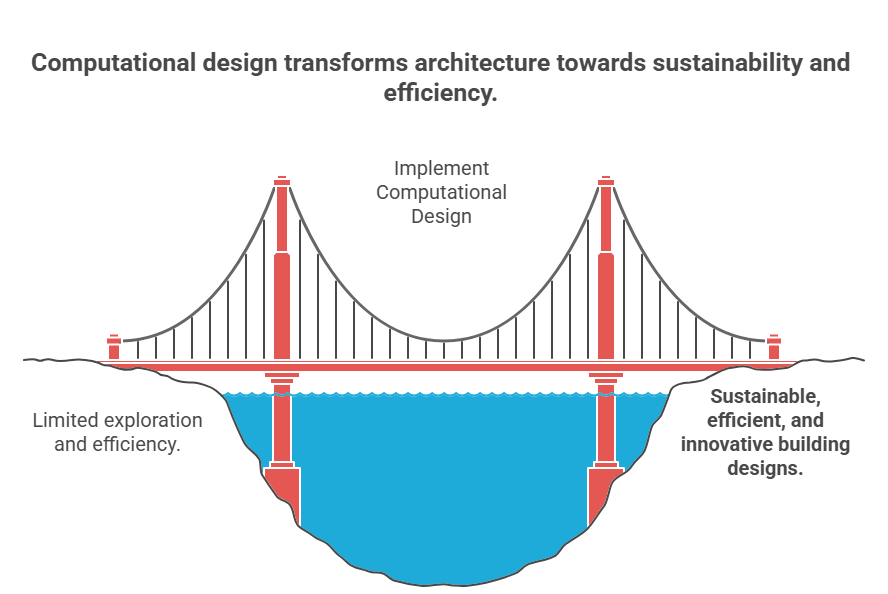
Imagine a building that designs itself, optimizing for sunlight, structural integrity, and even the unique properties of its materials, all before a single brick is laid. Sounds like science fiction? Not anymore. Welcome to the world of computational design in architecture, where algorithms and advanced software are transforming how we conceive, create, and construct our built environment. This isn’t just about drawing on a computer; it’s about empowering architects with a new language to solve complex problems, push creative boundaries, and build a more sustainable future. If you’ve ever wondered how buildings can be smarter, more efficient, and truly responsive to their surroundings, then you’re about to discover the digital revolution that’s making it all possible.

The Digital Architect’s Toolkit: What is Computational Design?

At its core, computational design (CD) in architecture is the application of computer algorithms and computational techniques to generate, analyze, and optimize architectural designs [1]. It moves beyond traditional CAD (Computer-Aided Design) by allowing designers to define rules and parameters, rather than just drawing lines. Think of it as teaching a computer to think like an architect, but with the ability to process vast amounts of data and explore countless design variations at lightning speed. This approach enables architects to tackle challenges that would be impossible or incredibly time-consuming with conventional methods.

Beyond the Drawing Board: Why Computational Design Matters

Computational design isn’t just a fancy new tool; it’s a paradigm shift that offers significant advantages for architects and the built environment. It empowers designers to explore and create in ways previously unimaginable. Instead of manually drawing every iteration, architects can now define a set of rules and allow the computer to generate thousands of design options, pushing the boundaries of complex geometries and innovative forms that might have been impossible to conceive through traditional methods [2]. This newfound freedom allows designers to focus on higher-level conceptual thinking, truly expanding the realm of architectural possibility.

One of the most powerful aspects of computational design is its ability to integrate performance analysis directly into the design process. Architects can simulate how a building will perform in terms of energy efficiency, daylighting, structural integrity, and even acoustics, all before construction even begins. This capability facilitates data-driven decisions that lead to more sustainable and efficient buildings [3]. For instance, a design can be meticulously optimized to maximize natural ventilation in a tropical climate, significantly reducing the need for artificial cooling and its associated energy consumption.

Furthermore, computational design brings unparalleled efficiency and automation to the architectural workflow. Repetitive and often tedious tasks, such as generating detailed drawings or calculating complex structural elements, can now be automated. This not only dramatically speeds up the design process but also minimizes human error, allowing architects to dedicate more of their valuable time to creative problem-solving and meaningful engagement with clients [4]. In an increasingly complex world, modern buildings often feature intricate geometries and demanding performance requirements. Computational design provides the essential tools to manage this inherent complexity, ensuring precise control and coordination of vast amounts of information, from the initial conceptual sketch to the detailed instructions for fabrication.

Finally, CD is opening exciting new doors for material innovation. It allows architects to gain a deeper understanding of how various materials behave, even those with inherent variability. By simulating material performance under different conditions, designers can push the boundaries of material use, leading to more efficient and innovative structures. This is particularly crucial for natural, sustainable materials, which often possess less predictable characteristics than their manufactured counterparts, enabling their integration into cutting-edge designs.

Computational Design in Action: Real-World Applications

Computational design is not merely theoretical; it is actively transforming various aspects of architectural practice today. One of its most common applications is Parametric Design, where design elements are defined by parameters and their intricate relationships. This means that changing one parameter automatically updates all related elements, allowing for rapid iteration and adaptation. It’s like having a dynamic model that intelligently responds to every design adjustment, offering unparalleled flexibility.

Taking this concept a significant step further, Generative Design employs algorithms to automatically generate a multitude of design alternatives based on a predefined set of goals and constraints. The architect sets the rules, and the computer then explores a vast solution space, presenting optimal or near-optimal designs [5]. This powerful capability is where the subtle threads of my own research begin to weave into the broader narrative, as generative design becomes a core component in exploring novel structural forms and innovative material applications, particularly for challenging yet sustainable resources.

Beyond generating forms, CD tools are invaluable for Performance Simulation and Optimization. This includes a range of critical analyses, such as energy analysis to predict heating, cooling, and lighting loads; daylight analysis to optimize natural light penetration and reduce glare; structural analysis to ensure the stability and efficiency of structural systems; and environmental impact assessment to evaluate the embodied energy and carbon footprint of materials and designs.

Finally, the seamless integration of computational design extends to Digital Fabrication. Computational models can be directly translated into precise instructions for digital fabrication machines, such as 3D printers and CNC routers. This direct link streamlines the construction process, significantly reduces material waste, and enables the creation of highly complex and customized building components with unprecedented accuracy.

References

[1] Novatr. (2022, December 29). Understanding Computational Design (The Ultimate Guide). Retrieved from https://www.novatr.com/blog/computational-design-guide

[2] Futurly. (2023, August 14). The Role of Computational Design in Architecture: 6 Ways it Will Change the Way You Work. Retrieved from https://www.futurly.com/blog/the-role-of-computational-design-in-architecture

[3] ArchSmarter. (2024, January 26). 5 Ways Computational Design Will Change the Way You Work. Retrieved from https://www.archsmarter.com/blog/computational-design

[4] Technostruct. (2024, March 12). The Role of Computational Design in Architecture. Retrieved from https://www.technostruct.com/blog/2024/03/12/the-role-of-computational-design-in-architecture/

[5] Novatr. (2024, August 14). Generative Design in Architecture: Everything You Need to Know. Retrieved from https://www.novatr.com/blog/generative-design-architecture

The Future is Now: Designing with Intelligence and Sustainability

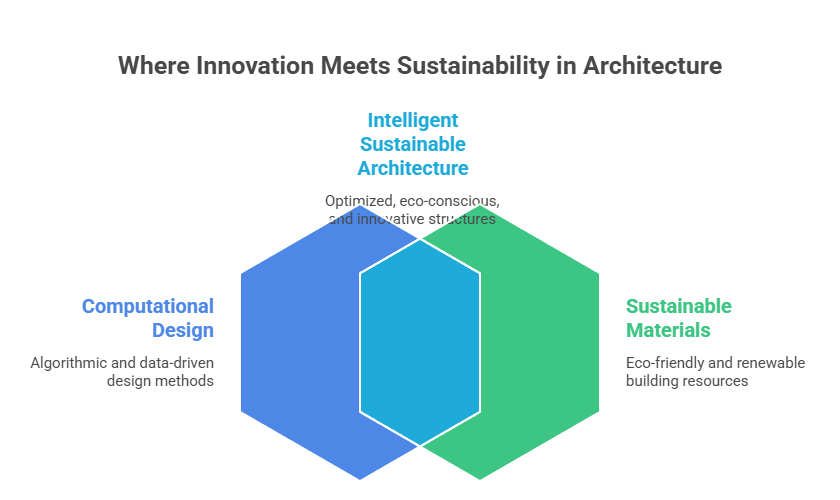
Computational design is not just a trend; it’s the inevitable evolution of architectural practice. It empowers architects to move beyond traditional limitations, creating buildings that are not only visually stunning but also highly efficient, responsive, and sustainable. By embracing algorithms and data, we can unlock unprecedented possibilities in design, from optimizing complex geometries to understanding and leveraging the unique properties of natural materials.

This journey into computational design is particularly exciting when considering its potential for sustainable materials. Imagine a future where we can precisely model and optimize structures made from rapidly renewable resources, like bamboo, accounting for their natural variations to create resilient and beautiful buildings. This approach promises to revolutionize how we build, fostering a deeper connection between technology, nature, and human well-being. As we continue to explore these frontiers, computational design will undoubtedly play a pivotal role in shaping a more intelligent and sustainable built environment for generations to come.