Beyond Green: Why Bamboo Needs Computational Optimization

Exploring How Computational Design Can Transform Bamboo Architecture in Indonesia

As I prepare to embark on doctoral research in computational design and sustainable architecture, I find myself constantly returning to a material that has defined my Indonesian homeland for centuries: bamboo. Walk through any village in Sumatra, Java, or Bali, and you’ll see it everywhere – used for homes, bridges, furniture, and art. Indonesia is home to 176 documented bamboo species, with 105 being endemic, making us a global biodiversity hotspot for this remarkable material [1]. Yet despite this abundance and our deep cultural connection, I believe we’ve been asking the wrong question about bamboo in architecture.

For years, the conversation has centered on a simple narrative: “Is bamboo sustainable?” The answer, definitively, is yes. A single hectare of bamboo sequesters approximately 17 tonnes of carbon annually – significantly more than most tree species [2]. Its rapid renewability, with harvesting cycles of just 3-5 years compared to decades for timber, positions it as one of the most regenerative building materials available [3]. These facts are powerful and important.

But here’s the critical insight I want to explore in this post: sustainability without performance is a missed opportunity. The simple act of substituting bamboo for traditional materials without fundamentally changing our design process is, in many ways, like driving a Ferrari in first gear. We’re not utilizing its full potential.

The architectural potential of bamboo is immense, but realizing it requires moving beyond traditional design methods.

As a lecturer teaching architecture students at Universitas Medan Area, I see this challenge firsthand. My students are eager to use bamboo – it aligns with their values, it’s locally abundant, it’s culturally meaningful. But when they sit down to design a structure, they often fall back on conventional design methods: static calculations, safety factors borrowed from timber design, and joinery details that don’t account for bamboo’s unique properties. The result? Over-designed, materially inefficient structures that don’t realize bamboo’s true promise.

This is where computational optimization enters the picture, and why I believe it’s essential for the future of Indonesian architecture.

In this post, I’m not declaring universal truths – I’m exploring why I believe computational design is crucial for unlocking bamboo’s performance potential. These are questions I’m actively investigating as I prepare for PhD study, and I’d love your perspective.

The Anisotropic Challenge: Why Bamboo is Not Wood

One of the first things I realized in my research is that a fundamental mistake undermines much bamboo design: treating bamboo as a simple wooden pole. This assumption is dangerous because it’s partially true, which makes it deceptively misleading.

Bamboo is a functionally graded, anisotropic composite material – meaning its mechanical properties vary directionally and change systematically from the inner to outer culm wall [4]. To understand what this means in practice:

Along the fibers (longitudinal direction): Bamboo’s tensile strength rivals mild steel—up to 140-160 MPa for species like Dendrocalamus asper (betung) and Gigantochloa apus (ampel), the two most common species in Indonesia [5].

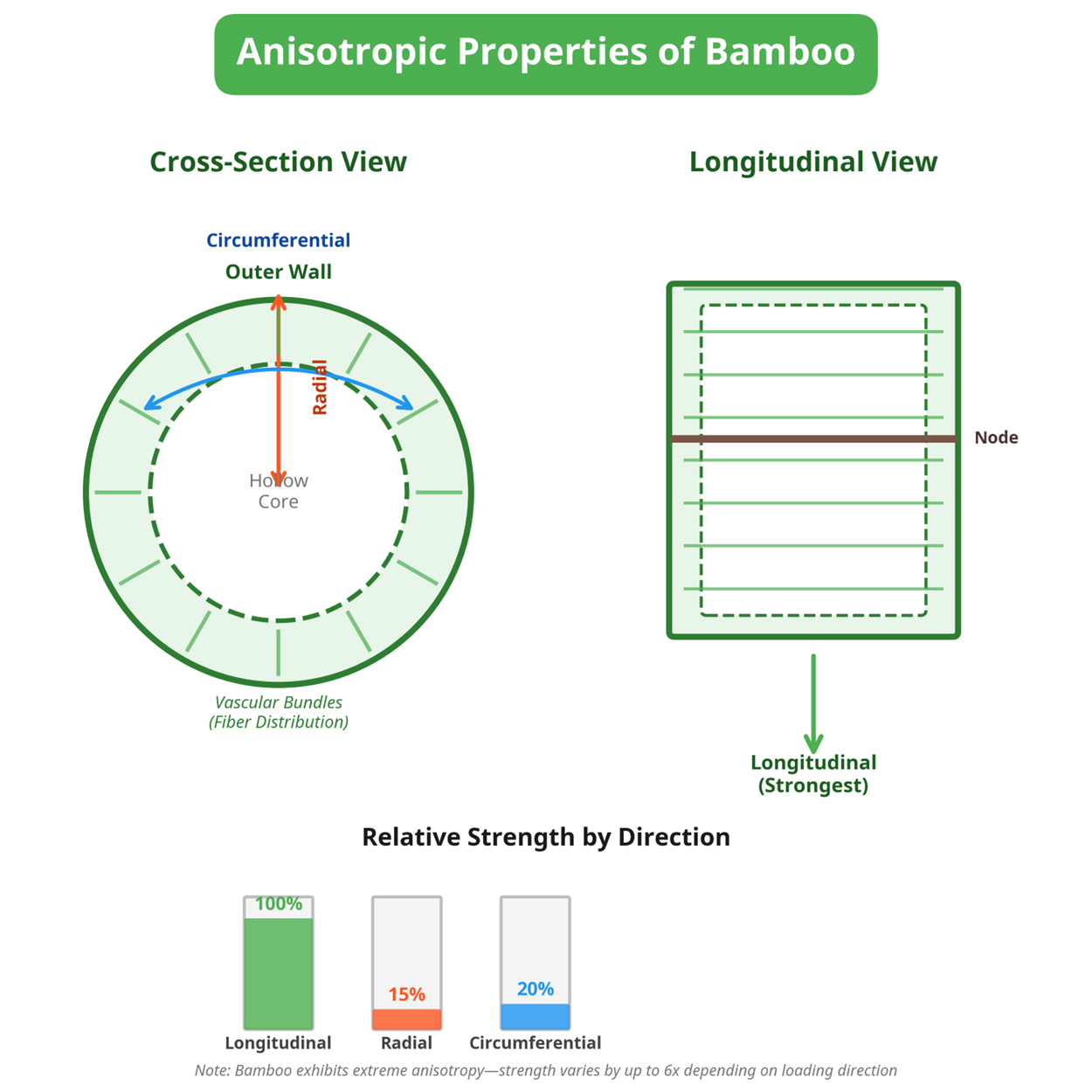
Perpendicular to fibers (radial/circumferential directions): Strength drops dramatically – up to 6 times weaker in some directions [4].

This difference in strength stems from bamboo’s elegant biomechanical structure: cellulose fibers are primarily oriented along the culm’s length, embedded in a lignin matrix. Additionally, the density and diameter of vascular bundles vary from the inner to outer wall, creating a natural gradient that’s been optimized by millions of years of evolution to resist wind and bending loads [6].

The anisotropic nature of bamboo, showing its primary strength along the longitudinal axis versus its weaker properties in the radial and circumferential directions. Strength can vary by up to 6x depending on loading direction.

Why conventional design fails:

Traditional architectural and engineering design methods rely on isotropic assumptions – the assumption that a material has uniform properties in all directions. This works reasonably well for steel or concrete, where isotropy is engineered into the manufacturing process. But for bamboo, this assumption is fundamentally violated.

This leads to two critical problems in practice:

  1. Material Inefficiency: Engineers, uncertain about bamboo’s directional weaknesses, often over-design structures with excessive safety factors [7]. I’ve seen bamboo frames using far more culms and material than structurally necessary. This negates some of bamboo’s sustainability advantage—if you use 50% more material than needed, your carbon payback period extends dramatically [7].
  2. Unpredictable Failure: An incomplete understanding of directional weaknesses can lead to catastrophic, unexpected failures. The most common failure mode I’ve observed in bamboo structures is longitudinal splitting—the culm fractures along its length. This typically occurs when loading direction isn’t optimized for fiber orientation or when designers use joinery details designed for isotropic materials [7].

How computational design changes this:

Finite element modeling allows architects to build detailed computational models that explicitly define bamboo’s anisotropic properties. Rather than applying uniform assumptions, the model understands that stress flows differently through the material depending on direction.

Engineers can then simulate:

  • How stress distributes through actual bamboo geometry with real anisotropic properties
  • Where maximum stresses occur and in which directions
  • Which culm orientations best resist applied loads
  • Optimal joint designs for actual bamboo behavior (not theoretical isotropy)

The result: structures that use bamboo efficiently, in its strongest orientations, with material placed exactly where it’s needed. This is performance-driven design, not assumption-driven design.

Indonesian context matters: In my teaching, I’m increasingly using parametric models showing students how Dendrocalamus asper (popular in North Sumatra) behaves differently than Gigantochloa apus (common in Bali) due to their different fiber orientation patterns and wall thickness gradients [5]. This localized knowledge becomes powerful when encoded computationally.

The Moisture Problem: Designing for a Living, Breathing Material

Beyond structural anisotropy lies another profound challenge: bamboo is hygroscopic – it constantly absorbs and releases moisture in response to atmospheric humidity. In Indonesia’s tropical climate, this isn’t a minor detail. It’s perhaps the critical factor determining long-term structural performance [8].

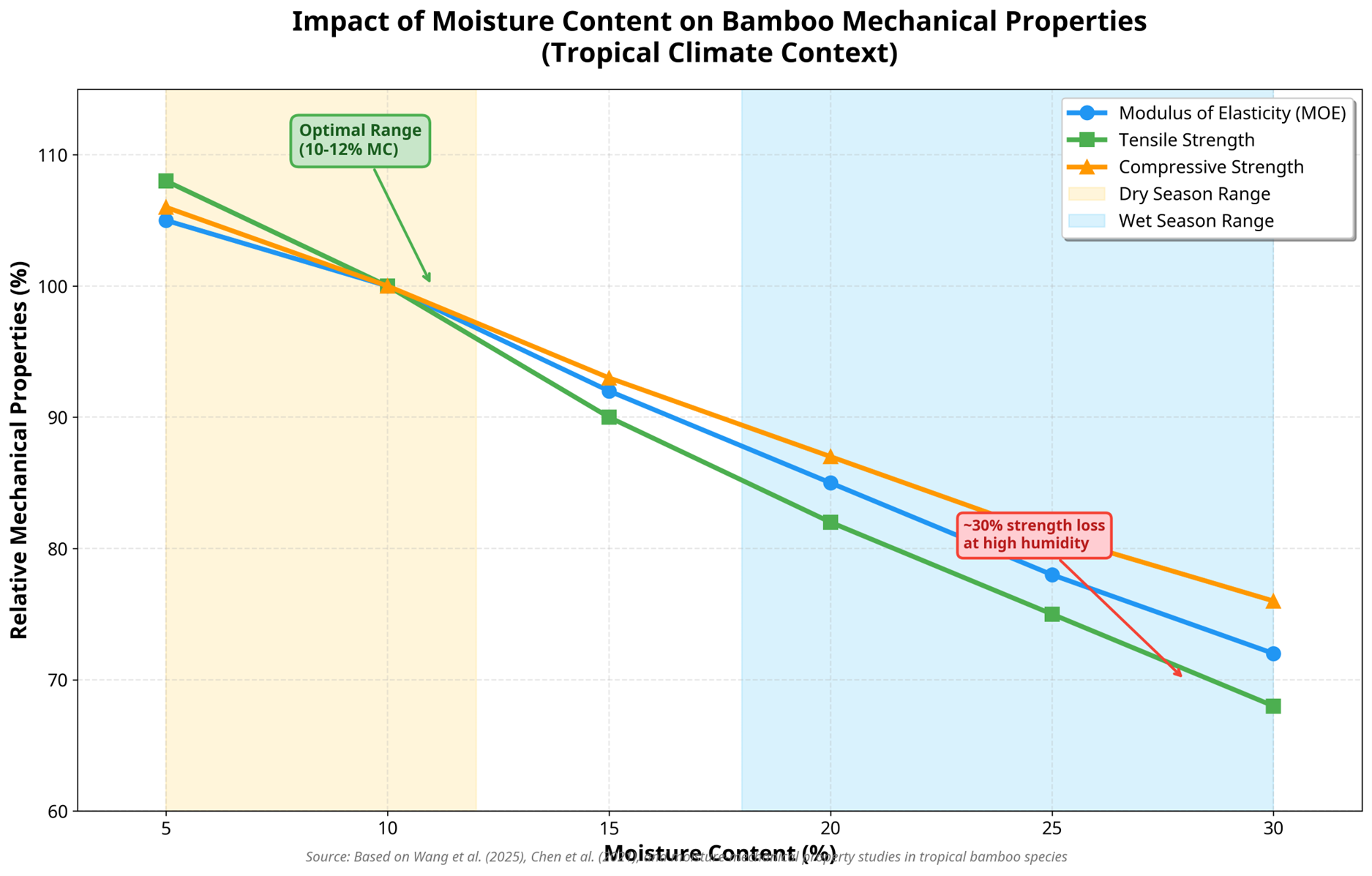
Here’s what happens: As moisture content increases, bamboo’s mechanical properties systematically degrade.

Studies show that [8] [9]:

  • Tensile strength decreases by up to 40-50% as moisture content increases from dry to saturated condition [9]
  • Elastic modulus (stiffness) decreases significantly, meaning the material becomes more flexible [8]
  • Dimensional stability changes: The material swells and shrinks, with different swelling rates in different directions [8]

In tropical Indonesia, seasonal moisture variations are extreme. During the rainy season (November-March), relative humidity can reach 95% or higher, causing bamboo moisture content to rise dramatically. During the dry season (June-September), humidity drops to 60-70%, and bamboo moisture content decreases. This cycle repeats year after year.

The practical problem:

Imagine a bamboo joint designed in controlled conditions—perhaps a laboratory in Stuttgart or Singapore where humidity is relatively stable. The joint is tight, load-bearing connections are perfect. Now place that same joint in a rural Sumatran village experiencing tropical humidity cycles:

  • Wet season: Bamboo swells; the joint tightens or becomes overstressed
  • Dry season: Bamboo shrinks; the joint loosens, potentially compromising structural integrity

The inverse relationship between moisture content in bamboo and its key mechanical properties. In tropical climates, seasonal humidity variations can cause up to 30% strength loss.

A joint tight during dry season becomes loose in wet season. A connection designed for static conditions becomes dynamic and unpredictable. This is why traditional Indonesian bamboo buildings employ specific joinery techniques that accommodate movement—our ancestors understood this intimately, even if they described it differently [10].

How conventional design fails:

Static design methods assume material properties remain constant throughout the building’s lifetime. Bamboo design guidelines often cite material properties at “standard” moisture content (around 12%), but never address the reality that Indonesian buildings experience moisture contents ranging from 8% to 20% or higher depending on season and location.

How computational optimization changes this:

Environmental-responsive parametric design incorporates real climate data directly into structural models [11]. Rather than assuming static moisture content, the design process:

  1. Integrates historical climate data from the specific building location
  2. Models moisture content cycles throughout the year based on humidity patterns
  3. Simulates structural behavior across the full range of moisture conditions
  4. Designs joints and connections that remain structurally sound whether bamboo is at its driest or wettest seasonal state
  5. Predicts movement and designs the structure to accommodate it

This level of analysis is impossible through manual calculations – the variables are too many, the relationships too complex. But computational models can simulate years of seasonal cycling in minutes, predicting how a structure will perform over decades [11].

Indonesian example I’m exploring: For buildings in Medan where I teach, tropical climate data shows humidity averages 75-80% year-round with minimal seasonal variation compared to other regions. This means different optimal designs than, say, a building in Bali where seasonality is more pronounced. Computational design makes this regional differentiation explicit and testable.

Encoding traditional wisdom: Interestingly, traditional Indonesian bamboo joinery often uses sliding connections or slightly loose joints that can accommodate movement. This isn’t haphazard – it’s sophisticated engineering [10]. Computational design can formalize this traditional knowledge, testing whether specific joint geometries actually optimally accommodate seasonal moisture cycling, and potentially improving on them.

From Variability to Opportunity: Embracing Natural Irregularity

Here’s where my research takes an exciting turn. In industrial construction, standardization is sacred. Materials are mass-produced to uniform specifications. A steel I-beam ordered in Jakarta is identical to one in Bandung. This standardization enables reproducibility and simplifies design calculations.

Bamboo, as a natural material, fundamentally resists this logic. Each culm is unique:

  • Diameter variations (within a single species, culms can vary from 4cm to 12cm)
  • Wall thickness variations (outer and inner wall diameter ratios vary)
  • Internode spacing variations (distance between nodes isn’t uniform)
  • Fiber orientation variations (subtle differences in how fibers are arranged)

For decades—honestly, for centuries until very recently—this variability was seen as a defect. Something to overcome through processing. Indonesian and other tropical builders dealt with this variability through:

  • Careful selection: Master craftspeople would age bamboo, split it lengthwise to examine fiber direction, and manually select pieces for specific structural roles
  • Lamination: Processing bamboo into laminated lumber to create artificial uniformity
  • Over-design: Using thicker sections and more material to account for uncertain properties

These approaches work, but they’re labour-intensive, require deep expertise, and often negate bamboo’s material and economic efficiency.

The computational perspective flips this entirely:

What if variability isn’t a problem to overcome, but data to harness?

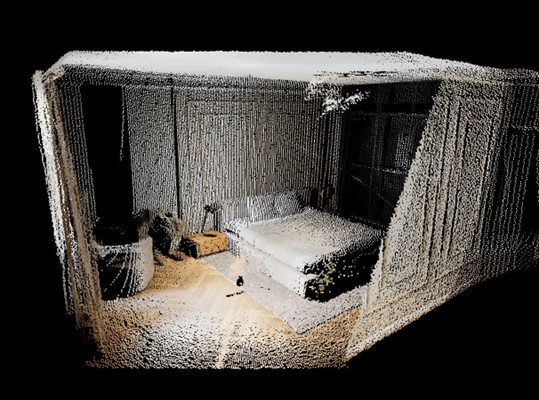
3D scanning and digital inventorying technologies can capture the precise geometric and material properties of every single culm available for a project. Feed this data into an optimization algorithm, and you get something remarkable: a system that functions like a master craftsperson with perfect information—selecting the ideal bamboo piece for each specific structural role [12].

3D scanning technologies can capture the unique geometric properties of each bamboo culm, turning natural variability into precise data for computational design.

Here’s how it works in practice:

  1. Scanning & Data Capture: Each bamboo culm is 3D-scanned to capture outer diameter, wall thickness variations, internal node geometry, and fiber orientation [12]
  2. Material Testing: A sample of culms are tested to establish property relationships (e.g., how wall thickness correlates to strength for this species)
  3. Algorithmic Selection: An optimization algorithm uses this data to assign each culm to specific positions in the structure where its unique properties are best utilized
  4. Structural Performance: The strongest, stiffest culms go where maximum load is concentrated; more flexible culms work in regions of lower stress; slender culms are used decoratively where they’re not load-critical
  5. Economic Benefit: The structure uses less material overall while maintaining or exceeding performance requirements

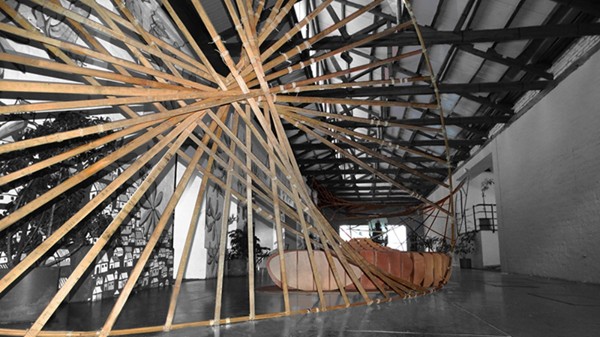
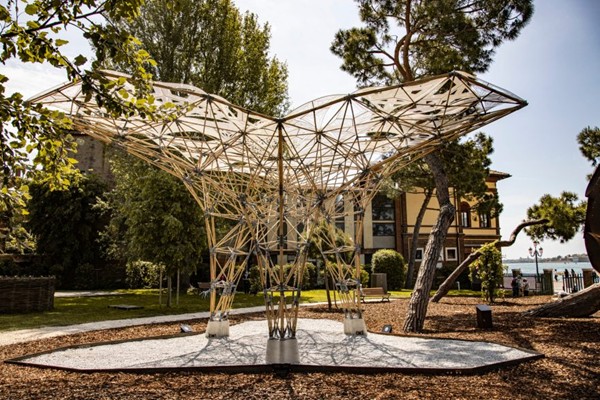
This process is called topology optimization or material-aware design, and it’s moving from theoretical research into semi-automated fabrication reality. Research at ETH Zurich’s Digital Building Technologies lab and ITKE at University of Stuttgart has demonstrated this working at architectural scales [14, 15].

ITKE’s computational bamboo research demonstrates how algorithmic design can work with natural material variability to create structurally optimized forms.

What excites me most: This approach celebrates bamboo’s natural diversity rather than fighting it. It’s the opposite of industrial homogenization. Each bamboo structure becomes uniquely optimized to its specific available materials, its specific climate, its specific structural requirements. And paradoxically, this variation-embracing approach leads to better performance and lower environmental impact than trying to force all bamboo into standardized categories.

Indonesian opportunity: With 176 bamboo species [1], many with subtle property variations, Indonesia has an extraordinary opportunity to lead in material-aware computational design. Rather than standardizing all bamboo, we could develop species-specific design protocols that account for the unique properties of Dendrocalamus asper vs. Gigantochloa apus vs. endemic species found only in specific regions.

Multi-Objective Optimization: Beyond Structure into Culture

Here’s where I believe computational design becomes genuinely powerful for Indonesian architecture: optimizing for multiple competing objectives simultaneously.

A successful building is never just about structural performance. It must simultaneously achieve:

  • Structural safety (won’t collapse)
  • Economic viability (cost-effective)
  • Environmental responsibility (low carbon, sustainable materials)
  • Constructability (can actually be built with available skill and equipment)
  • Cultural authenticity (resonates with place and people)
  • Aesthetic integrity (visually appropriate and beautiful)

In Indonesia particularly, the last criterion – cultural resonance – is irreplaceable. A structurally perfect design that’s culturally alien is ultimately a failure. It won’t be maintained, won’t be valued, won’t inspire future practitioners.

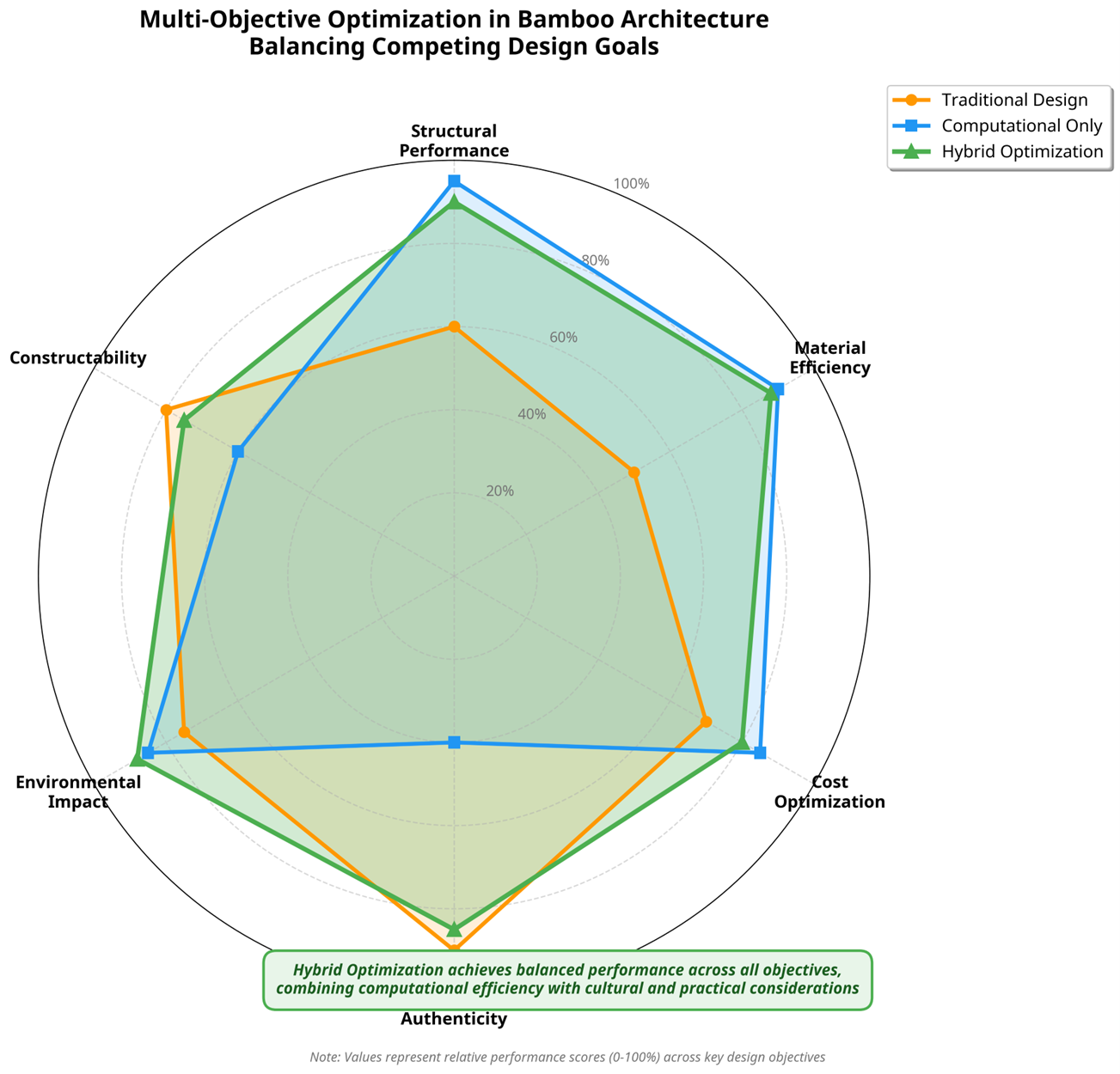
Traditional design methods can technically “optimize” for one criterion (usually lowest cost or maximum span). But the moment you introduce multiple competing objectives, manual design becomes unwieldy. How do you simultaneously minimize cost, maximize cultural appropriateness, and optimize structural efficiency? How do you make informed trade-offs?

Multi-objective optimization balances competing goals such as structural performance, cost, sustainability, and cultural aesthetics. Hybrid computational approaches achieve the best overall balance.

Multi-objective optimization algorithms solve this elegantly:

These algorithms allow designers to define:

  1. Quantifiable performance objectives (minimize material use, minimize cost, minimize carbon, maximize structural efficiency)
  2. Design constraints (must accommodate traditional joinery, must use available bamboo species, must fit within site constraints)
  3. Relative importance weights (cost is important, but cultural appropriateness is more important)

The algorithm then generates a Pareto front—a set of optimal solutions representing the best possible trade-offs between competing objectives. Rather than a single “best” solution, the designer gets multiple solutions, each optimal for slightly different priority weightings.

In practice, for an Indonesian bamboo school project, this might mean:

The algorithm explores designs that:

  • Minimize material use (environmental objective) [11]
  • Use only local Indonesian bamboo species (cultural/economic objective)
  • Employ traditional joinery techniques from Bali/Java/Sumatra (cultural objective) [10]
  • Meet modern building code requirements (safety objective)
  • Fit within a specific budget (economic objective)
  • Can be fabricated by local craftspeople without importing specialized equipment (social/economic objective)

Rather than compromising across all these goals mediocrely, the algorithm finds designs that excel at different trade-off combinations. The architect then selects which combination best serves the specific project context.

ETH Zurich’s Digital Bamboo project showcases integrated computational workflows that combine structural optimization with fabrication constraints.

Why this matters for Indonesia:

This approach allows computational design to be culturally intelligent. It’s not imposing a globally-standard design methodology; it’s enabling architects to encode Indonesian design values – cultural continuity, local material sourcing, traditional craft techniques – directly into the optimization framework. The result is high-performance architecture that’s computationally rigorous AND culturally rooted.

I see this as essential for sustainable practice in Indonesia. We don’t want our buildings to look like they could have been designed anywhere—we want computational efficiency in service of deepening our architectural identity, not erasing it.

Moving Forward: Computational Design as Indonesia’s Opportunity

As I prepare to pursue doctoral research in this intersection of computational optimization and bamboo architecture, I’m increasingly convinced this isn’t a luxury – it’s a necessity for Indonesia.

Consider our situation: We have the most biodiverse bamboo resource globally – 176 species [1], enormous cultivation potential, centuries of craft knowledge [10]. We have urgent needs: housing shortages, infrastructure gaps, climate commitments. We have emerging capability: young architects and researchers trained in computational design, growing access to digital fabrication tools, universities engaged in this research space.

What we’re building is the computational capacity to leverage all of this simultaneously – our material abundance, our cultural knowledge, our urgent development needs, our technical capability.

But I’ll be honest: the challenges are real. The barriers include:

  • Limited computational design expertise in most Indonesian architecture schools
  • Need for comprehensive material property databases specific to Indonesian bamboo species [5]
  • Integration challenges between traditional craft knowledge and digital workflows
  • Affordable access to design software and computational resources
  • Convincing construction industry to adopt new methods

And yet, the potential payoff is immense:

  1. Indonesian intellectual leadership: Positioning Indonesia as a global research center in sustainable computational architecture, not just a bamboo supplier
  2. Scalable housing solutions: Moving from one-off artisanal bamboo buildings to productized, computationally-optimized bamboo housing that meets massive development needs
  3. Cultural continuity through innovation: Preserving and evolving traditional knowledge rather than watching it disappear as younger generations move toward reinforced concrete
  4. Climate contribution: Actually achieving the carbon benefits of bamboo [2] through efficient design, not just using it as a “green” substitute

This is the work I’m committing the next several years to. I’ll be documenting this journey on this blog – sharing insights, dead-ends, breakthroughs, and questions as I navigate PhD applications and eventually doctoral research. I’m not claiming certainty or declaring universal principles. I’m exploring. I’m curious. I’m working through these questions systematically.

If you’re an Indonesian architect, student, researcher, or practitioner interested in this space, I’d genuinely love to hear from you. What are your observations about bamboo design in practice? What barriers do you see? What excites you about computational approaches? Let’s work through this together – this is too important and too complex for any individual to solve alone.

References

[1] Ekawati, L. Karlinasari, R. Soekmadi, and I. Nurrochmat, “The status of bamboo research and development for sustainable use in Indonesia: A systematic literature review,” IOP Conference Series: Earth and Environmental Science, vol. 1109, no. 1, p. 012100, 2022.

[2] “Bamboo plants can act as efficient carbon sinks,” Nature India, Mar. 30, 2021. [Online]. Available: https://www.nature.com/articles/nindia.2021.46

[3] O. S. B. V., “Top 5 Bamboo material environmental benefits,” MOSO Bamboo Blog. [Online]. Available: https://blog.moso-bamboo.com/top-5-bamboo-material-environmental-benefits

[4] Akinbade, L. Horne, J. Nash, J. Heeley, and T. Morsink, “Modelling full-culm bamboo as a naturally varying functionally graded material,” Construction and Building Materials, vol. 310, p. 125211, 2021.

[5] Hartono et al., “Physical, chemical, and mechanical properties of six bamboo from Sumatera Island Indonesia and its potential applications for composite materials,” Polymers, vol. 14, no. 22, p. 4868, Nov. 2022.

[6] Sun et al., “Bionic design and multi-objective optimization for variable wall thickness tube inspired bamboo structures,” Thin-Walled Structures, vol. 113, pp. 114-123, 2017.

[7] Triwiyono et al., “Optimizing Bamboo as an Alternative Building Material to Respond Global Architectural Challenges,” IOP Conference Series: Earth and Environmental Science, vol. 1157, no. 1, p. 012011, 2023.

[8] Chen et al., “Water vapor sorption behavior of bamboo pertaining to its structure,” Scientific Reports, vol. 11, no. 1, p. 12543, 2021.

[9] Wang et al., “Correlations between moisture expansion and flexural properties of bamboo strips under different loading rates,” Holzforschung, vol. 78, no. 8, pp. 715-724, 2024.
[10] Huda et al., “Bamboo architecture as a learning project for community development of rural area in Indonesia,” IOP Conference Series: Earth and Environmental Science, vol. 490, no. 1, p. 012004, 2020.

[11] Tedjosaputro et al., “Multi-objective optimisation of bamboo tensegrity structure for immediate relief shelters,” City, Territory and Architecture, vol. 12, no. 1, p. 14, 2025.

[12] Saghafi Moghaddam et al., “Bamboo spatial structure, developing an integrated computational workflow and a tailored semi-automated fabrication apparatus,” International Journal of Architectural Computing, vol. 22, no. 4, pp. 567-585, 2024.
[13] Columbia GSAPP, “Structural Optimization of Composite Bamboo Beams,” May 28, 2024. [Online]. Available: https://www.arch.columbia.edu/student-work/12707-structural-optimization-of-composite-bamboo-beams

[14] Digital Building Technologies, ETH Zurich, “Digital Bamboo,” Oct. 8, 2020. [Online]. Available: https://dbt.arch.ethz.ch/project/digital-bamboo/

[15] ITKE, University of Stuttgart, “Computational Bamboo,” 2017. [Online]. Available: https://www.itke.uni-stuttgart.de/

The Bamboo Renaissance: Indonesia’s Role in Global Climate Architecture

Standing at the forefront of our planet’s climate crisis, the global architecture community faces an unprecedented challenge: how to build the structures our growing population desperately needs while dramatically reducing the carbon footprint of construction. In this pivotal moment, an ancient grass from the tropical forests of Southeast Asia has emerged as perhaps our most promising ally. Bamboo—once dismissed in many parts of the world as the ‘poor man’s timber’—is experiencing a remarkable renaissance, and Indonesia stands at the epicenter of this transformation. From the innovative bamboo pavilions that have captivated international architectural publications to the scientific breakthroughs emerging from Indonesian research institutions, the archipelago is not merely participating in the global shift toward sustainable construction; it is leading it.

The urgency of this transformation cannot be overstated. The construction industry remains one of the world’s most carbon-intensive sectors, responsible for approximately 39% of global carbon emissions when we include both operational and embodied carbon [1]. The production of cement alone accounts for 8% of global CO₂ emissions, while steel production adds another significant burden to our atmospheric carbon load [2]. As the global population continues to urbanize—with the World Bank forecasting a 150% increase in urban populations by 2045—the demand for housing and infrastructure will only intensify [3]. Traditional building materials simply cannot meet this demand without catastrophic environmental consequences. This is where Indonesia’s bamboo expertise becomes not just valuable but essential for our planet’s future.

Indonesia’s Bamboo Supremacy: A Natural and Cultural Foundation

Indonesia’s position as a global bamboo powerhouse extends far beyond mere abundance. The archipelago hosts an extraordinary 176 documented bamboo species, with 105 being endemic—meaning they exist nowhere else on Earth [4]. This biological treasure trove represents one of the world’s most diverse collections of bamboo genetics, each species offering unique properties that can be optimized for specific architectural applications. From the massive Dendrocalamus asper (Giant Bamboo) that can reach diameters exceeding 20 centimeters and heights of 30 meters to the more delicate varieties perfect for intricate architectural details, Indonesia’s forests contain a living library of sustainable building materials.

But Indonesia’s bamboo renaissance is not solely about natural resources—it represents a profound cultural continuity that bridges ancient wisdom with contemporary innovation. For centuries, Indonesian communities have developed sophisticated traditional building techniques that maximize bamboo’s unique properties. The traditional Karo Batak houses of North Sumatra, constructed entirely from bamboo and wood using no nails or screws but held together with natural fibers, demonstrate engineering principles that modern architects are only beginning to fully appreciate [5]. These structures have withstood tropical storms, earthquakes, and the test of time, proving that bamboo construction can be both durable and beautiful when properly executed.

Recent scientific research has validated what traditional builders knew intuitively. Studies examining six bamboo species from Sumatra Island revealed that Betung bamboo (Dendrocalamus asper) demonstrates the highest structural performance values, making it particularly suitable for load-bearing applications [6]. This scientific backing provides the foundation for modern engineering standards while honoring centuries of accumulated knowledge. The integration of traditional Indonesian craftsmanship with contemporary design principles has created a unique architectural language that is distinctly Indonesian yet universally applicable.

The Global Influence: How Bali’s Bamboo Pioneers Changed the World

The transformation of bamboo from a vernacular building material to an internationally acclaimed architectural medium can be traced to a handful of visionary projects in Bali that captured global attention. The Green School Bali, established in 2008, serves as perhaps the most influential demonstration of bamboo’s potential in contemporary architecture. This tropical jungle campus of curved bamboo pavilions has become a globally influential exhibition of sustainable design, inspiring architects worldwide to reconsider their material choices [7].

The school’s impact extends far beyond its physical structures. Recognized by the World Economic Forum as a progressive ‘school of the future,’ Green School Bali has demonstrated that bamboo buildings can be sophisticated, durable, and environmentally responsible [8]. The campus generates over 150 kilograms of fresh produce monthly, operates vehicles powered by cooking oil, and achieves a 40% reduction in carbon footprint compared to conventional schools [9]. These achievements prove that bamboo architecture is not about making do with less, but about achieving more with materials that actively benefit the environment.

Building on the Green School’s foundation, Elora Hardy’s IBUKU design firm has pushed bamboo architecture into new territory, creating structures that redefine luxury while maintaining environmental responsibility. Since 2010, IBUKU has completed over 60 bamboo structures throughout Bali and the region, ranging from private residences to commercial developments [10]. Their projects, including the iconic Arc at Green School—the world’s largest bamboo arched structure—and the six-story Sharma Springs residence, have appeared in international publications including Architectural Digest, Vogue, and Architectural Review [11].

What makes IBUKU’s work particularly significant is its influence on global architectural practice. The firm’s design vocabulary, based on working with bamboo’s natural curves and inherent properties rather than imposing geometric constraints, has inspired architects worldwide to reconsider their relationship with materials. Projects by IBUKU and other Indonesian bamboo architects have influenced firms in Vietnam, Thailand, China, and even Europe, creating a ripple effect that is transforming sustainable architecture globally [12].

Climate Champion: The Science Behind Bamboo’s Environmental Impact

The environmental case for bamboo in construction is compelling and backed by increasingly sophisticated scientific research. Unlike conventional building materials that are carbon-positive in their production, bamboo is fundamentally carbon-negative throughout its lifecycle. During its rapid growth phase, bamboo sequesters approximately 17 tons of carbon per hectare annually—significantly more than most tree species [13]. Some studies suggest that well-managed bamboo forests can sequester up to 50 tons of CO₂ per hectare annually, making them among the most effective carbon sinks available [14].

The carbon benefits extend beyond sequestration during growth. Recent life-cycle analyses indicate that bamboo products can mitigate between 1.38 and 2.29 gigatons of CO₂ equivalent by 2050, primarily through substitution of carbon-intensive materials like steel and concrete [15]. This mitigation potential is particularly significant because it addresses both embodied carbon (the emissions associated with material production) and the ongoing carbon storage within the built structure itself.

The United Nations Framework Convention on Climate Change has recognized this potential through its BambooBoost Initiative, which estimates that applying bamboo cultivation to 70-174 million hectares of degraded forestlands could sequester roughly 2 gigatons of CO₂ annually—equivalent to 7.7% of current global emissions [16]. Indonesia is in a unique position to significantly contribute to these global climate goals due to its vast areas of degraded land and ideal growing conditions.

Beyond carbon considerations, bamboo offers multiple environmental benefits that support broader sustainability objectives. The plant’s extensive root system prevents soil erosion, particularly valuable in Indonesia’s tropical climate, where heavy rainfall can cause significant land degradation. Bamboo cultivation requires no pesticides or fertilizers, making it inherently organic and environmentally benign. The material can be harvested sustainably every 3-5 years without destroying the root system, allowing for continuous production from the same land base [17].

Innovation and Technology: Modern Solutions Meet Traditional Wisdom

Technological innovation that improves the material’s performance and applications is increasingly supporting Indonesia’s leadership in bamboo architecture. Digital tools like BambuFlex, developed by Indonesian researchers, enable architects to accurately model curved bamboo structures, optimizing designs for specific bamboo species and local bending techniques [18]. These computational approaches allow for precise engineering calculations while respecting bamboo’s natural variability.

The development of engineered bamboo products has significantly expanded the material’s potential applications. Indonesian manufacturers have pioneered laminated bamboo lumber, bamboo plywood, and composite materials that offer consistent properties suitable for modern construction standards [19]. These innovations address one of the primary barriers to bamboo adoption—the perception that natural materials lack the predictability required for contemporary building codes.

Indonesian research institutions are at the forefront of developing preservation and treatment techniques that extend bamboo’s durability. Advanced borax treatment methods, combined with proper drying and storage techniques, can extend bamboo’s lifespan to decades, making it competitive with conventional materials in terms of lifecycle performance [20]. These technical advances are crucial for expanding bamboo’s use beyond tropical climates to temperate regions where durability concerns have historically limited adoption.

The integration of bamboo with other sustainable technologies is creating hybrid systems that maximize environmental benefits. Indonesian architects are experimenting with bamboo structures that incorporate solar panels, rainwater harvesting systems, and natural ventilation strategies, creating buildings that are not just carbon-neutral but actively beneficial to their environments [21].

Economic Impact: Building Sustainable Livelihoods

The bamboo renaissance in Indonesia is generating significant economic benefits while supporting rural development and community empowerment. The Indonesian government’s initiative to develop 1,000 bamboo villages represents an ambitious effort to create sustainable rural economies based on bamboo cultivation and processing [22]. These villages are designed to produce raw materials for the growing bamboo industry while providing stable incomes for local communities.

The economic potential is substantial. The global bamboo market was valued at approximately $68 billion in 2020, with projections suggesting continued growth as demand for sustainable materials increases [23]. Indonesia, despite having the world’s most diverse bamboo resources, currently accounts for only about 1% of global bamboo exports, indicating enormous potential for growth [24]. The government’s bamboo industry roadmap aims to address this gap by improving processing capabilities, establishing quality standards, and developing supply chains that can compete internationally [25].

Bamboo cultivation provides particular benefits for smallholder farmers, offering a crop that requires minimal inputs while providing regular income. Unlike timber, which requires decades before harvesting, bamboo can be selectively harvested annually after the initial 3- to 4- year establishment period. This cash flow characteristic makes bamboo cultivation particularly attractive for rural communities seeking to diversify their income sources while contributing to environmental restoration [26].

The development of bamboo processing industries is creating value-added employment opportunities beyond farming. Modern bamboo factories in Java and Bali employ sophisticated techniques to produce everything from construction materials to high-end consumer products. These facilities demonstrate how traditional materials can support modern industrial development while maintaining environmental benefits [27].

Challenges and Opportunities: Scaling Up for Global Impact

Despite its potential, bamboo construction must overcome a number of obstacles to reach a global scale. One of the most significant barriers is the lack of standardized building codes and engineering specifications for bamboo structures. While Indonesia has made progress in developing these standards, international adoption requires harmonized regulations that provide confidence to architects, engineers, and building officials worldwide [28].

Quality control remains another critical challenge. Bamboo’s natural variability, while part of its appeal, complicates standardization efforts. Different species, growing conditions, and treatment methods can result in varying material properties, making it difficult to create universal specifications. Indonesian researchers are addressing this through the development of grading systems and quality protocols that can ensure consistent performance while accommodating natural variation [29].

The perception challenge is equally important. In many markets, bamboo continues to be associated with temporary or low-cost construction, despite evidence of its structural capabilities and aesthetic potential. Changing these perceptions requires continued demonstration of bamboo’s possibilities through high-quality, innovative projects that showcase the material’s true potential. Indonesian architects and firms are leading this effort through international projects and educational initiatives [30].

Infrastructure limitations also constrain market development. Bamboo processing requires specialized equipment and expertise that are not yet widely available outside of established production centers. The development of distributed processing capabilities and supply chains will be essential for expanding bamboo construction to new markets [31].

Global Expansion: Indonesia’s International Influence

Indonesian architects and builders are increasingly sharing their bamboo expertise internationally, working on projects all over the world. The knowledge and techniques developed in Indonesia’s tropical climate are proving applicable in diverse contexts, from Latin America to Africa to other parts of Asia. This knowledge transfer is helping to establish bamboo as a viable construction material in regions where it was previously unknown or underutilized [32].

The Green School model has been particularly influential, with sister schools opening in New Zealand, South Africa, and Mexico, each adapting Indonesian bamboo techniques to local conditions and regulations [33]. These international expansions show how to adapt Indonesian innovations to various climates and building codes while preserving their fundamental sustainability benefits.

IBUKU and other Indonesian bamboo firms are undertaking projects throughout Southeast Asia and beyond, bringing Indonesian expertise to new markets. These international collaborations are crucial for establishing bamboo as a mainstream construction material rather than a regional specialty [34].

Educational initiatives are also expanding Indonesian influence. Bamboo U, based in Bali, provides intensive training programs for architects and builders from around the world, with nearly 700 participants from over 50 countries having completed their programs [35]. These educational efforts are creating a global network of practitioners who understand bamboo’s potential and can advocate for its adoption in their home markets.

Future Horizons: Towards a Bamboo-Powered Built Environment

The future of bamboo architecture extends far beyond current applications, with emerging technologies and growing environmental pressures creating new opportunities for innovation. Climate change is driving unprecedented demand for sustainable building solutions, and bamboo’s unique combination of carbon sequestration, rapid renewability, and structural performance positions it as a material for the future [36].

The integration of bamboo with smart building technologies presents exciting possibilities. Researchers are exploring bamboo structures embedded with sensors that monitor structural health or bamboo panels that incorporate photovoltaic cells for energy generation. These hybrid approaches could create buildings that are not just carbon-neutral but actively beneficial to the environment [37].

Biotechnology may further enhance bamboo’s properties through selective breeding and genetic techniques that optimize growth rates, structural properties, and environmental adaptation. Indonesian research institutions are at the forefront of these efforts, working to develop bamboo varieties specifically suited for construction applications [38].

The circular economy principles are naturally aligned with bamboo construction, as the material can be recycled, composted, or repurposed at the end of its useful life. This compatibility with circular design principles makes bamboo particularly attractive as building practices evolve toward zero-waste models [39].

Conclusion: Indonesia’s Gift to a Climate-Challenged World

The bamboo renaissance represents more than an architectural trend; it embodies a fundamental shift toward building practices that work with natural systems rather than against them. Indonesia’s leadership in this transformation demonstrates how traditional knowledge, combined with modern innovation, can provide solutions to global challenges. The archipelago’s bamboo forests, cultural expertise, and innovative spirit have created a model for sustainable development that other nations can adapt and adopt.

As we face the mounting challenges of climate change and resource depletion, Indonesia’s bamboo architecture offers hope that we can build the structures our civilization needs while healing rather than harming our planet. The techniques developed in Indonesian bamboo villages and the architectural innovations emerging from Balinese design studios are not just local solutions—they are global resources that can help transform the built environment worldwide.

The success of Indonesia’s bamboo renaissance will be measured not just in the structures built or the carbon sequestered, but in the global adoption of principles that prioritize environmental stewardship, community empowerment, and aesthetic beauty. As more architects, policymakers, and communities embrace bamboo’s potential, Indonesia’s vision of sustainable architecture becomes humanity’s pathway to a more resilient and beautiful future.

In the gentle swaying of bamboo culms in Indonesia’s tropical forests, we can see more than just plants growing—we can see the future of architecture itself, sustainable, beautiful, and in harmony with the natural world. The question is not whether bamboo can change construction, but how quickly we can scale Indonesia’s innovations to meet the urgent demands of our climate-challenged planet.

References

[1] Global Alliance for Buildings and Construction, “2021 Global Status Report for Buildings and Construction,” UN Environment Programme, 2021.

[2] International Energy Agency, “Cement Technology Roadmap: Carbon Emissions Reductions up to 2050,” Paris: OECD/IEA, 2018.

[3] World Economic Forum, “Bamboo can help solve the world housing and climate crises,” Feb. 2023. [Online]. Available: https://www.weforum.org/stories/2023/02/bamboo-construction-housing-climate/

[4] D. Ekawati, L. Karlinasari, R. Soekmadi, and I. Nurrochmat, “The status of bamboo research and development for sustainable use in Indonesia: A systematic literature review,” IOP Conference Series: Earth and Environmental Science, vol. 1109, no. 1, p. 012100, 2022.

[5] Peoples of the World, “Indigenous peoples of the world — the Karo Batak.” [Online]. Available: https://www.peoplesoftheworld.org/text?people=Karo+Batak

[6] R. Hartono et al., “Physical, chemical, and mechanical properties of six bamboo from Sumatera Island Indonesia and its potential applications for composite materials,” Polymers, vol. 14, no. 22, p. 4868, Nov. 2022.

[7] The Conversation, “Bamboo architecture: Bali’s Green School inspires a global renaissance,” Sep. 2, 2019.

[8] World Economic Forum, “Schools of the Future: Defining New Models of Education for the Fourth Industrial Revolution,” Jan. 2020.

[9] The Earth & I, “Green School Bali: Caring for Students, Connecting with Nature,” Apr. 21, 2024.

[10] IBUKU, “About Us.” [Online]. Available: https://ibuku.com/about-us/

[11] Champ Magazine, “IBUKU — Ala Champ,” May 23, 2025.

[12] ArchDaily, “Building the Future with Bamboo: ArchDaily’s Experience at Bamboo U in Bali, Indonesia,” Oct. 23, 2024.
[13] UGM News, “With Carbon Absorption Potential, UGM Encourages Bamboo Utilization for Climate Change Mitigation,” Feb. 14, 2025.

[14] A. Rastogi, “Bamboos in climate change mitigation: A perspective,” International Journal of Ecology and Environmental Sciences, vol. 7, no. 2, pp. 36-40, 2025.

[15] M. Zhang et al., “Carbon footprint and climate mitigation potential of bamboo products,” Science of The Total Environment, vol. 958, p. 177383, 2025.

[16] UNFCCC, “BambooBoost Initiative.” [Online]. Available: https://unfccc.int/bambooboost

[17] We Are Synergy Pro, “Bamboo Construction in Indonesia for Sustainable Living in 2025,” May 27, 2025.

[18] W. A. Hardiansyah, A. Kusumawanto, and I. S. Irawati, “BambuFlex – a Digital Form-Finding Tool for Curved Bamboo Structure based on Indonesian Bamboo,” Journal of Architecture Research and Development Studies, vol. 8, no. 1, pp. 21-35, 2024.
[19] A. Supriadi and D. R. Trisatya, “Engineered bamboo: The promising material for building and construction application in Indonesia,” IOP Conference Series: Earth and Environmental Science, vol. 886, no. 1, p. 012040, 2021.

[20] A. Al Athar and Y. K. Prihatmaji, “Optimized bamboo panels techniques for sustainable lighting and thermal solutions,” Journal of Architecture & Environment, vol. 23, no. 1, pp. 45-56, Apr. 2024.

[21] A. Al Athar and Y. K. Prihatmaji, “Implementing bamboo research into holistic architecture design for creating thermally comfortable interior environment in Gili Meno, Indonesia,” IOP Conference Series: Earth and Environmental Science, vol. 195, no. 1, p. 012089, 2018.

[22] ITTO, “Indonesia’s plan for 1000 bamboo villages,” Jun. 4, 2017. [Online]. Available: https://www.itto.int/top_story/id=5129

[23] Mark Wide Research, “Indonesia Bamboos Market 2025-2034 | Size, Share, Growth,” May 7, 2025.

[24] Antara News, “Developing bamboo road map for sustainable industry in future,” May 14, 2024.

[25] Ibid.

[26] A. Huda et al., “Bamboo architecture as a learning project for community development of rural area in Indonesia,” IOP Conference Series: Earth and Environmental Science, vol. 490, no. 1, p. 012004, 2020.

[27] Dezeen, “RAW Architecture celebrates bamboo’s versatility at home in Indonesia,” Sep. 23, 2022.

[28] S. A. Nugroho, A. S. W. Utomo, and A. H. Iswanto, “Challenges and opportunities of bamboo as a sustainable building material in Indonesia: A review,” IOP Conference Series: Earth and Environmental Science, vol. 1076, no. 1, p. 012001, 2022.

[29] N. Triwiyono et al., “Optimizing Bamboo as an Alternative Building Material to Respond Global Architectural Challenges,” IOP Conference Series: Earth and Environmental Science, vol. 1157, no. 1, p. 012011, 2023.

[30] Studio WNA, “About Studio WNA.” [Online]. Available: https://studiowna.com/en/

[31] Climate Change Commission Philippines, “Bamboo: A Vital Ally in Climate Action,” Sep. 15, 2024.

[32] Green School Foundation, “Empowering the Next Generation,” Aug. 10, 2023.

[33] Green School, “World Economic Forum: ‘Schools of the Future 2020,'” Jan. 9, 2020.

[34] IBUKU, “The Design Studio and Our Story,” May 20, 2025.

[35] Bamboo U, “About Bamboo U.” [Online]. Available: https://www.bamboou.com

[36] Institute of Civil Engineers, “Why Use Bamboo As A Building Material,” Jul. 25, 2025.

[37] Climate Technology Centre & Network, “Carbon sink and low-carbon building materials.” [Online]. Available: https://www.ctc-n.org/technologies/carbon-sink-and-low-carbon-building-materials

[38] Y. Yang et al., “Haplotype-based pangenomes reveal genetic variations and climate adaptations in moso bamboo populations,” Nature Communications, vol. 15, Article 8186, Sep. 14, 2024.

[39] M. Yadav et al., “Bamboo as a sustainable material in the construction industry: An overview,” Materials Today: Proceedings, vol. 43, pp. 2872-2876, 2021.

The Architect’s Mind as a Master Tool

Have you ever walked into a building and felt an immediate sense of awe, comfort, or even unease? Beyond the aesthetic appeal or the sheer scale, there’s an intricate dance of thought processes that brings a structure to life. Architecture involves a profound engagement with complex problems, necessitating a diverse toolkit of intellectual approaches. From the first idea to the last beam being installed, architects always deal with a mix of limits and opportunities—like physical forces, what clients want, rules and regulations, cultural differences, and the constant pressures of time and budget. This intricate mediation between technical systems and human experience necessitates a fluency not only in craft and technology but, crucially, in distinct modes of thinking that fundamentally shape how architectural challenges are framed and ultimately resolved. In this post, we will explore five essential ‘thinkings’ that empower architects to design buildings that are not only safe and efficient but also deeply meaningful and adaptive.

Analytical Thinking: Deconstructing Complexity for Precision

At its core, analytical thinking in architecture is the rigorous process of dissecting a complex whole into its fundamental constituent parts, meticulously identifying the relationships and interdependencies among these elements, and then systematically applying evidence and established rules to predict outcomes. For an architect, this translates into transforming often ambiguous programmatic and environmental data into quantifiable, measurable variables. Consider, for instance, the seemingly abstract concept of ‘comfort’ in a building. Analytical thinking breaks this down into tangible metrics: thermal gains and losses, daylight factors, acoustic reverberation times, air quality parameters, and pedestrian circulation patterns. This data-driven approach has become central to modern architectural practice, enabling designers to move from intuition-based decisions to evidence-based design [1].

This mode of thinking is inherently methodical, prioritizing precise measurement, sophisticated computational modeling, and the reproducibility of results. It compels the architect to ask fundamental questions: What are the critical inputs that influence this design decision? How do individual components, such as a façade system or a structural bay, interact with each other and with the overall building performance? What are the logical consequences and predictable outcomes if a specific parameter, say the window-to-wall ratio or the column spacing, is altered? The use of building performance analysis tools is a direct application of this thinking, allowing for the simulation and optimization of designs before construction begins [2].

Case Example: Optimizing a High-Performance Office Tower in a Tropical Climate

An architect is tasked with designing a new office tower in a hot, humid tropical city. The client’s brief emphasizes energy efficiency and occupant comfort. The architect employs analytical thinking from the outset. Instead of relying on generic assumptions, they first gather precise local climate data: hourly temperature, humidity, solar radiation, and wind speed. They carefully break down the building into its heating and cooling areas, material layers, and working systems using building information modeling (BIM) software combined with energy analysis tools. They analyze:

  • Solar Heat Gain: By modeling different façade orientations, shading devices (e.g., horizontal louvers, vertical fins), and glazing types (e.g., low-e glass with varying U-values and SHGCs), they quantify the precise amount of solar radiation entering the building at different times of the day and year. This analysis might reveal that a highly reflective, heavily shaded façade on the east and west is crucial, while a more transparent north façade is permissible.
  • Daylight Autonomy: They simulate natural light penetration to determine how much of the occupied floor area can be adequately lit by daylight, reducing the need for artificial lighting. This involves analyzing window sizes, internal reflections, and the impact of internal partitions. The analysis might show that deeper floor plates require light shelves or atrium spaces to achieve desired daylight levels.
  • Ventilation and Airflow: Using CFD, they model natural ventilation strategies, such as stack effects or cross-ventilation, to understand how air moves through the building. This helps optimize window operability, atrium design, and even the placement of internal elements to promote airflow and reduce reliance on air conditioning.

Critical Thinking: Interrogating Assumptions for Robust Design

Critical thinking, in contrast to analytical thinking’s dissection, is a reflective and evaluative process. It involves meticulously examining claims, scrutinizing sources, identifying underlying assumptions, and rigorously evaluating arguments before forming judgments. It’s about asking not just what the data says, but how reliable that data is, who benefits from a particular claim, and what unspoken assumptions might be influencing a proposed solution. In architecture, this is crucial for navigating the ethical dimensions of design, ensuring that projects contribute positively to society and the environment [3].

In the realm of architecture, critical thinking is an indispensable skill, particularly during the crucial phases of project briefing, complex stakeholder negotiations, and the implementation of research-informed design. It serves as a vital safeguard against the uncritical replication of flawed precedents, allowing architects to differentiate genuine empirical performance from mere marketing rhetoric. This mode of thought is essential for guarding against design decisions driven solely by superficial aesthetics or convenience, ensuring that solutions are grounded in sound reasoning and evidence. Furthermore, critical thinking forms the ethical backbone of architectural practice, compelling practitioners to constantly question whether a proposed design truly serves the well-being of its users, contributes meaningfully to environmental sustainability, or genuinely enhances community resilience [4].

Case Example: Evaluating a ‘Smart City’ Proposal for a New Urban District

Imagine an architect involved in the master planning of a new urban district, where a prominent technology firm proposes integrating a comprehensive ‘smart city’ infrastructure, promising unprecedented efficiency and connectivity. The architect, employing critical thinking, does not simply accept these claims at face value. Instead, they initiate a rigorous inquiry:

  • Data Reliability and Privacy: The firm claims their sensors will optimize traffic flow and energy consumption. The architect critically questions the source of this data, its accuracy, and, crucially, the privacy implications for future residents. Are the algorithms transparent? How is personal data collected, stored, and used? What is the potential for surveillance or misuse? This leads to a demand for independent audits of the technology and a clear data governance policy.
  • Unspoken Assumptions about User Behavior:The proposal assumes a certain level of user engagement with the smart systems. The architect challenges this by asking, “What if residents are resistant to constant monitoring?” What are the implications for social interaction if digital interfaces replace physical community spaces? This prompts a re-evaluation of the human-centric design principles and a push for more adaptable, less prescriptive technological integration.
  • Long-term Sustainability vs. Short-term Hype: The firm highlights immediate energy savings. The architect critically examines the life-cycle costs and environmental footprint of the proposed technology itself. What is the embodied energy of the sensors and servers? How will they be maintained and eventually disposed of? Is this a truly sustainable solution, or merely a technologically advanced one with hidden long-term burdens?

Creative Thinking: Igniting Novelty and Meaning in Form

Creative thinking is the dynamic ability to generate ideas that are not only novel and original but also profoundly useful and contextually meaningful. It’s a cognitive process that thrives on associative leaps, drawing unexpected connections between disparate concepts, employing analogical reasoning (transferring insights from one domain to another), and fearlessly recombining existing elements into entirely new configurations. In architecture, creativity transcends mere ornamentation; it is the fundamental engine that drives the development of new spatial paradigms, reimagines forms of inhabitation, and provides ingenious ways to reconcile often competing demands within a design brief [5]. Recent studies have focused on how to foster this creativity within the architectural design studio, recognizing its importance for innovation [6].

Architectural creativity frequently blossoms at the fertile intersection of diverse disciplines. It might involve borrowing biomimetic strategies from the natural world to inform structural systems, adapting computational algorithms to generate complex geometries, or drawing inspiration from traditional crafts and sociological patterns to shape community spaces. This mode of thinking flourishes when design challenges are reframed as open-ended prompts rather than insurmountable obstacles. For instance, a seemingly restrictive budget can become a catalyst for exploring innovative, low-cost material applications or modular construction techniques, leading to solutions that are both economical and aesthetically compelling.

Case Example: Reimagining Affordable Housing in a Dense Urban Fabric

An architect is commissioned to design an affordable housing complex on a challenging, irregularly shaped urban infill site, facing severe budget constraints and a critical need to foster community interaction in a high-density environment. Traditional approaches might lead to repetitive, uninspired block structures. However, the architect employs creative thinking to transcend these limitations:

  • Reimagining Circulation as Social Space: Instead of conventional, enclosed corridors, the architect conceives of shared semi-public terraces and open-air walkways that double as daylight wells and social platforms. These circulation paths are strategically widened at certain points to accommodate informal seating, small community gardens, or children’s play areas, transforming a utilitarian element into a vibrant social artery.
  • Vernacular-Inspired Shading Systems: To address thermal comfort and energy efficiency without resorting to expensive mechanical systems, the architect draws inspiration from vernacular architectural techniques found in tropical climates. They develop a modular, low-tech shading system using locally sourced, rapidly renewable materials like bamboo or recycled timber.
  • Flexible Unit Configurations: To maximize spatial efficiency and adaptability for diverse family structures, the architect designs a series of flexible modular units. These units can be easily combined or reconfigured over time, allowing residents to adapt their living spaces as their needs evolve.

Strategic Thinking: Navigating the Long Horizon of Architectural Impact

Strategic thinking is a form of long-horizon reasoning that meticulously aligns immediate actions with overarching, high-level goals and the broader contextual landscape. It is a comprehensive approach that integrates scenario planning, rigorous risk assessment, detailed stakeholder mapping, and the astute optimization of resources. While analytical thinking delves into the ‘how’ of a problem and critical thinking interrogates the ‘why,’ strategic thinking is primarily concerned with the questions of ‘what next?’ and ‘how will this decision play out over time?’ It compels architects to look beyond the immediate project delivery and consider the enduring legacy and adaptability of their designs [7].

In the architectural domain, strategic thinking is paramount in processes such as master planning, phased project delivery, and adaptive reuse initiatives. The adaptive reuse of heritage buildings, for example, is a key area where strategic thinking is applied to balance preservation with new uses [8]. It requires architects to anticipate future trends and potential disruptions:How will demographic shifts, the accelerating impacts of climate change, or evolving policy frameworks influence the building’s relevance and performance over its lifespan? Which investments made today will effectively mitigate the need for costly retrofits or major overhauls in the decades to come? What is the optimal sequence of interventions that will maximize long-term value, resilience, and societal benefit?

Case Example: Developing a Resilient Coastal City Masterplan in the Face of Climate Change

Consider an architect leading the development of a master plan for a rapidly growing coastal city, which is increasingly vulnerable to rising sea levels and more frequent extreme weather events. Instead of merely designing individual buildings, the architect employs strategic thinking to craft a comprehensive, phased plan that balances immediate urban development needs with a long-term vision for climate resilience, economic diversification, and social equity over a 50-year horizon. This involves:

  • Scenario Planning for Climate Impacts: The team develops multiple future scenarios based on different projections of sea-level rise, storm surge intensity, and precipitation patterns.
  • Phased Infrastructure Development: The master plan proposes a series of phased infrastructure upgrades, such as the gradual elevation of critical transportation networks and the development of nature-based solutions like expanded mangrove forests.
  • Adaptive Reuse and Future-Proofing: The plan identifies existing historical buildings and infrastructure that can be adaptively reused, minimizing demolition waste and preserving cultural heritage.

Design Thinking: A Human-Centered, Iterative Approach to Innovation

Design thinking is not merely a singular cognitive skill but rather a comprehensive, human-centered, and iterative approach to problem-solving. It systematically integrates empathy, ideation, prototyping, and testing, emphasizing profound engagement with the end-users, rapid exploration of diverse alternatives, and continuous learning through tangible prototypes or simulations. This methodology, which has gained significant traction recently, moves beyond abstract concepts to concrete, testable solutions, ensuring that designs are not only functional but also deeply resonant with human needs and experiences [9]. The integration of human-centered design principles is becoming increasingly important in the AEC industry, with a growing body of research exploring its benefits and challenges [10].

For architects, embracing design thinking translates into a highly collaborative and user-centric design process. This often involves conducting participatory workshops with future occupants, engaging in ethnographic research to understand their daily routines and unspoken needs, and creating quick physical or digital mockups of spatial ideas. The core of design thinking in architecture lies in its commitment to continuous feedback loops throughout the design development phases. It focuses on creating early versions—like mock rooms, small installations, virtual reality (VR) tours, or even basic cardboard models—to find usability problems, emotional reactions, and unexpected issues before spending a lot of money.

Case Example: Designing a Community Health Clinic for Diverse Needs

Consider a design team tasked with creating a new community health clinic in a multicultural urban neighborhood. A conventional design process might focus solely on medical efficiency and regulatory compliance. However, by adopting a design thinking approach, the team prioritizes the human experience:

  • Empathize: The team begins by conducting in-depth empathy interviews and observation sessions with a diverse range of potential patients and clinic staff.
  • Define: Based on these insights, the team synthesizes their findings to define the core problems from the users’ perspectives.
  • Ideate: The team then engages in a series of brainstorming sessions to generate a wide range of potential solutions.
  • Prototype: Instead of immediately committing to a single design, the team creates low-fidelity prototypes to test their ideas.
  • Test: Through these iterative tests, the team gathers immediate feedback to refine their design.

How the Five Modes Work Together in Practice

The skills of analytical, critical, creative, strategic, and design thinking are not separate or mutually exclusive. Rather, they are complementary and interconnected tools within an architect’s comprehensive mental toolbox. A truly robust and effective architectural design process involves a fluid and dynamic interplay between these modes. Talented architects skillfully move between different approaches, creating a studio environment where daring creative ideas are carefully examined, where understanding user needs is turned into measurable performance data through careful analysis, and where quick design choices are always in line with long-term goals.

Integrated Case: The Seaside Cultural Centre – A Symphony of Thought

To truly appreciate the power of these five modes of thinking, let us consider a hypothetical yet realistic architectural project: the design of a new seaside cultural centre. This project presents a multifaceted challenge: it must be iconic and visually striking, resilient against the increasing threat of storm surges and coastal erosion, adhere to a modest budget, and, crucially, serve the diverse cultural and recreational needs of its local communities. This complex brief demands a fluid and integrated application of all five thinking modes.

Phase 1: Empathy and Definition (Design Thinking)

The project begins not with sketches, but with deep design thinking. The architectural team conducts extensive empathy sessions, workshops, and community forums with local residents, artists, fishermen, and cultural groups.

Phase 2: Data-Driven Understanding (Analytical Thinking)

Armed with empathetic insights, the team then shifts to analytical thinking. They gather precise environmental data: historical tidal patterns, projected sea-level rise scenarios, storm surge heights, wind loads, and soil conditions.

Phase 3: Form Generation and Innovation (Creative Thinking)

With a clear understanding of both human needs and environmental constraints, the team unleashes creative thinking. They explore a myriad of formal and spatial strategies.

Phase 4: Scrutiny and Refinement (Critical Thinking)

As creative ideas take shape, critical thinking becomes paramount. The team rigorously challenges every assumption and claim.

Phase 5: Long-Term Vision and Implementation (Strategic Thinking)

Finally, strategic thinking guides the long-term vision and implementation. The team considers how the cultural center will evolve over decades.

References

[1] M. Cantamessa, F. Montagna, S. Altavilla, and P. D. R. d. S. e. S. Paolo, “Data-driven design: the new challenges of digitalization on product design and development,” Design Science, vol. 6, 2020.

[2] F. Mosca and K. Perini, “Reviewing the Role of Key Performance Indicators in Architectural and Urban Design Practices,” Sustainability, vol. 14, no. 22, p. 14464, 2022.

[3] C. Gillon, M. J. Ostwald, and H. Easthope, “Shifting ethical priorities and the architectural profession: a systematic review of recent research and its alignment with contemporary professional codes of conduct,” Architectural Science Review, pp. 1–15, 2025.

[4] N. Saliu and K. Elezi, “The transformative integration of artificial intelligence in architectural practice: From generative design to sustainable building performance,” European Chronicle, 2025.

[5] E. J. Park and S. Lee, “Creative thinking in the architecture design studio: Bibliometric analysis and literature review,” Buildings, vol. 12, no. 6, p. 828, 2022.

[6] H. Casakin and A. Wodehouse, “A systematic review of design creativity in the architectural design studio,” Buildings, vol. 11, no. 1, p. 31, 2021.

[7] A. Peletidi, V. Birlirakis, and M. Petrides, “Strategic infrastructure planning for the evolution of 2030 community pharmacy,” Journal of Pharmaceutical Policy and Practice, vol. 17, no. 1, 2024.

[8] D. Mısırlısoy and K. Günçe, “Adaptive reuse strategies for heritage buildings: A holistic approach,” Sustainable Cities and Society, vol. 26, pp. 91-98, 2016.

[9] G. Stoyanov, “Human-centered residential architecture in the post-COVID era: exploring developments and significance,” Athens Journal of Health & Medical Sciences, vol. 10, no. 4, pp. 265–278, 2023.

[10] H. N. Rafsanjani and A. H. Nabizadeh, “Towards human-centered artificial intelligence (AI) in architecture, engineering, and construction (AEC) industry,” Computers in Human Behavior Reports, vol. 10, p. 100286, 2023.

Understanding Building Structure: From Simple Houses to Tall Towers

When you enter a building, have you ever considered how it remains standing? The walls, the roof, and the beams supporting the floors are not there by chance. Every architectural design is supported by a powerful, unseen system that works continuously to maintain its stability. As buildings become more complex, so does the intricacy of this underlying structural framework.

Let’s explore the development of building structures, from basic wooden houses to tall city towers and even large cultural halls with seemingly floating roofs. We will examine how materials, forces, and design choices evolve, not only to support weight but also to respond to the climate, culture, and human needs.

Simple Buildings: The Basics of Engineering

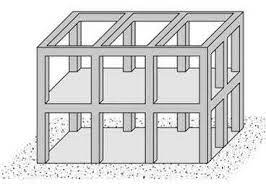
In small-scale construction, such as a rural house, a pavilion, or a simple workshop, the structure often relies on fundamental principles. Common systems include the post-and-lintel (a vertical support holding a horizontal beam) or platform framing, where wooden studs form walls and frames support floors.

These systems are simple, affordable, and easy to build, especially with local materials like timber or bamboo. However, they have clear limitations: when the span becomes too large, or when the load increases, components may bend or fail. This is why traditional construction limits the spacing between supports. A wooden beam might span only 3 to 5 meters before needing additional reinforcement.

These early forms are still relevant today. In low-cost housing and sustainable design, minimalist systems using local timber or bamboo are being reconsidered, with modern calculations and improved connections to ensure safety [1].

Mid-Rise Buildings: The Role of Columns and Beams

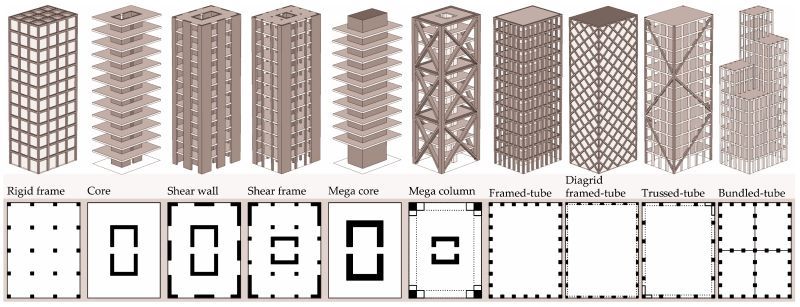
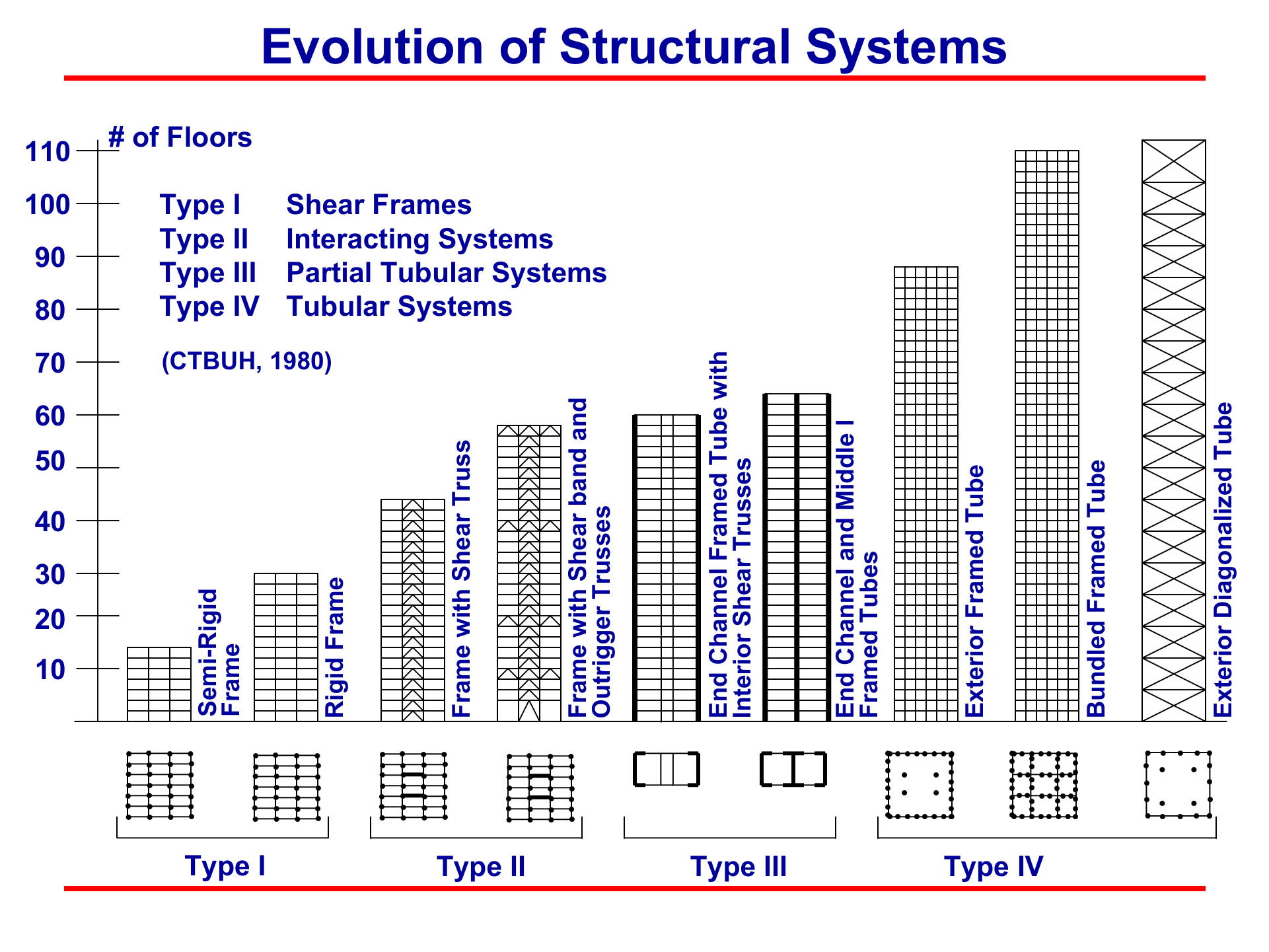
As buildings grow taller, typically 4 to 10 stories, the load on each structural element significantly increases. Individual posts can no longer support the combined weight of the floors, walls, and roof. This is where structural frames become essential.

In mid-rise buildings, common systems include moment frames or braced frames. In these systems, beams and columns are connected with rigid joints, allowing them to resist both vertical loads and lateral forces, such as wind or earthquakes. The connections between beams and columns are crucial; they must be strong enough to transfer bending forces without deforming.

Steel and reinforced concrete are preferred materials because they can handle high tension and compression. In Indonesia, for example, many apartment buildings in cities like Medan, Bandung, or Surabaya use reinforced concrete frames, with columns spaced every 4 to 6 meters to balance strength and usable floor space [2].

However, even with these robust systems, careful planning by engineers is vital. A column that is too thin might buckle under load. Beams that are not deep enough will sag over time. If connections are not detailed precisely, the building’s performance during seismic events—a serious concern in earthquake-prone regions like Indonesia—could be severely compromised.

High-Rise Buildings: Managing Wind and Gravity

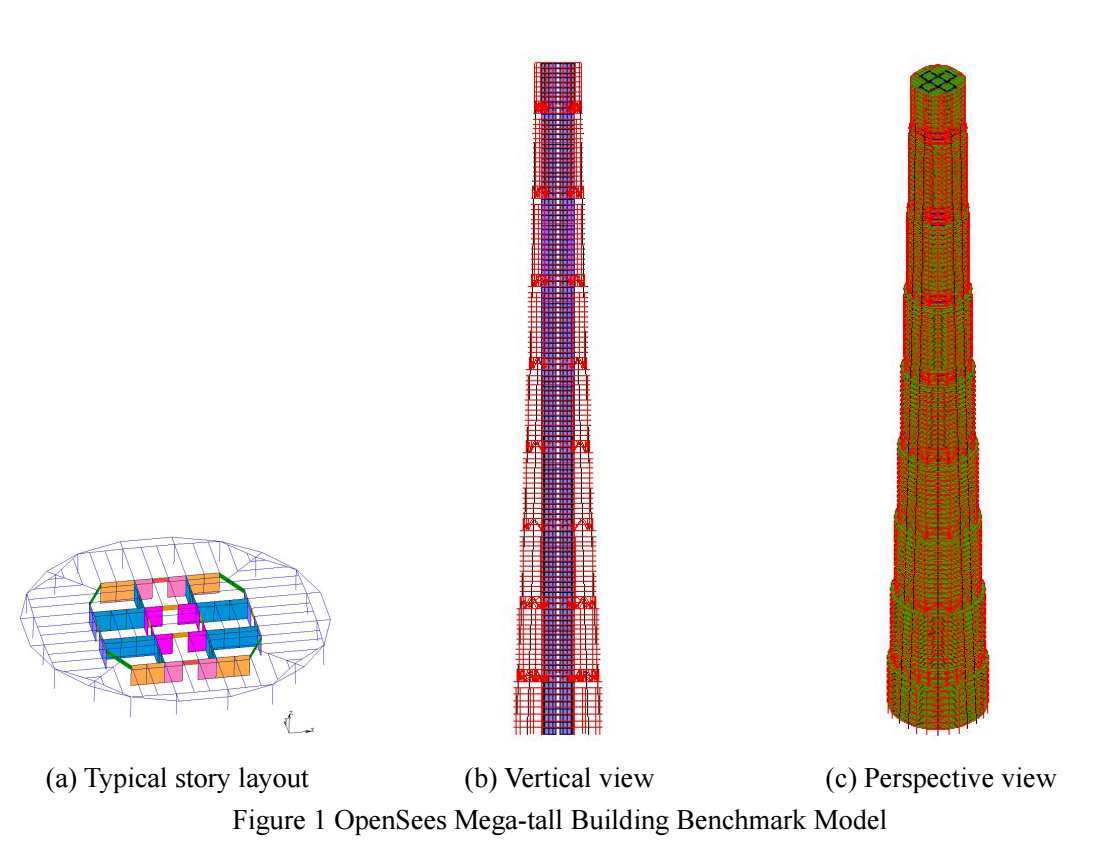
Consider a structure reaching 50 or even 100 floors. The forces acting on it go beyond just supporting weight; they include critical considerations for stability against strong winds, controlled movement during earthquakes, and efficient use of space. This is where advanced structural solutions are needed.

In high-rise architecture, the structure evolves into a sophisticated system with vertical cores, outrigger trusses, and often, tuned mass dampers. A central core, usually made of reinforced concrete, acts as the building’s main support, carrying vertical loads and resisting lateral forces. Outriggers are horizontal truss systems that connect this central core to the outer columns, significantly stiffening the entire structure.

One notable innovation is the tuned mass damper—a large weight suspended inside the building, designed to gently swing opposite to the building’s swaying motion caused by wind. For instance, the Taipei 101 tower uses a 660-ton steel sphere that moves against the building’s sway, reducing movement by up to 40% [3].

Despite these advanced systems, designers still face the challenge of creating structures that are both strong and flexible, while also allowing for open and adaptable floor plans. This is why modern high-rises often use composite structures, combining steel frames with concrete slabs for superior strength and faster construction.

Wide-Span Structures: Blending Architecture and Engineering

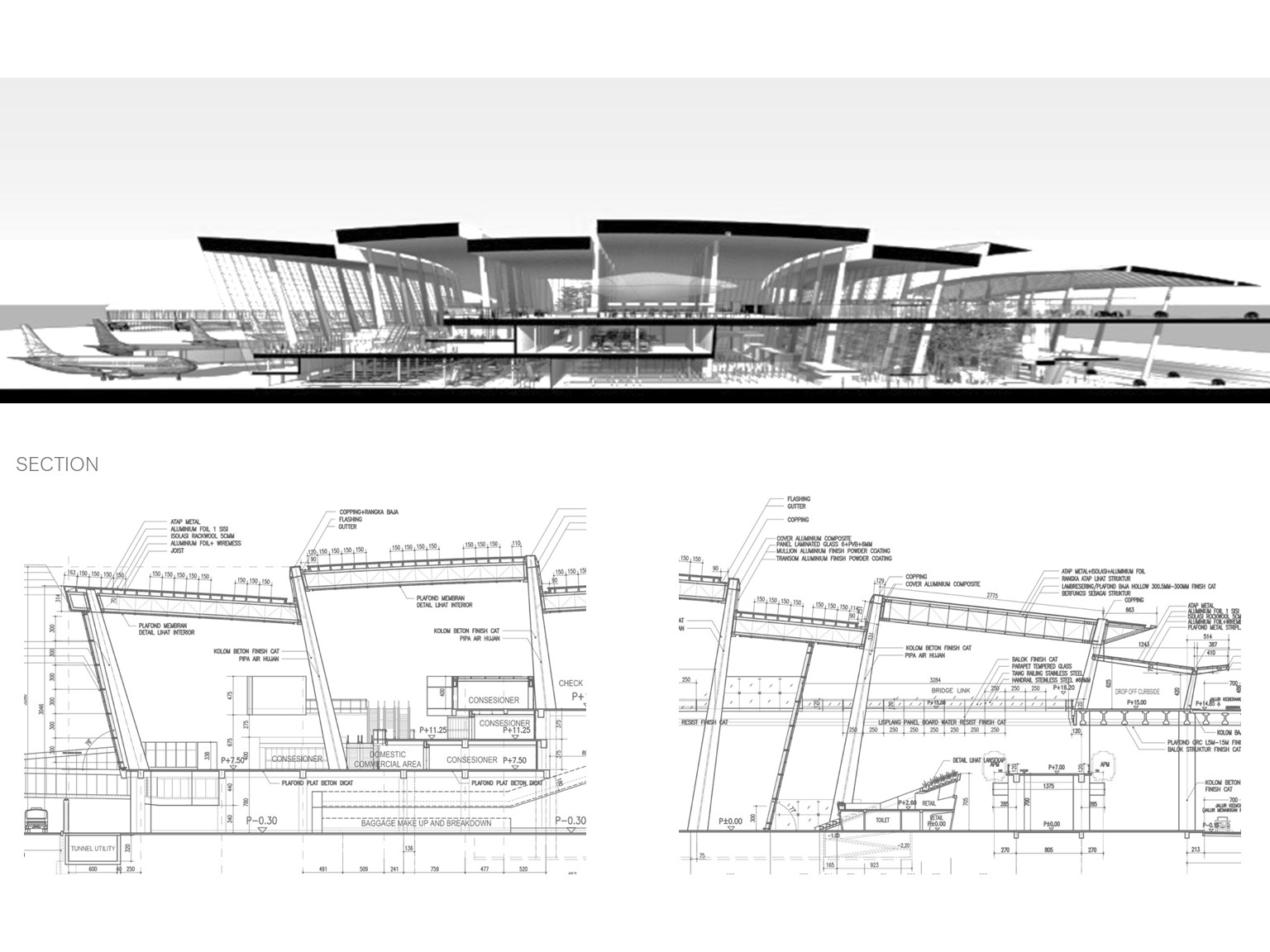
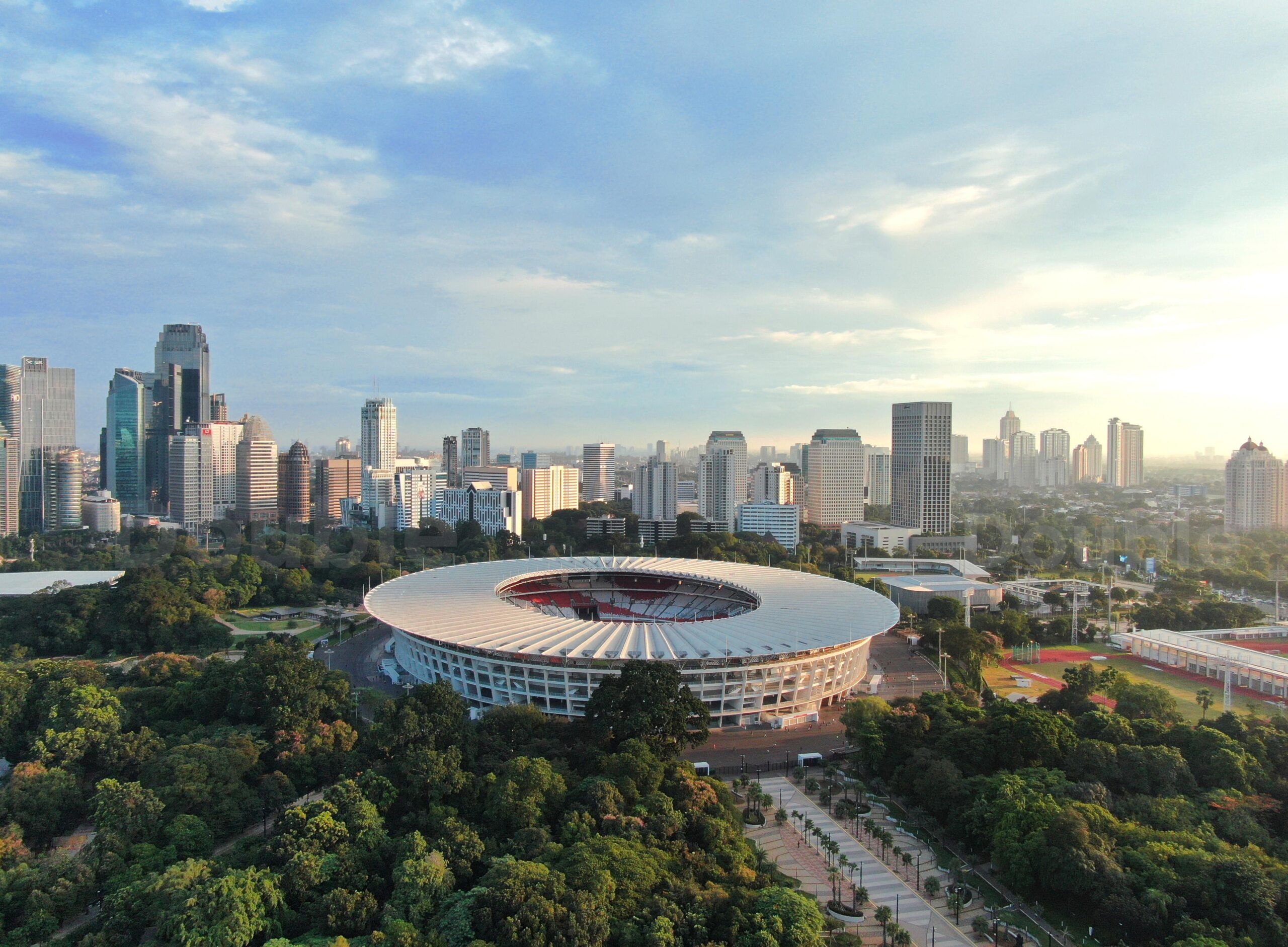
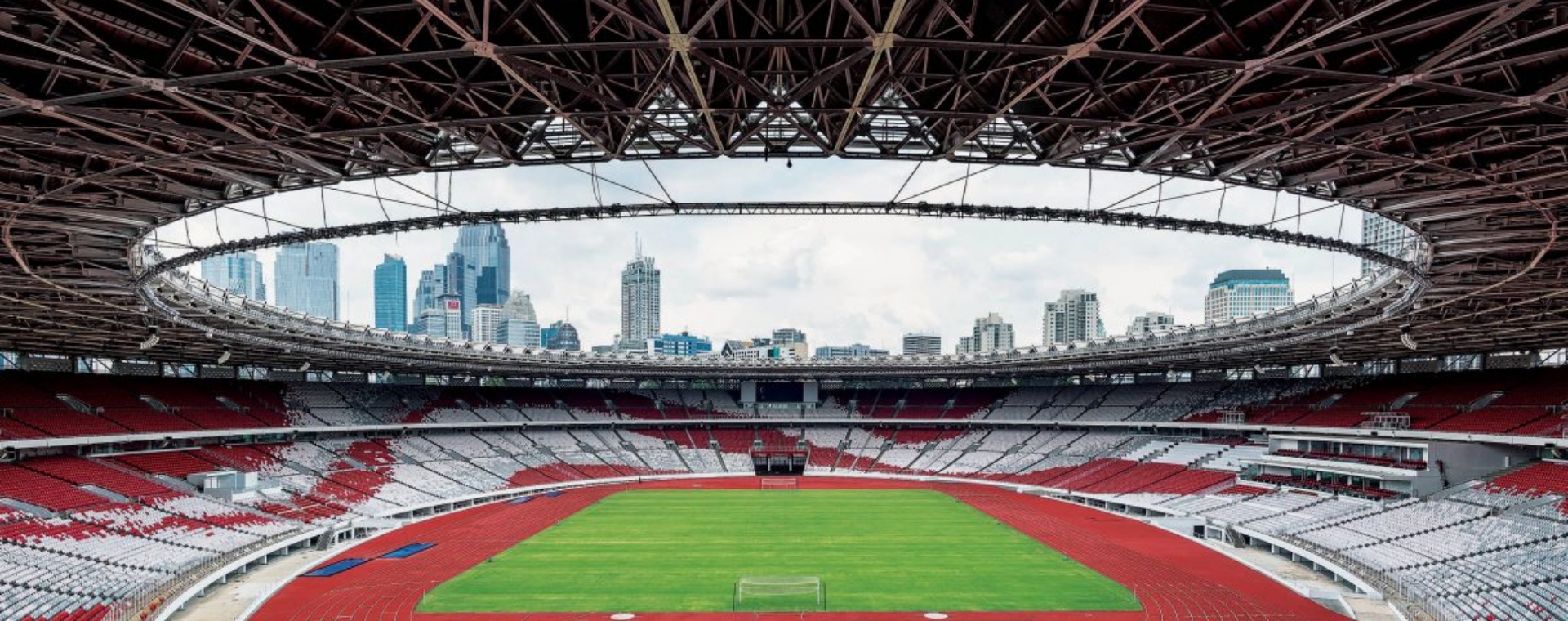
Now, let’s look at a different type of architectural space—large areas like convention centers, sports stadiums, airport terminals, or grand mosques with massive domes. These buildings do not need tall columns or rigid frames because the primary goal is to cover vast areas without internal supports. The main challenge here is achieving spatial freedom.

This is where the ingenuity of trusses, arches, cables, and membrane structures becomes apparent:

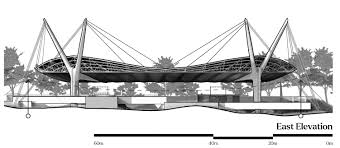
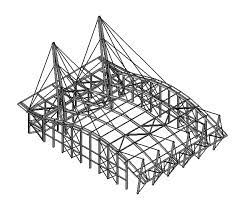
  • A truss is an efficient geometric system of triangles that distributes loads effectively. Imagine a roof made of steel beams arranged in a ladder-like pattern.
  • An arch utilizes compression to direct downward forces to its supporting bases. The Colosseum in Rome is a classic example of this principle.
  • Cable-supported structures, like those found in stadium roofs, rely on the tension in steel cables to hold up the roof, requiring minimal support at the edges.

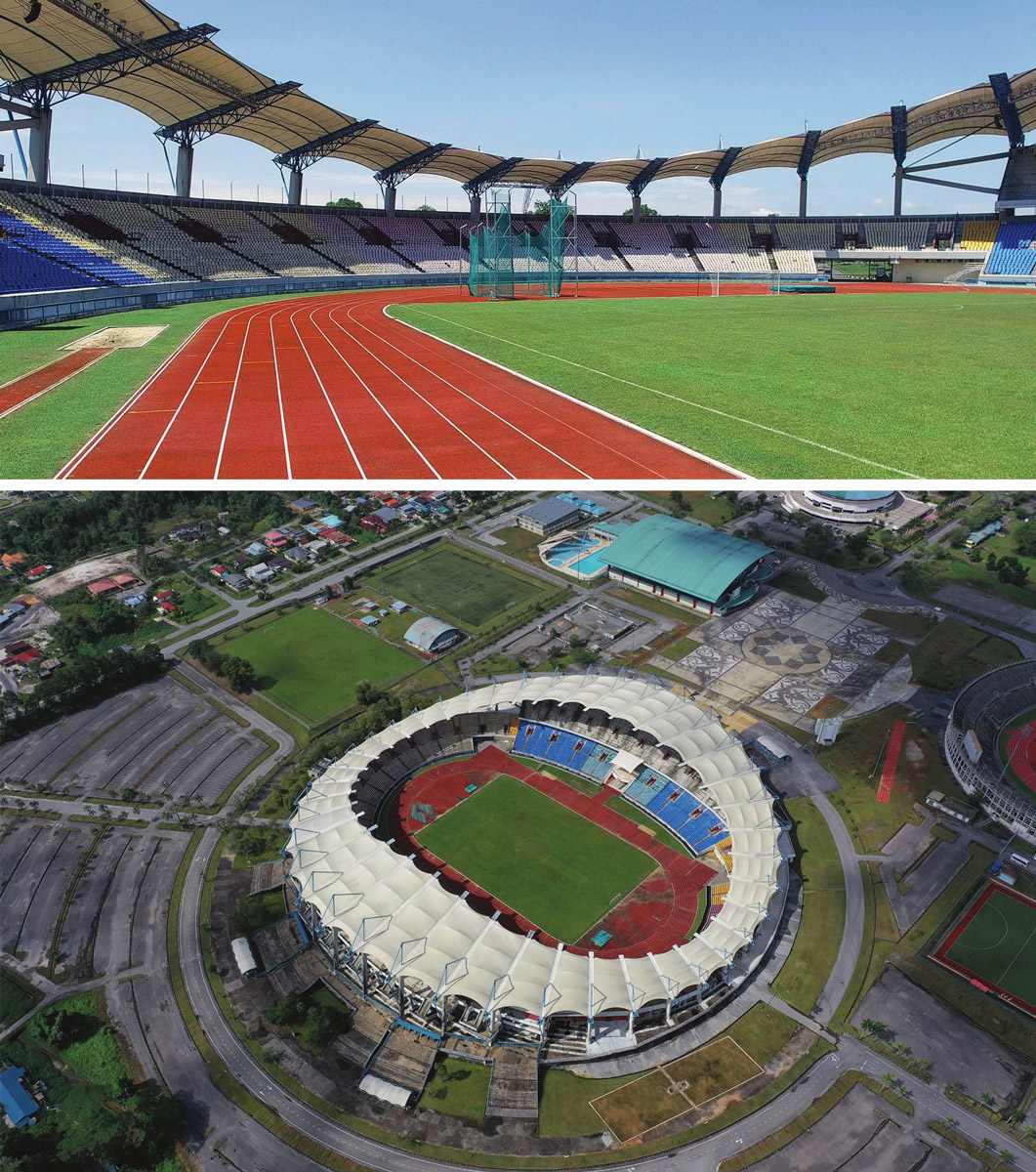
  • Membrane structures, such as tensile roofs made from coated fabric, are light, flexible, and strong, making them ideal for covering large areas with minimal material [4].

An excellent example is the Sarawak Stadium roof in Malaysia, which uses a cable-net system spanning over 150 meters without any central support. This creates a remarkable sense of openness and freedom for spectators.

The key insight here is that the structure is more than just a collection of parts; it functions as a high-performing system. Every element—from material choice to connection details and overall geometry—works together seamlessly to achieve both optimal function and aesthetic appeal.

Common Thread: The Designer’s Essential Role

Regardless of scale or complexity, one truth remains: architects do not merely draw buildings; they engage with the principles of physics.

As a designer, you are a problem-solver who constantly asks: How can we support this load? How do we prevent unwanted movement? How do we ensure safety, efficiency, and beauty simultaneously? This is a significant intellectual challenge.

As structures become more intricate, the need for collaboration increases. This involves working closely with structural engineers, MEP (Mechanical, Electrical, and Plumbing) specialists, contractors, and clients. The buildings you design today must be constructible, functional, and safe, not just in theory but in reality.

This highlights why today’s architecture students must go beyond basic CAD sketches. We need to develop a deep understanding of:

  • How various materials behave under different stresses (tension, compression, shear).
  • The mechanisms by which connections transfer forces.
  • How local building codes (such as SNI in Indonesia or IBC in the US) influence design decisions.
  • The use of digital tools like ETABS, SAP2000, or Revit to analyze these complex loads before construction begins.

References

  1. Kharrazi, M. et al. (2020). Sustainable Timber Framing in Low-Cost Housing: A Case Study in Indonesia. 🌐 https://www.mdpi.com/2075-5309/10/10/836
  2. SNI 03-1729-2002 – Design of Concrete Structures (Indonesian National Standard). 🌐 https://standartsni.go.id/
  3. Lin, C.-C. & Chou, C.-C. (2006). Seismic Response of the Tuned Mass Damper at Taipei 101. 🌐 https://www.sciencedirect.com/science/article/pii/S0141029605002351
  4. Oberaigner, L. (2015). Tensile and Composite Structures: Design and Construction. 🌐 https://www.asce.org/
  5. IBC 2021 – International Building Code – Chapter 16 (Structural Design). 🌐 https://codes.iccsafe.org/content/IBC2021/chapter-16-structural-design

Beyond Blueprints: How Computational Design is Reshaping Architecture

Imagine a building that designs itself, optimizing for sunlight, structural integrity, and even the unique properties of its materials, all before a single brick is laid. Sounds like science fiction? Not anymore. Welcome to the world of computational design in architecture, where algorithms and advanced software are transforming how we conceive, create, and construct our built environment. This isn’t just about drawing on a computer; it’s about empowering architects with a new language to solve complex problems, push creative boundaries, and build a more sustainable future. If you’ve ever wondered how buildings can be smarter, more efficient, and truly responsive to their surroundings, then you’re about to discover the digital revolution that’s making it all possible.

The Digital Architect’s Toolkit: What is Computational Design?

At its core, computational design (CD) in architecture is the application of computer algorithms and computational techniques to generate, analyze, and optimize architectural designs [1]. It moves beyond traditional CAD (Computer-Aided Design) by allowing designers to define rules and parameters, rather than just drawing lines. Think of it as teaching a computer to think like an architect, but with the ability to process vast amounts of data and explore countless design variations at lightning speed. This approach enables architects to tackle challenges that would be impossible or incredibly time-consuming with conventional methods.

Beyond the Drawing Board: Why Computational Design Matters

Computational design isn’t just a fancy new tool; it’s a paradigm shift that offers significant advantages for architects and the built environment. It empowers designers to explore and create in ways previously unimaginable. Instead of manually drawing every iteration, architects can now define a set of rules and allow the computer to generate thousands of design options, pushing the boundaries of complex geometries and innovative forms that might have been impossible to conceive through traditional methods [2]. This newfound freedom allows designers to focus on higher-level conceptual thinking, truly expanding the realm of architectural possibility.

One of the most powerful aspects of computational design is its ability to integrate performance analysis directly into the design process. Architects can simulate how a building will perform in terms of energy efficiency, daylighting, structural integrity, and even acoustics, all before construction even begins. This capability facilitates data-driven decisions that lead to more sustainable and efficient buildings [3]. For instance, a design can be meticulously optimized to maximize natural ventilation in a tropical climate, significantly reducing the need for artificial cooling and its associated energy consumption.

Furthermore, computational design brings unparalleled efficiency and automation to the architectural workflow. Repetitive and often tedious tasks, such as generating detailed drawings or calculating complex structural elements, can now be automated. This not only dramatically speeds up the design process but also minimizes human error, allowing architects to dedicate more of their valuable time to creative problem-solving and meaningful engagement with clients [4]. In an increasingly complex world, modern buildings often feature intricate geometries and demanding performance requirements. Computational design provides the essential tools to manage this inherent complexity, ensuring precise control and coordination of vast amounts of information, from the initial conceptual sketch to the detailed instructions for fabrication.

Finally, CD is opening exciting new doors for material innovation. It allows architects to gain a deeper understanding of how various materials behave, even those with inherent variability. By simulating material performance under different conditions, designers can push the boundaries of material use, leading to more efficient and innovative structures. This is particularly crucial for natural, sustainable materials, which often possess less predictable characteristics than their manufactured counterparts, enabling their integration into cutting-edge designs.

Computational Design in Action: Real-World Applications

Computational design is not merely theoretical; it is actively transforming various aspects of architectural practice today. One of its most common applications is Parametric Design, where design elements are defined by parameters and their intricate relationships. This means that changing one parameter automatically updates all related elements, allowing for rapid iteration and adaptation. It’s like having a dynamic model that intelligently responds to every design adjustment, offering unparalleled flexibility.

Taking this concept a significant step further, Generative Design employs algorithms to automatically generate a multitude of design alternatives based on a predefined set of goals and constraints. The architect sets the rules, and the computer then explores a vast solution space, presenting optimal or near-optimal designs [5]. This powerful capability is where the subtle threads of my own research begin to weave into the broader narrative, as generative design becomes a core component in exploring novel structural forms and innovative material applications, particularly for challenging yet sustainable resources.

Beyond generating forms, CD tools are invaluable for Performance Simulation and Optimization. This includes a range of critical analyses, such as energy analysis to predict heating, cooling, and lighting loads; daylight analysis to optimize natural light penetration and reduce glare; structural analysis to ensure the stability and efficiency of structural systems; and environmental impact assessment to evaluate the embodied energy and carbon footprint of materials and designs.

Finally, the seamless integration of computational design extends to Digital Fabrication. Computational models can be directly translated into precise instructions for digital fabrication machines, such as 3D printers and CNC routers. This direct link streamlines the construction process, significantly reduces material waste, and enables the creation of highly complex and customized building components with unprecedented accuracy.

References

[1] Novatr. (2022, December 29). Understanding Computational Design (The Ultimate Guide). Retrieved from https://www.novatr.com/blog/computational-design-guide

[2] Futurly. (2023, August 14). The Role of Computational Design in Architecture: 6 Ways it Will Change the Way You Work. Retrieved from https://www.futurly.com/blog/the-role-of-computational-design-in-architecture

[3] ArchSmarter. (2024, January 26). 5 Ways Computational Design Will Change the Way You Work. Retrieved from https://www.archsmarter.com/blog/computational-design

[4] Technostruct. (2024, March 12). The Role of Computational Design in Architecture. Retrieved from https://www.technostruct.com/blog/2024/03/12/the-role-of-computational-design-in-architecture/

[5] Novatr. (2024, August 14). Generative Design in Architecture: Everything You Need to Know. Retrieved from https://www.novatr.com/blog/generative-design-architecture

The Future is Now: Designing with Intelligence and Sustainability

Computational design is not just a trend; it’s the inevitable evolution of architectural practice. It empowers architects to move beyond traditional limitations, creating buildings that are not only visually stunning but also highly efficient, responsive, and sustainable. By embracing algorithms and data, we can unlock unprecedented possibilities in design, from optimizing complex geometries to understanding and leveraging the unique properties of natural materials.

This journey into computational design is particularly exciting when considering its potential for sustainable materials. Imagine a future where we can precisely model and optimize structures made from rapidly renewable resources, like bamboo, accounting for their natural variations to create resilient and beautiful buildings. This approach promises to revolutionize how we build, fostering a deeper connection between technology, nature, and human well-being. As we continue to explore these frontiers, computational design will undoubtedly play a pivotal role in shaping a more intelligent and sustainable built environment for generations to come.

From Passive to Proactive: How Technology is Helping Buildings Give Back to Nature

In architecture, we often talk about making buildings more sustainable. You might have heard terms like ‘passive design’ and ‘regenerative design.’ My last blog post discussed these ideas. Passive design aims to reduce energy and resource use, like a building holding its breath. Regenerative design, however, is about buildings actively giving back to nature, like breathing out clean air and water. How can a building do this? Technology holds the key.

The Limits of Passive Design

Passive design is a very important first step in sustainable architecture. It focuses on using natural elements to make buildings comfortable and efficient. Think about big windows that let in sunlight for warmth in winter, or clever designs that allow cool breezes to flow through a building in summer. These ideas help reduce the need for air conditioning and heating, saving energy and money. For example, the Bullitt Center in Seattle, often called the ‘greenest commercial building in the world,’ uses features like automated windows for natural ventilation and a smart building shell to be energy net-positive [1].

While passive design reduces a building’s negative impact, it doesn’t actively improve the environment. It minimizes harm, but doesn’t create positive change. It’s a crucial foundation, but we need buildings that don’t just take less, but actually give more.

The Rise of Proactive Buildings

This is where proactive, or regenerative, buildings come in. Imagine a building not just as a shelter, but as a living part of its environment. These buildings are designed to act like natural ecosystems. They aim to improve the environment around them, not just reduce their own impact. This means they can generate more energy than they use, clean the air, manage rainwater, and even help local wildlife thrive. It’s about creating a positive impact, making the world a better place just by existing.

One great example is the Omega Center for Sustainable Living in New York. It has a special wastewater treatment system that works like natural wetlands. It cleans water and creates a beautiful space for learning [2]. Another is the Khoo Teck Puat Hospital in Singapore. It has lots of greenery that cools the building and provides a healing space for patients, while also helping local nature [3]. These buildings show how architecture can actively contribute to the health of both people and the planet.

Technology as the Game-Changer

So, how do we make buildings proactive? The answer lies in smart technology. These tools help architects and designers create buildings that work with nature, not against it.

Generative Design and Artificial Intelligence (AI)

Think of generative design as a super-smart assistant for architects. Instead of drawing every line themselves, designers give the computer a set of rules and goals. For example, they might tell it: “Design a building that uses the least amount of material, gets lots of natural light, and stays cool in a tropical climate.” The computer then uses AI to explore thousands, even millions, of design options that a human could never think of. It learns what works best and suggests the most efficient and sustainable designs [4].

This is especially exciting for materials like bamboo. Bamboo is amazing – it grows fast, is strong, and can store carbon. But each bamboo stalk is unique, and its properties can change with moisture and temperature. This allows us to design buildings that truly use bamboo to its full potential, adapting to its natural variations and the tropical climate. AI helps us unlock bamboo’s ‘secret language’ to build stronger, more sustainable structures.

Smart Materials

Imagine a building that can heal itself, change its color to reflect sunlight, or even clean the air around it. This isn’t science fiction; it’s the world of smart materials. These materials can react to their environment and change their properties. For example, some windows can automatically tint themselves to block harsh sunlight, reducing the need for air conditioning. There are even materials that can absorb pollutants from the air or self-repair small cracks, making buildings last longer and require less maintenance [5]. These innovations help buildings become more adaptive and efficient, actively contributing to a healthier environment.

IoT and Sensors

Just like our bodies have senses, smart buildings have sensors. These tiny devices, connected through the Internet of Things (IoT), collect real-time information about everything from temperature and humidity to air quality and how many people are in a room. This data is like a building’s nervous system. It allows the building to understand its own performance and make adjustments automatically. For instance, if a room is empty, the lights can dim, and the air conditioning can reduce its output, saving energy. This constant monitoring and adjustment help buildings operate at peak efficiency, minimizing waste and maximizing comfort [6].

Examples of Proactive Buildings in Action

These technologies are not just ideas; they are being used in real buildings around the world, making a tangible difference:

  1. The California Academy of Sciences (San Francisco, USA): This building combines passive and proactive design. Its living roof provides insulation (passive) while supporting native plants and managing stormwater (proactive). It also generates its own renewable energy and educates on environmental stewardship [7].
  2. The Edge (Amsterdam, Netherlands): Often called the world’s most sustainable office building, The Edge uses a vast network of IoT sensors to monitor everything from temperature and light to CO2 levels and occupancy. This data allows the building to adjust its systems in real-time, optimizing energy use and creating a highly efficient and comfortable environment. It even has a smartphone app that learns user preferences, further personalizing and optimizing the workspace [8]. This is a prime example of how IoT makes a building truly proactive in its energy management.
  3. One Central Park (Sydney, Australia): This residential tower is famous for its vertical gardens, which are not just for show. These gardens act as a living skin, providing natural shading, improving air quality, and reducing the urban heat island effect. The building also incorporates a tri-generation plant for energy and a wastewater treatment system, demonstrating a holistic, proactive approach to urban sustainability [9]. While not explicitly stated as using generative design, the complexity and optimization of such a system often benefit from advanced computational tools.

These examples show that buildings can be more than just shelters; they can be active participants in creating a healthier planet. They demonstrate how technology, from AI-powered design to smart materials and interconnected sensors, is enabling a new era of architecture that goes beyond simply reducing harm to actively giving back to nature.

The Future is a Partnership with Nature, Powered by Technology

The journey from passive to proactive buildings is an exciting one. It represents a fundamental shift in how we think about our built environment. No longer are buildings just static structures; they are becoming dynamic, intelligent entities that can adapt, learn, and contribute positively to the world around them.

This shift is driven by the incredible advancements in technology. Generative design, AI, smart materials, and IoT sensors are not just tools; they are enablers that allow us to design and construct buildings that are deeply integrated with natural systems. They help us understand complex environmental data, optimize material use, and create structures that are resilient and responsive to changing conditions.

Ultimately, the goal is to create a future where every building is a partner with nature. A future where our cities are not just concrete jungles, but thriving ecosystems where human life and natural life coexist and flourish. This vision is becoming a reality, one smart, proactive building at a time. It’s a hopeful vision for architecture, where innovation and sustainability go hand in hand to build a better world for everyone.

References

[1] Aulia Muflih Nasution. (2025, June 26). Passive vs Regenerative Design in Architecture: Practical Insights for Sustainable Building. Retrieved from https://auliamuflih.blog.uma.ac.id/2025/06/26/passive-vs-regenerative-design-in-architecture-practical-insights-for-sustainable-building/

[2] Omega Institute. (n.d.). Omega Center for Sustainable Living. Retrieved from https://www.eomega.org/omega-center-for-sustainable-living

[3] Khoo Teck Puat Hospital. (n.d.). Our Green Hospital. Retrieved from https://www.ktph.com.sg/about-us/our-green-hospital/

[4] Maket.ai. (n.d.). The Role of AI in Sustainable Architecture: How Generative Design is Helping to Reduce Carbon Footprints. Retrieved from https://www.maket.ai/post/the-role-of-ai-in-sustainable-architecture-how-generative-design-is-helping-to-reduce-carbon-footprints

[5] ArchDaily. (2022, May 31). What Are the Smart Materials in Architecture?. Retrieved from https://www.archdaily.com/982583/what-are-the-smart-materials-in-architecture

[6] Neuroject. (2024, September 5). IoT Sensors in Smart Buildings: Enhancing Efficiency. Retrieved from https://neuroject.com/iot-sensors-in-smart-buildings/

[7] California Academy of Sciences. (n.d.). Architecture. Retrieved from https://www.calacademy.org/academy/architecture

[8] PLP Architecture. (n.d.). The Edge. Retrieved from https://plparchitecture.com/work/the-edge/

[9] One Central Park. (n.d.). About. Retrieved from https://www.onecentralpark.com.au/about/

Passive vs Regenerative Design in Architecture: Practical Insights for Sustainable Building

In the evolving landscape of sustainable architecture, two design philosophies have emerged as particularly significant: passive design and regenerative design. While both approaches aim to create environmentally responsible buildings, they differ fundamentally in their underlying principles, methodologies, and ultimate goals. This comprehensive article explores these two design paradigms in depth, providing students and practitioners with a thorough understanding of their applications, benefits, and real-world implementations.

Passive design represents a more traditional approach to sustainable architecture, focusing primarily on reducing energy consumption through intelligent building design that works with natural environmental conditions. The concept dates back to ancient architectural practices but was formalized in the 20th century as part of the energy conservation movement. Regenerative design, by contrast, is a more recent development that goes beyond sustainability to actively improve and restore the natural environment through built interventions. This approach emerged in the late 20th century as architects and designers began recognizing the need for more holistic solutions to environmental challenges.

Understanding the distinction between these approaches is crucial for architecture students and professionals alike. While passive design can significantly reduce a building’s environmental footprint, regenerative design aims to create structures that give back to their ecosystems. The practical implications of choosing one approach over the other—or combining elements of both—can have profound effects on everything from energy performance to community well-being and ecological health.

Passive design operates on the principle of working with natural environmental conditions to maintain comfortable interior spaces with minimal mechanical intervention. This approach carefully considers factors such as building orientation, thermal mass, natural ventilation, and daylighting to reduce energy demands. For example, in temperate climates, passive solar design might involve positioning large windows on the south-facing side of a building (in the northern hemisphere) to maximize winter sun exposure while using overhangs to block high summer sun. The thermal mass of materials like concrete or brick can then store this heat, releasing it gradually to maintain stable temperatures.

The effectiveness of passive design strategies depends heavily on local climate conditions. In hot, arid regions, traditional passive cooling techniques might include wind towers that capture cooler breezes at higher elevations and direct them downward, or thick earthen walls that provide thermal lag. In more humid climates, passive design might emphasize cross-ventilation and shading to promote air movement while minimizing solar heat gain. These climate-responsive strategies demonstrate how passive design adapts to environmental conditions rather than attempting to overcome them through mechanical means.

One of the most compelling aspects of passive design is its cost-effectiveness over a building’s lifecycle. While some passive strategies may require higher initial investments—such as high-performance glazing or additional insulation—they typically pay for themselves through reduced energy costs within a few years. The Bullitt Center in Seattle serves as an excellent example of passive design principles applied at scale. Dubbed the ‘greenest commercial building in the world,’ it incorporates features like automated windows for natural ventilation, a carefully calibrated building envelope, and photovoltaic panels that make it net-positive in energy production.

Regenerative design represents a paradigm shift in sustainable architecture, moving beyond the goal of simply reducing harm to actively improving environmental conditions. This approach views buildings not as isolated objects but as integral components of living systems that can contribute to ecological restoration. Where passive design might focus on minimizing a building’s energy use, regenerative design asks how that building can generate clean energy, purify water, enhance biodiversity, and even sequester carbon. The Living Building Challenge, one of the most rigorous sustainability standards, embodies many regenerative design principles by requiring projects to give back more than they take.

At its core, regenerative design seeks to create buildings that function like natural ecosystems—self-sustaining, resilient, and productive. This might involve designing wastewater treatment systems that create habitat for local species, or green roofs that not only insulate but also support pollinator populations. The Omega Center for Sustainable Living in New York provides a compelling case study. Its Eco Machine wastewater treatment system mimics natural wetland processes to clean water while creating educational and aesthetic value. Such projects demonstrate how regenerative design can turn buildings into assets for their surrounding environments.

The social dimension of regenerative design is equally important. Many regenerative projects incorporate community engagement and education components, recognizing that sustainable systems must be understood and maintained by the people who use them. The Khoo Teck Puat Hospital in Singapore exemplifies this approach. Its design integrates extensive greenery that cools the building while providing therapeutic spaces for patients and habitat for urban wildlife. The hospital’s architecture actively contributes to patient healing and staff well-being while improving the local microclimate—a true embodiment of regenerative principles.When comparing passive and regenerative design approaches, it’s important to recognize that they operate on different scales and timelines. Passive design primarily addresses the building scale and immediate energy performance, while regenerative design considers broader ecological systems and longer-term impacts. A passive house might achieve remarkable energy efficiency through its envelope design, but a regenerative building would additionally consider how its materials were sourced, how construction affected local ecosystems, and how the building could contribute to regional environmental goals.

The choice between these approaches often comes down to project constraints and aspirations. Passive design principles can be applied relatively easily to conventional projects with modest sustainability goals, while regenerative design typically requires more ambitious programming and client commitment. However, the most forward-thinking projects increasingly combine elements of both. The California Academy of Sciences in San Francisco demonstrates this integration beautifully. Its living roof provides insulation (passive benefit) while supporting native plant species and managing stormwater (regenerative benefits). The building also generates its own renewable energy and serves as an educational resource about environmental stewardship.

California Academy of Sciences
Location: San Francisco, California
Architect: Renzo Piano Building Workshop

Material selection offers another interesting point of comparison between the two approaches. Passive design might prioritize materials with high thermal mass or insulating properties, while regenerative design would additionally consider material lifecycles, embodied carbon, and potential for reuse or biodegradation. Cross-laminated timber (CLT) has gained popularity in both approaches but for slightly different reasons. Passive designers value it for its thermal performance and airtight construction potential, while regenerative designers appreciate its carbon sequestration capacity and renewability as a material.

For students and practitioners looking to apply these concepts, several practical considerations emerge. First, climate analysis should inform any sustainable design strategy. Passive design requires detailed understanding of solar paths, prevailing winds, and seasonal temperature variations. Regenerative design expands this analysis to include watershed conditions, soil health, and local biodiversity. Tools like climate consultant software can aid passive design decisions, while regenerative design might employ permaculture principles or ecosystem services assessments.

Second, both approaches benefit from integrated design processes that bring together architects, engineers, and other specialists early in the project. Passive design requires careful coordination between building orientation, envelope design, and mechanical systems. Regenerative design demands even broader collaboration, potentially including ecologists, landscape architects, and community stakeholders. The Bertschi School Living Science Building in Seattle illustrates this well, having been developed through an intensive charrette process that engaged students, teachers, and design professionals in shaping its regenerative features.

Third, performance monitoring is crucial for validating design assumptions and improving future projects. Passive buildings often use energy monitoring systems to verify efficiency gains, while regenerative projects might track additional metrics like water quality improvement or species diversity. The Center for Sustainable Landscapes in Pittsburgh, which generates all its own energy and treats all stormwater on site, maintains extensive monitoring systems that provide valuable data for both operations and research.

Center for Sustainable Landscapes / The Design Alliance Architects - Exterior Photography, Facade

Looking ahead, both passive and regenerative design will likely evolve in response to climate change and technological advancements. Passive design may incorporate more dynamic, responsive systems that adapt to changing weather patterns, such as phase-change materials that adjust their thermal properties based on temperature. Regenerative design will probably move toward more quantifiable ecological benefits, with buildings required to demonstrate measurable improvements in air quality, carbon sequestration, or habitat provision.

The convergence of these approaches seems inevitable as sustainability standards become more rigorous. Future buildings may need to demonstrate both exceptional energy performance (passive) and net-positive environmental contributions (regenerative). Emerging technologies like photovoltaic glass and carbon-negative concrete could facilitate this dual achievement. Educational institutions have an important role to play in this transition by training architects who understand both technical building science and ecological systems thinking.

Ultimately, the distinction between passive and regenerative design may blur as best practices from each become standard in high-performance architecture. What begins as a specialized approach—whether maximizing passive strategies or pursuing regenerative outcomes—will ideally become simply how all buildings are designed. The urgency of climate change and biodiversity loss makes this integration not just desirable but necessary for creating built environments that sustain both human and ecological communities for generations to come.

Unlocking Creativity with Generative Design: A Beginner’s Guide for Architects

Generative design is a revolutionary method in architecture that uses computers and AI to completely change how buildings and places are thought up, planned, and built. Generative design is a method that uses computers to instantly come up with many design choices based on rules and parameters that an architect or designer has already set. Unlike traditional design methods, which rely on hand-drawn sketches and the designer’s creativity, generative design uses modern computers to explore a huge range of design options that would be hard for a person to think of on their own. This method not only boosts creativity by finding new ways to do things, but it also boosts efficiency by accelerating the planning process and making sure that results are the best they can be in terms of performance, cost, and sustainability. Generative design is important in modern architecture because it can combine complicated data sources like site conditions, environmental factors, material properties, and user needs into a framework for design study that works well. This combination helps builders make smart choices that balance the need for beauty with the need for functionality. This results in buildings that are better suited to their surroundings and users.

The growth of generative design is closely connected to improvements in computer technology, such as the creation of complex formulas and the ease of access to strong software tools. With these tools, builders can set design goals and boundaries, like the building’s size, how it should be built, how much energy it should save, and how much it can cost. The software can then come up with multiple design options that meet these requirements. Planners iteratively review the generated choices, adjust the parameters, and guide the system towards optimal solutions. The dynamic interaction between human imagination and computer computation makes for a collaborative design space where the builder stays in charge but can use the algorithmic process’s powerful search tools. This means that generative design not only speeds up the early steps of design development, but it also helps people make better decisions throughout the entire project lifecycle.

Through the use of computers and algorithms, generative design is an innovative approach to architecture that entirely changes how buildings and places are thought of and built. Generative design starts with clearly stating the design goals, boundaries, and parameters. Computer algorithms then take care of these and instantly come up with a huge number of design options. Usually, architects come up with a single answer by drawing it out by hand and making small changes over and over again. This method is a little different. Instead, generative design encourages questioning and variety so that makers can look at many different choices that meet the needs that have been set. Limits and settings can be changed by architects based on the results, which leads the system to more polished and perfect solutions over time. This process naturally repeats itself and changes over time. Computer power makes it possible to process complicated factors and huge files that would be hard or impossible to handle by hand. This means that architectural design creates new ways for people to be creative and come up with new ideas.

In generative design, algorithms, parametric modelling, and rule-based limitations work together to make the design process successful. By following mathematical and logical rules, algorithms explore the design space in a planned way, which leads to the creation of design choices. One important method in this context is parametric modelling, in which design elements are described by factors that can change the design’s shape and function on the fly. This method, based on parameters, is flexible and adaptable because when you change one parameter, the whole model is updated instantly, keeping everything consistent and logical. Rule-based constraints make sure that the designs that are made follow realistic rules like building codes, structural soundness, environmental concerns, and what the client wants. By adding these limits to the creative process, the system gets rid of choices that aren’t possible or aren’t wanted, focusing on solutions that can be used. Generative design is different from other methods because it uses both strict algorithms and flexible design. Other methods usually rely on gut and experience instead of systematic exploration.

The fact that generative design is ongoing is one of the things that makes it unique. The planner usually starts by describing the problem area, including the goals and limits of the project. After that, the generative program creates various designs, each of which could serve as a potential solution. The architect rates the options based on their appearance, performance, cost, and durability. Based on this, the architect changes the input settings. This loop goes back and forth, with each time focusing on ideas that work better. Thanks to modern computers, it is now possible to quickly create and evaluate thousands or even millions of different design options. This thorough research not only raises the chances of finding new and useful designs, but it also gives us a better picture of the design space, showing trade-offs and chances that might have been missed otherwise. For example, an engineer working on a complicated facade might use generative design to try out different patterns and materials, aiming for the best results in areas such as light penetration, thermal performance, and visual effect all at the same time.

As an example, think about how parametric modelling tools like Grasshopper can be used with 3D modelling platforms like Rhino. Grasshopper lets builders make visual formulas that show how design elements relate to each other. This feature makes it easy to quickly make and change complex shapes. By changing things like curve radiuses, angles, or structure supports, architects can see right away how those changes affect the whole design. Such an approach makes the work process more participatory and exploratory. In the same way, Higharc is a generative design tool made specifically for residential buildings. It creates room layouts and construction papers automatically based on factors set by the user. This tool shows how generative design can make everyday jobs easier while giving customers more ways to make them unique. Archistar, on the other hand, uses both generative design and site analysis to help builders find the best plans for buildings while taking into account things like zoning laws, the environment, and the limitations of the site itself. In these cases, software tools enable builders to implement generative design ideas more quickly and creatively.

To sum up, generative design in architecture uses algorithms to look at different design options within a set of known limits and factors. It uses parametric modelling and rule-based systems to make sure that the ideas it comes up with are both new and feasible. With today’s computers and the iterative process, architects can solve difficult design problems faster and with more clarity than with older methods. By adopting this method, architects can expand their imagination, improve the performance of buildings, and better meet the many needs of modern architecture. This change in thinking not only improves the design process, but it also gives architecture new ways to deal with important problems like sustainability, user experience, and urban integration that weren’t possible before.

Generative design in architecture depends on complex mathematical methods that make it possible to automatically come up with and evaluate a lot of different design options based on certain input factors and limitations. Generative design depends on these algorithms to do its work. They carefully search through huge design spaces to find solutions that meet certain criteria. Genetic, evolutionary, and parametric algorithms are some of the most popular algorithms used in this field. Each one brings something different to the planning process. Genetic algorithms use the ideas behind natural selection and genetics to improve performance against set criteria by joining and changing traits from previous generations. Evolutionary algorithms build on this idea by using mutation, crossing, and selection, among other things, to find the best solutions to difficult problems over many rounds. On the other hand, parametric algorithms focus on describing how design variables relate to each other. This approach lets builders change parameters dynamically and see how the design output changes in real time. Using these algorithms for research and optimisation is much more sophisticated than doing it by hand. This approach lets builders find new ways to balance beauty, usefulness, and speed.

Special software tools that make the generative design process easier are an important part of using these methods in real life. One example of this is Grasshopper, a visual programming environment that operates in conjunction with Rhino, a well-known 3D modelling tool. By connecting nodes that represent geometric processes, data inputs, and logical functions, Grasshopper lets builders make parametric models. This node-based interface lets users create complicated algorithms without writing traditional code. This advantage means that creators with different levels of computer skills can use it. Grasshopper lets builders make complex shapes, improve structural parts, and model environmental factors, all in a user-friendly environment that lets them make changes quickly. Another useful tool is Higharc, which was made especially for residential building. By figuring out what the user wants, like the size of the lot, the number of bedrooms, and the style they want, it automatically makes room plans and building documents. Higharc’s creative engine quickly comes up with a number of appealing home designs. The software lets builders and clients see and change options online, which speeds up the design and approval process. Archistar combines generative design with advanced site analysis tools, utilising zoning rules, geography, and environmental data to find the best locations and sizes for buildings. This tool is especially helpful for urban planners and builders who have to work within complicated legal frameworks because it automates checks for compliance and makes the most of each site’s potential.

Additionally, these software programs don’t only automatically create different design options; they also have optimisation and visualisation features that help people make decisions. Grasshopper’s ability to work with environmental analysis tools, for example, lets builders check things like daylighting, energy use, and thermal comfort while the design is being made. The latter feature lets both aesthetically pleasing and functional factors be accounted for at the same time, which results in designs that are more environmentally friendly and simple to use. Any changes to the design quickly reflect in the technical drawings thanks to Higharc’s real-time updating of construction papers. This cuts down on mistakes and saves time during the building phase. Arcistar’s 3D visualisation of zoning boundaries and site constraints helps everyone involved understand the early effects of design choices, which makes it easier for everyone to work together and give informed consent. When using these tools, the user usually sets the starting parameters, runs the generative algorithms, looks over the choices that were generated, and introduces changes to the inputs based on feedback. Within this loop, builders can actively control the generative process, balancing computer discovery with human judgement and innovation.

When these automated processes and software tools are added to architectural routines, they cause a big change in how design is done. Generated design tools let architects focus on bigger-picture thinking and resolving problems by automating repetitive tasks and opening up new design possibilities. They also make design processes more open to everyone by letting clients and other partners see and interact with different design choices. This openness and teamwork make design more accessible to everyone, which results in buildings that better meet the needs of their users and surroundings. As computers get faster and algorithms get smarter, these tools will likely play a bigger role in architecture. Such developments will make it harder to tell the difference between human creativity and machine intelligence as we look for new, efficient, and environmentally friendly ways to design things.

In many areas of architecture, generative design has been used in useful and important ways, changing how homes, businesses, and environmentally friendly buildings are planned and built. In residential architecture, generative design tools like Higharc have changed the way homes are built by automatically making room layouts and construction documents based on user-defined factors like style tastes, lot size, and number of bedrooms. Not only does such technology speed up the design process, but it also makes customisation better by letting customers connect with digital models and making their homes fit their specific wants and tastes. Higharc can quickly update building papers when design changes happen. This approach cuts down on mistakes and makes it easier for architects, builders, and clients to talk to each other, which makes the whole process more efficient and clear. This method solves common problems in residential design, like finding the right balance between space needs, price, and site limitations, by quickly coming up with several good choices that meet these requirements. The outcome is a planning process that is more flexible and focused on the client, giving both homes and builders more power.

Generative design is an important part of business architecture for making complex building layouts work better and for measuring success. Architects and urban planners can deal with complicated zoning rules, weather factors, and site-specific limits with the help of tools like Archistar that combine generative design with advanced site analysis. By automatically analysing these factors, Archistar helps find the best locations for buildings and the best ways to mass them so that they meet local building rules and make the most use of space. This capability is especially helpful in crowded cities where the site conditions are very limited and complicated. Generative design makes it easier to try out a lot of different design options that balance functional needs, aesthetic goals, and legal requirements. This leads to more creative and useful business developments in the long run. Furthermore, being able to see zoning boundaries and environmental effects in three dimensions makes it easier for stakeholders to get involved and make decisions. This makes it easier for architects, developers, and city officials to work together.

The ability of generative design to directly include environmental performance factors in the design process is very helpful for sustainable building. Generative algorithms can create building shapes and positions that optimise the use of natural light, airflow, and energy efficiency by utilising data on wind patterns, heat performance, and energy consumption. For instance, parametric modelling tools like Rhino and Grasshopper work together to let architects simulate and study environmental factors in real time while changing design parameters to get better sustainability results. This feature allows users to create attractive, functional, eco-friendly, and cost-effective buildings. Generative design helps meet the growing need for green building practices by making it easier to create buildings that are eco-friendly and take advantage of the resources they have. It also lets new building materials and methods be tested within the generative structure, which leads to even more sustainable design innovation.

In all of these types of buildings, generative design solves common problems like limited site space, environmental concerns, and client customisation by offering an open and data-driven way to explore design ideas. Being able to quickly come up with and review a lot of different design options helps builders find solutions that might be missed in more standard workflows. This feature makes design more creative because the computer process can find shapes and arrangements that don’t seem likely at first but meet many criteria at once. Generated design also makes things more efficient because it cuts down on the time needed for human iterations and repetitive jobs. This lets architects focus on more creative choices at a higher level. Integration of modelling and optimisation tools that check structural soundness, energy use, and occupant comfort during the planning phase leads to better performance. This process lets proactive changes be made that improve the quality of the building.

Parametric Modeling 101: Transforming Architectural Dreams into Reality

Parametric modeling is a fascinating concept that has gained significant attention in the field of architecture. For those unfamiliar with the term, parametric modeling refers to a design process that uses parameters or variables to create and manipulate 3D models. This approach allows architects and designers to explore various design options quickly and efficiently, making it an essential tool in modern architecture.

At its core, parametric modeling enables designers to define relationships between different elements of a structure. For example, if an architect changes the height of a building, all related components—such as windows, doors, and structural supports—can automatically adjust according to predefined rules. This interconnectedness simplifies the design process and reduces errors.

One of the primary benefits of parametric modeling is its ability to enhance creativity. By allowing architects to experiment with different shapes and forms easily, this method encourages innovative thinking. Designers can visualize complex geometries that would be challenging or time-consuming to create using traditional methods.

Examples of Modelling that can produced with parametric – generate with superAI

Moreover, parametric modeling streamlines collaboration among project stakeholders. Architects can share their models with engineers and contractors more effectively since everyone works from a single digital file that reflects real-time changes. This collaborative environment enhances communication and ensures a shared understanding throughout the project lifecycle.

In addition to improving collaboration, parametric modeling also saves time during the design phase. Traditional drafting methods often require repetitive tasks when making adjustments; however, with parametric tools like Rhino or Grasshopper, modifications are made swiftly across all relevant components without starting from scratch each time.

As technology continues evolving within architecture practices globally, today’s designs are becoming increasingly complex, largely because they incorporate advanced materials alongside sustainable strategies aimed at reducing environmental impact while enhancing user experience through thoughtful spatial organization—all achievable via these powerful software solutions!

Looking ahead into future developments surrounding this exciting field, we see potential for even greater integration between artificial intelligence (AI) technologies alongside existing capabilities offered by programs such as Revit, which already utilize some level of automation based upon user-defined parameters set forth earlier mentioned above!

The relationship between AI and parametric modeling could lead us toward smarter buildings capable not only of responding dynamically but also of learning from their environments over time—adapting accordingly based upon usage patterns observed through data collection techniques employed during occupancy periods!

Furthermore, incorporating machine learning algorithms into our workflows may allow us to further refine designs beyond what was previously thought possible, enabling architects to push boundaries further than ever before while still maintaining focus on sustainability principles guiding contemporary practice today!

In conclusion, understanding how these concepts intertwine provides valuable insight into where architectural innovation is headed next—it’s clear we’re entering new territory filled with opportunities waiting for exploration! As more professionals embrace this methodology, expect to see transformative results emerge across the industry landscape, ultimately benefiting society at large through improved infrastructure quality, enhanced living conditions, and overall well-being for inhabitants everywhere!

By demystifying concepts like “parametrics,” anyone interested can appreciate the significance behind them, recognizing the importance of staying informed about advancements shaping the world around us every day—from homes and offices to public spaces alike—all designed thoughtfully, utilizing cutting-edge techniques available now thanks to advancements in technology, paving the way forward together, collaboratively creating a brighter tomorrow ahead!

Roots of Resilience: Bamboo Architecture for a Sustainable World

Bamboo architecture is an exciting and innovative approach to building that is gaining recognition around the world. As we face significant challenges such as climate change, urbanization, and the depletion of natural resources, the need for sustainable building materials has never been more critical. Bamboo, a fast-growing grass, offers a unique solution to these challenges. It is not only strong and flexible but also lightweight, making it an ideal material for construction. Understanding the basics of bamboo architecture is essential for appreciating its potential in creating sustainable living spaces.

Bamboo Forest - Generate with AI

Bamboo Forest – Generate with AI

Bamboo has been used for centuries in various cultures, particularly in Asia and South America. Its rapid growth rate allows it to be harvested in just a few years, unlike traditional timber, which can take decades to mature. This characteristic makes bamboo a renewable resource that can help reduce deforestation and promote sustainable forestry practices. As the global population continues to rise, the demand for housing and infrastructure increases, putting pressure on our planet’s resources. Bamboo can help meet this demand while minimizing environmental impact.

One of the most significant advantages of bamboo is its strength-to-weight ratio. Bamboo is incredibly strong, often compared to steel in terms of tensile strength. This means that structures made from bamboo can be both lightweight and durable, allowing for innovative architectural designs that are not only functional but also aesthetically pleasing. The flexibility of bamboo also makes it resistant to earthquakes and other natural disasters, providing safety and security for those who live in bamboo structures.

In addition to its physical properties, bamboo is also an environmentally friendly material. It absorbs carbon dioxide from the atmosphere, helping to mitigate climate change. By using bamboo in construction, we can reduce our carbon footprint and contribute to a healthier planet. Furthermore, bamboo can be grown in a variety of climates and soil types, making it accessible to many communities around the world. This versatility allows for local sourcing of materials, reducing transportation emissions and supporting local economies.

Bamboo architecture aligns closely with several Sustainable Development Goals (SDGs) established by the United Nations. For instance, it contributes to Goal 11, which aims to make cities and human settlements inclusive, safe, resilient, and sustainable. By incorporating bamboo into urban planning and development, we can create affordable housing solutions that are both environmentally friendly and culturally relevant. Additionally, bamboo supports Goal 12, which focuses on ensuring sustainable consumption and production patterns. By promoting the use of renewable resources like bamboo, we can move towards a more sustainable future.

The use of bamboo in architecture also encourages community involvement and traditional craftsmanship. Many communities have a rich history of working with bamboo, and by reviving these practices, we can empower local artisans and preserve cultural heritage. This not only creates job opportunities but also fosters a sense of pride and ownership within communities. As more architects and builders recognize the potential of bamboo, there is an opportunity to create a new wave of sustainable architecture that honors traditional techniques while embracing modern design principles.

Moreover, bamboo architecture can play a crucial role in disaster relief and recovery efforts. In areas affected by natural disasters, bamboo can be quickly sourced and constructed into temporary shelters. Its lightweight nature allows for rapid assembly, providing immediate housing solutions for those in need. This adaptability makes bamboo an invaluable resource in times of crisis, demonstrating its potential to address urgent humanitarian needs.

As we look to the future, the importance of bamboo architecture cannot be overstated. It represents a shift towards more sustainable building practices that prioritize environmental health and social equity. By embracing bamboo as a primary building material, we can create structures that are not only beautiful and functional but also contribute to the well-being of our planet and its inhabitants. The integration of bamboo into modern architecture is not just a trend; it is a necessary step towards a more sustainable and resilient future.

In conclusion, bamboo architecture offers a promising solution to some of the most pressing challenges we face today. Its unique properties, environmental benefits, and alignment with sustainable development goals make it an essential material for the future of construction. As we continue to explore innovative ways to build and live sustainably, bamboo stands out as a beacon of hope, reminding us that nature can provide the solutions we need to create a better world for generations to come. Embracing bamboo in architecture is not just about building structures; it is about building a sustainable future.